
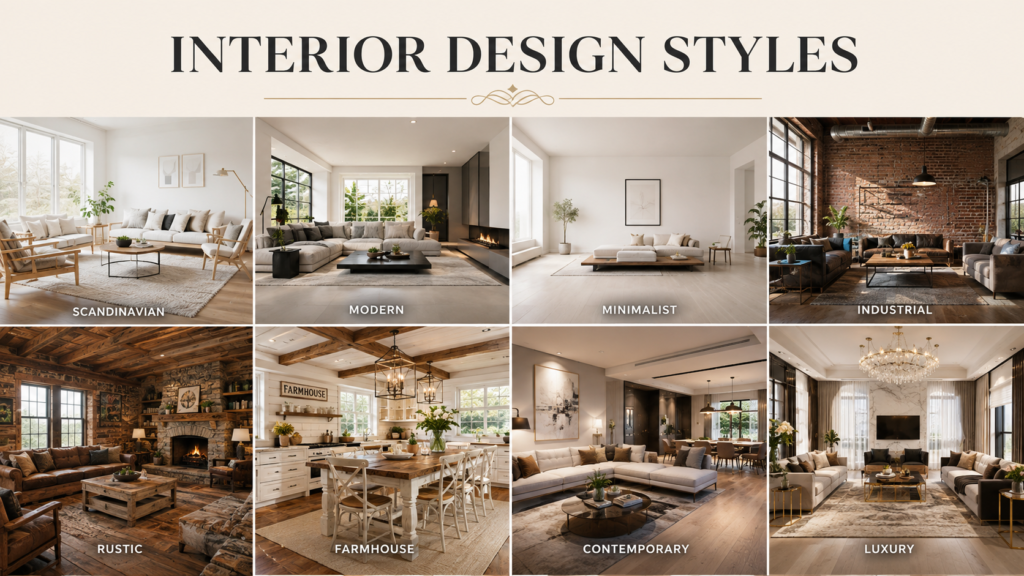

Interior design is much more than selecting beautiful furniture or painting walls with trendy colours. It is about creating spaces that reflect personality, improve comfort, and enhance daily living. Every home tells a story, and choosing the right interior design style helps express that story through colours, materials, furniture, lighting, textures, and décor.
Whether you’re decorating a new house, renovating an apartment, or simply looking for inspiration, understanding different interior design styles makes decision making much easier. This comprehensive guide explores the world’s most popular styles, explains their unique characteristics, and helps you find the perfect design for your lifestyle.
What Is Interior Design Style?
Understanding Interior Design Styles
Interior design styles refer to distinctive approaches to decorating indoor spaces. Each style combines specific colours, materials, furniture designs, architectural elements, and decorative accessories to create a unique atmosphere.
Rather than randomly selecting furniture, interior design styles provide a structured theme that keeps every room cohesive. From elegant traditional homes to sleek minimalist apartments, each style creates a different mood and visual experience.
Core Elements
Every design style includes:
- Colour palettes
- Furniture choices
- Flooring materials
- Lighting
- Decorative accessories
- Wall finishes
- Fabrics
- Room layout
Why Interior Design Styles Matter
A well planned interior creates balance between beauty and functionality. Choosing a clear design style helps homeowners avoid mismatched décor and unnecessary spending.
Interior design also influences mood. Bright Scandinavian interiors feel calm and refreshing, while rustic homes feel warm and welcoming. Modern interiors promote simplicity, whereas luxury interiors showcase elegance and sophistication.
Consistent styling can even increase property value by making homes more attractive to buyers.
How Interior Design Has Evolved
Interior design has evolved dramatically over centuries. Earlier homes focused mainly on practicality, while today’s interiors combine technology, sustainability, and personal expression.
Modern homeowners increasingly prefer open layouts, energy efficient materials, smart lighting, and eco friendly furniture. Designers also blend multiple influences, creating fresh interpretations rather than following rigid rules.
Modern Interior Design Style
Modern interior design originated during the early twentieth century and remains one of the world’s most popular styles.
It emphasizes clean lines, uncluttered spaces, geometric shapes, and functional furniture.
Characteristics
- Neutral colours
- Open floor plans
- Large windows
- Glass and steel materials
- Minimal decoration
- Simple furniture
Modern homes feel organized, spacious, and sophisticated.
Contemporary Interior Design Style
Although often confused with modern design, contemporary style changes with current trends.
Today’s contemporary interiors include curved furniture, textured walls, sustainable materials, and bold statement lighting while maintaining simplicity.
Popular colours include grey, beige, black, white, olive green, and warm earth tones.
Minimalist Interior Design Style
Minimalism follows the philosophy that less is more.
Every furniture piece serves a purpose. Decorative items remain limited, allowing the architecture itself to stand out.
Minimalist interiors feature:
- White walls
- Hidden storage
- Simple furniture
- Natural lighting
- Neutral colours
- Clean surfaces
The result is peaceful, clutter free living.
Scandinavian Interior Design Style
Inspired by Nordic countries, Scandinavian interiors prioritize comfort, natural light, and functionality.
Wood flooring, soft textiles, white walls, and cosy accessories create inviting spaces that remain practical throughout the year.
Natural materials and sustainable furniture make this style especially popular among environmentally conscious homeowners.
Traditional Interior Design Style
Traditional interiors celebrate timeless elegance inspired by European design.
Rich wood furniture, decorative mouldings, classic artwork, luxurious fabrics, and symmetrical layouts define this style.
Warm colours such as burgundy, navy, cream, and gold contribute to a refined atmosphere that never goes out of fashion.
Transitional Interior Design Style
Transitional design combines traditional elegance with modern simplicity.
Instead of ornate decoration or stark minimalism, transitional interiors balance comfort and sophistication through neutral colours, comfortable furniture, and subtle decorative details.
It is one of today’s most versatile interior styles.
Industrial Interior Design Style
Industrial interiors embrace unfinished architecture.
Inspired by converted warehouses and factories, this style highlights exposed brick walls, visible pipes, steel beams, concrete floors, and reclaimed wood.
Leather furniture and vintage lighting complete the urban aesthetic while maintaining warmth.
Rustic Interior Design Style
Rustic interiors celebrate nature through handcrafted furniture, exposed timber, stone fireplaces, and earthy colours.
Rather than polished perfection, rustic design embraces natural textures and imperfections that create warmth and authenticity.
Large wooden beams and cosy fabrics make spaces feel inviting.
Farmhouse Interior Design Style
Farmhouse style blends rustic charm with practical living.
Soft whites, reclaimed wood, shiplap walls, farmhouse sinks, and vintage accessories create welcoming family homes.
Modern farmhouse interiors simplify traditional farmhouse elements while incorporating cleaner lines and contemporary finishes.
Mid-Century Modern Interior Design Style
Originating during the mid twentieth century, this style remains incredibly popular.
It features:
- Tapered wooden legs
- Organic shapes
- Functional furniture
- Bold accent colours
- Large windows
- Indoor plants
Mid century interiors successfully combine retro charm with modern practicality.
Bohemian Interior Design Style
Bohemian style embraces creativity and personal expression.
Rather than following strict decorating rules, boho interiors layer colourful textiles, handmade décor, global influences, vintage furniture, woven baskets, and abundant greenery.
The relaxed atmosphere encourages individuality.
Coastal Interior Design Style
Coastal interiors recreate the relaxing atmosphere of seaside living.
Soft blue tones, sandy neutrals, white furniture, linen fabrics, driftwood accents, and abundant natural light define this refreshing design.
The goal is to create an airy, peaceful environment inspired by the ocean.
Luxury Interior Design Style
Luxury interiors prioritize premium materials and exceptional craftsmanship.
Marble flooring, crystal chandeliers, velvet upholstery, custom cabinetry, designer furniture, and elegant lighting create sophisticated living spaces.
Luxury design focuses on quality rather than excessive decoration.
Japandi Interior Design Style
Japandi combines Japanese minimalism with Scandinavian comfort.
Natural wood, soft neutral colours, handcrafted furniture, indoor plants, and uncluttered layouts create peaceful interiors focused on balance and mindfulness.
Its popularity continues growing due to increasing interest in sustainable living.
Mediterranean Interior Design Style
Mediterranean interiors draw inspiration from Southern Europe.
Terracotta floors, arched doorways, textured walls, wooden beams, colourful tiles, and wrought iron accents create warm, welcoming homes filled with natural character.
The style feels relaxed while remaining elegant.
Art Deco Interior Design Style
Art Deco showcases glamour and bold geometric design.
Gold finishes, marble surfaces, mirrored furniture, luxurious fabrics, dramatic lighting, and symmetrical patterns define this iconic style.
It remains popular in luxury apartments and boutique hotels.
Eclectic Interior Design Style
Eclectic interiors thoughtfully mix different styles into one harmonious design.
Vintage furniture may sit alongside modern artwork, while industrial lighting complements traditional architecture.
Successful eclectic interiors require balance, consistent colour palettes, and intentional furniture selection.
Latest Interior Design Trends
Interior design continues evolving with changing lifestyles.
Current trends include:
- Sustainable furniture
- Eco friendly materials
- Smart home technology
- Curved furniture
- Earth tone colour palettes
- Natural stone finishes
- Multifunctional spaces
- Indoor plants
- Biophilic design
- Home wellness spaces
Designers increasingly prioritize comfort, flexibility, and environmental responsibility.
How to Choose the Right Interior Design Style
Choosing the right style begins with understanding your daily lifestyle, available space, and personal preferences.
Small apartments often benefit from Scandinavian or minimalist styles because they maximize natural light and reduce visual clutter. Larger homes can successfully accommodate traditional, luxury, or farmhouse interiors.
Budget also matters. While luxury interiors require premium materials, rustic, industrial, and bohemian styles can often be achieved using reclaimed furniture and affordable décor.
Consider creating mood boards before purchasing furniture. Visual planning helps maintain consistency throughout every room.
Common Mistakes to Avoid
Many homeowners make decorating mistakes that reduce both functionality and visual appeal.
Avoid mixing too many styles without a clear plan. Excessive furniture can make rooms appear crowded, while poor lighting diminishes even the most beautiful interiors.
Ignoring room proportions is another common mistake. Large furniture overwhelms small spaces, while undersized décor can make spacious rooms feel empty.
Always prioritize functionality alongside aesthetics for the best long term results.
Conclusion
Choosing among today’s many interior design styles is about more than following trends. The best design reflects your personality, supports your lifestyle, and creates a space where you genuinely enjoy spending time. Whether you prefer the clean simplicity of minimalism, the warmth of rustic interiors, the elegance of traditional design, or the balance of Japandi, every style offers unique advantages.
Frequently Asked Questions
Which interior design style is most popular?
Modern, Scandinavian, contemporary, and minimalist styles remain among the most popular worldwide due to their clean appearance and versatility.
Which style makes a small room look bigger?
Minimalist and Scandinavian interiors maximize natural light, reduce clutter, and create an open feeling.
Can I combine multiple interior styles?
Yes. Transitional and eclectic designs successfully combine elements from different styles while maintaining harmony.
Which style is easiest to maintain?
Minimalist interiors require less cleaning because they feature fewer decorative objects and simpler layouts.
Which interior style increases home value?
Timeless styles such as modern, contemporary, Scandinavian, and transitional often appeal to the widest range of buyers.
What colours work in most interior styles?
White, beige, cream, grey, taupe, and soft earth tones provide flexible foundations for nearly every design style.
Is contemporary the same as modern?
No. Modern refers to a specific historical design movement, while contemporary reflects current design trends and evolves over time.
Which style is best for families?
Transitional, farmhouse, Scandinavian, and contemporary interiors combine comfort, durability, and practicality, making them ideal for family living.
You may also read more blogs