
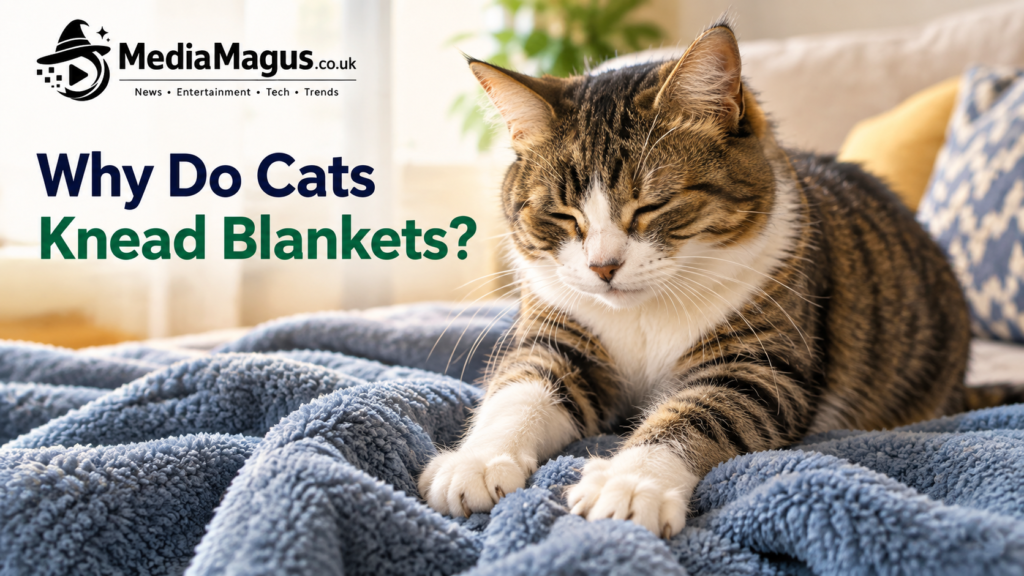

Cats have many behaviors that seem mysterious to humans, and kneading is one of the most recognizable. A cat may sit on a blanket, cushion, bed, or even a person’s lap and repeatedly push its front paws into the soft surface. Some cats knead slowly and quietly, while others become completely absorbed in the activity, sometimes purring at the same time.
So, why do cats knead blankets? In most cases, kneading is a normal and comforting behavior that has roots in kittenhood. Cats may knead because they associate soft surfaces with comfort, relaxation, safety, and familiar experiences. The behavior can also be connected to scent marking and instinctive behaviors that cats carry into adulthood.
Understanding the reason behind kneading can help cat owners interpret their pet’s behavior more accurately. While kneading is usually nothing to worry about, the circumstances surrounding it can provide useful clues about how a cat is feeling.
What Is Cat Kneading?
Cat kneading is a repetitive movement in which a cat alternates its front paws against a soft surface. The cat may extend and retract its claws while pressing its paws into a blanket, pillow, bed, clothing, or a person’s body. Some cats knead with both paws in a steady rhythm, while others use a slower or less coordinated movement.
Kneading is sometimes called “making biscuits” because the paw movements resemble someone working dough. The behavior can look especially cute when a cat combines kneading with purring, relaxed eyes, drooping whiskers, or gentle head movements.
Although adult cats commonly knead, the behavior begins much earlier in life. Kittens instinctively press their paws against their mother’s abdomen while nursing. This movement helps stimulate milk flow during feeding. As cats grow older, the original nursing behavior can become associated with comfort and relaxation.
This means that when an adult cat kneads a blanket, it is not necessarily trying to recreate nursing itself. Instead, the soft texture and repetitive movement may trigger an old comforting association. The blanket can provide the warmth, softness, and security that make the behavior feel natural.
Why Do Cats Knead Blankets?
The most common explanation for why cats knead blankets is comfort. Blankets are soft, warm, and easy for cats to press their paws into. A comfortable blanket can provide the ideal surface for a cat that wants to relax, settle down, or prepare for sleep.
Kneading can also be connected to emotional security. Cats often develop strong preferences for particular sleeping areas, fabrics, toys, and household spaces. If a cat repeatedly kneads the same blanket, that object may have become part of its familiar comfort zone.
The behavior can therefore be a sign that the cat feels relaxed in its surroundings. A cat that chooses to knead while resting near its owner may also associate that environment with safety.
Another reason is instinct. Cats have inherited behavioral patterns from their wild ancestors, and some of these patterns remain even though domestic cats no longer need them for survival. Kneading may have served practical purposes for cats in earlier environments, including preparing a comfortable resting area.
For modern indoor cats, those instincts can appear during everyday activities. A blanket may simply provide the right texture and environment for the behavior to occur.
Why Do Cats Knead Blankets and Purr?
Kneading and purring often occur together because both behaviors can appear when a cat is relaxed. A cat may climb onto a blanket, begin pressing its paws into the fabric, and start purring within a few moments.
Purring is commonly associated with contentment, although cats can also purr in other situations. When a cat is comfortably positioned on a familiar blanket, has relaxed body language, and is not showing signs of distress, kneading combined with purring is generally consistent with a calm and comfortable state.
The repetitive paw movement may help a cat settle into a relaxed routine. Much like humans may have comforting habits before sleeping, cats can develop their own routines around resting.
Owners may notice that kneading becomes more frequent during quiet periods. A cat may knead a blanket before taking a nap, after receiving affection, or when sitting beside a trusted person.
Why Do Cats Knead Soft Blankets?
Texture is an important part of kneading behavior. Cats have sensitive paws containing nerve endings that help them gather information about surfaces. A soft blanket provides resistance without being too hard, making it comfortable for repeated paw movements.
The softness may also remind cats of experiences from kittenhood. Although scientists cannot know exactly what an individual cat is thinking, the connection between kitten nursing behavior and adult kneading provides a strong behavioral explanation.
Different cats can have different preferences. One cat may prefer a thick fleece blanket, while another may prefer a knitted throw, soft towel, pillow, or piece of clothing.
This explains why some cats ignore hard surfaces but immediately begin kneading when they find a particularly soft blanket. The physical texture appears to be an important part of what makes the behavior satisfying.
Why Do Cats Knead Blankets Before Sleeping?
Many cats knead shortly before settling down to sleep. This can be understood as part of a relaxation routine. The cat finds a comfortable location, moves around until it is satisfied with the position, kneads the soft surface, and then settles down.
Cats naturally spend a significant amount of time resting and sleeping. Creating a comfortable resting area is therefore an important part of their daily behavior. Kneading can become part of the process of preparing that area.
There is also an instinctive explanation. Wild cats may press down vegetation or other materials before resting. Although the domestic cat’s blanket does not need to be prepared in the same way, the underlying movement may remain as an inherited behavioral pattern.
A cat kneading before sleep is usually not a sign that something is wrong. If the cat otherwise eats normally, plays normally, uses the litter box normally, and behaves comfortably, the kneading is generally considered a normal part of its routine.
Why Do Cats Knead Their Owners Instead of Blankets?
Some cats prefer kneading people rather than blankets. A cat may climb onto a person’s lap and begin pressing its paws against their legs, stomach, chest, or clothing.
This behavior can occur because the person provides warmth and familiarity. Cats often form strong social bonds with people they trust, and sitting close to a familiar person can be comforting.
A person’s clothing may also provide a soft surface. If the cat kneads a sweater, blanket, or soft trousers while sitting on someone’s lap, the behavior may involve both the texture and the social environment.
Kneading a person does not necessarily mean that the cat is trying to hurt them. However, claws can make the behavior uncomfortable. If necessary, an owner can place a soft blanket between themselves and the cat without punishing or frightening the animal.
Does Kneading Mean a Cat Loves You?
Kneading can occur when a cat is comfortable around a person, but it should not be interpreted as a direct scientific measurement of affection. Cats communicate through many behaviors, and kneading is only one part of that communication.
When a cat voluntarily sits beside someone, relaxes its body, purrs, kneads, slow blinks, or remains close, these behaviors can collectively indicate comfort and trust. The overall body language matters more than one individual action.
Cats are also individuals. Some cats knead frequently, while others rarely knead. A cat that does not knead is not necessarily less attached to its owner.
The important point is that kneading is generally compatible with a positive emotional state when the rest of the cat’s behavior appears relaxed. Owners should consider the entire context rather than assigning one fixed meaning to the behavior.
Why Do Cats Knead Blankets With Their Claws Out?
Cats may extend their claws while kneading because the movement naturally involves flexing and stretching the toes. This does not automatically mean the cat is aggressive or trying to scratch.
During kneading, cats repeatedly push their paws downward and retract them. The claws may become visible as part of this movement. Some cats keep their claws mostly covered, while others extend them more noticeably.
Claw extension can become more obvious when a cat is deeply relaxed. If the behavior is directed toward a thick blanket, the claws may simply sink into the fabric.
Owners who find the claws uncomfortable can redirect the cat toward a thicker blanket or place another soft layer underneath. Regular nail trimming can also reduce accidental scratches.
Punishing the cat for kneading is generally unnecessary because kneading itself is a normal behavior. Providing an appropriate soft surface is usually a better solution.
Is Kneading a Sign of Stress?
Kneading is most often associated with comfort, but no single cat behavior should be interpreted without considering the surrounding circumstances. A cat may display familiar behaviors for different reasons depending on the situation.
If a cat suddenly begins kneading much more frequently while also hiding, avoiding interaction, eating less, vocalizing unusually, or showing other changes in behavior, the overall change deserves attention.
The key issue is not kneading by itself. A relaxed cat that kneads a blanket before sleeping is very different from a cat displaying multiple unusual behaviors at the same time.
Owners should watch for broader changes rather than assuming that increased kneading automatically means stress. Cats can be sensitive to changes in their environment, including new furniture, new animals, household activity, changes in routine, or unfamiliar visitors.
Why Do Cats Knead Blankets and Bite Them?
Some cats knead a blanket and then gently bite, suck, lick, or chew the fabric. This can sometimes be connected to kittenhood behaviors and comfort seeking.
Soft fabrics can trigger behaviors associated with nursing and early development in some cats. Certain cats may develop a particularly strong attraction to fleece, wool, blankets, or other fabrics.
Gentle fabric licking is not necessarily dangerous. However, owners should pay attention if the cat is actually swallowing pieces of fabric. Repeated ingestion of non food materials can create a risk of digestive problems.
If a cat persistently chews and swallows fabric, the behavior should not simply be dismissed as cute. A veterinarian can help determine whether there is an underlying behavioral or medical issue that needs attention.
Why Do Cats Knead Blankets With Their Back Legs?
Most classic kneading involves the front paws, but cats can sometimes move their back legs during the process. The exact movement varies considerably between individual cats.
A cat may shift its weight, stretch its hind legs, or adjust its position while kneading. These movements can be part of getting comfortable rather than a separate behavior with one specific meaning.
Some cats also knead in unusual positions. They may lie on their side, stand partially upright, or stretch their body while pressing their paws into a blanket.
These variations are generally normal if the cat appears comfortable. Cat behavior can be surprisingly individual, and not every kneading pattern has a single universal explanation.
Does Kneading Mean My Cat Is Happy?
Kneading can be associated with relaxation and contentment, particularly when it occurs alongside other signs of comfort. A cat that is resting on a familiar blanket, purring softly, and maintaining a relaxed posture may simply be enjoying a comfortable moment.
Other signs of a relaxed cat can include half closed eyes, relaxed ears, a loose body posture, gentle grooming, and choosing to remain near familiar people.
However, kneading alone should not be used to determine whether a cat is happy. Cats communicate through combinations of behaviors, facial expressions, posture, vocalizations, and daily routines.
The best way to understand your cat is to observe what is normal for that individual animal. Changes from its usual behavior are often more informative than any single behavior viewed in isolation.
Why Do Cats Knead Certain Blankets but Ignore Others?
Cats can be surprisingly selective about fabrics. One blanket may become a favorite kneading surface while another is completely ignored.
Texture, temperature, smell, thickness, and location can all influence a cat’s preference. A blanket that carries a familiar household scent may also feel more reassuring than a new blanket.
Cats rely heavily on scent when interacting with their environment. A familiar blanket may therefore become associated with a particular sleeping area or person.
If your cat repeatedly returns to one blanket, there is no need to replace it simply because the behavior looks unusual. The blanket may have become an important comfort object.
Can Kneading Help Cats Relax?
Kneading may function as a self comforting behavior for some cats. The repetitive movement provides predictable sensory stimulation, while the soft surface provides physical comfort.
Repetitive behaviors are common across many animals, particularly during periods of rest. For cats, kneading can become part of a familiar routine that signals a transition toward relaxation.
This may explain why a cat starts kneading after climbing onto a favorite bed or blanket. The behavior may form part of a predictable sequence that ends with sleeping.
Providing a quiet, comfortable resting area can support this natural behavior. A cat does not need to be stopped from kneading simply because humans find the movement unusual.
Should You Stop Your Cat From Kneading Blankets?
In most cases, there is no reason to stop a cat from kneading a blanket. It is generally a normal behavior and can be part of a healthy relaxation routine.
The main reason to intervene is if the behavior causes a practical problem. For example, a cat may accidentally scratch someone, damage delicate fabric, or repeatedly chew and swallow pieces of material.
Instead of punishing the cat, owners can redirect the behavior. A thick blanket, dedicated cat bed, or durable fabric can give the cat an appropriate surface.
Positive redirection is usually easier for both the owner and the cat. The goal is not to eliminate a harmless natural behavior but to make sure it happens safely.
When Should Cat Kneading Become a Concern?
Normal kneading is usually gentle, repetitive, and connected to comfortable situations. Concern is more appropriate when kneading appears alongside other unusual physical or behavioral changes.
For example, if a cat suddenly becomes restless, repeatedly kneads while vocalizing, stops eating, hides for long periods, changes its litter box habits, or shows signs of pain, those symptoms deserve attention.
A sudden behavioral change can have many possible causes. Environmental changes may influence a cat, but medical problems can also affect behavior.
If you are concerned about a noticeable change in your cat’s behavior, a veterinarian can help determine whether further evaluation is appropriate. Kneading itself is rarely the problem. The surrounding changes are what matter.
Why Do Kittens Knead More Than Adult Cats?
Kneading has a particularly clear connection to kittenhood because nursing kittens instinctively press their paws against their mother’s body while feeding.
The movement helps stimulate milk flow and becomes part of the kitten’s early feeding behavior. This early experience may create a strong association between paw pressing, warmth, food, and comfort.
As cats mature, they no longer need to knead their mother while feeding. However, the behavioral pattern can remain.
Adult cats may therefore knead blankets, beds, clothing, or people because the movement has become connected with relaxation. This is one reason the behavior can look so natural and automatic.
Why Do Cats Knead Blankets More at Night?
Cats can be particularly active around evening and nighttime because their natural activity patterns differ from those of humans. Although domestic cats can adapt their schedules to their owners, many remain more alert during dawn and dusk.
When the household becomes quiet at night, a cat may settle into a preferred sleeping location. That can create the perfect opportunity for kneading.
A blanket may become part of the cat’s bedtime routine. The cat climbs onto the surface, kneads it, adjusts its body position, grooms itself, and eventually falls asleep.
If your cat kneads at night but otherwise behaves normally, this is generally not something that needs correction. A comfortable sleeping area can help keep the routine manageable.
Does Kneading Mark a Cat’s Territory?
Kneading may have a scent marking component. Cats have scent glands in several parts of their bodies, including areas around their paws.
When a cat repeatedly presses its paws against a surface, it may leave some of its scent behind. This can contribute to the cat’s sense of familiarity with a particular area.
This does not mean every instance of kneading is primarily territorial. Comfort and instinct are also important explanations.
A favorite blanket may become especially attractive because it smells familiar to the cat. The combination of familiar scent and soft texture can make the object a preferred resting surface.
Why Do Cats Knead Blankets After Being Petted?
Some cats begin kneading after receiving affection because petting can create a relaxed emotional state. Once comfortable, the cat may move onto a blanket and start kneading.
This can become part of a predictable social routine. The cat receives attention, becomes relaxed, finds a comfortable surface, and begins its familiar kneading behavior.
Cats often develop routines around interactions with trusted people. A particular chair, blanket, time of day, or person may become connected with relaxation.
As long as the cat’s body language remains comfortable, kneading after petting is usually a normal behavior rather than something that requires intervention.
How to Give Your Cat a Safe Kneading Blanket
If your cat loves kneading, providing a dedicated blanket can be a simple way to support the behavior. Choose a durable fabric that can tolerate repeated claw movement.
Avoid blankets that easily shed threads or contain loose pieces that your cat could swallow. Check the fabric regularly for damage, particularly if your cat also likes to chew or suck on blankets.
Place the blanket in an area where your cat already enjoys resting. A quiet corner, cat bed, sofa area, or familiar sleeping spot may work well.
You can also keep one dedicated blanket near your favorite sitting area if your cat regularly kneads your lap. This allows the cat to continue the behavior while giving you some protection from claws.
What Cat Owners Should Understand About Kneading
The most important thing to understand about kneading is that it is usually normal. It is not automatically a sign of anxiety, aggression, hunger, or illness.
Kneading is connected to several aspects of feline behavior, including kittenhood, comfort, soft textures, relaxation, instinct, and potentially scent communication.
There is also considerable variation between cats. Some knead every day, while others rarely do it. Some use blankets, while others prefer clothing, cushions, beds, or human laps.
Instead of asking what kneading means in every cat, owners should consider the context. Looking at the cat’s complete body language and daily behavior provides a much more accurate picture.
Frequently Asked Questions About Cats Kneading Blankets
Why do cats knead blankets?
Cats commonly knead blankets because the soft surface feels comfortable and may remind them of kittenhood. Kneading is also associated with relaxation and familiar resting routines.
For most cats, this behavior is completely normal. It can occur before sleeping, while purring, or while spending time with a trusted person.
Why does my cat knead and purr at the same time?
Kneading and purring often appear together when a cat is relaxed. The combination can be part of a comfortable resting routine.
If your cat also has relaxed body language and normal daily behavior, there is usually no reason to be concerned about this combination.
Why does my cat knead my blanket before sleeping?
Kneading may help your cat settle into a comfortable resting routine. The soft texture of the blanket can provide a suitable surface for the repetitive paw movement.
Cats may also retain instinctive behaviors associated with preparing a comfortable resting area. The blanket simply provides a convenient modern version of that surface.
Is kneading a sign that my cat loves me?
Kneading can occur when a cat feels comfortable around a trusted person, but it should not be treated as a direct measurement of affection.
Look at the complete body language. Relaxed posture, voluntary closeness, gentle interaction, slow blinking, and calm behavior can provide additional clues about the cat’s comfort and social bond.
Should I stop my cat from kneading?
Usually, no. Kneading is a normal feline behavior and generally does not need to be stopped.
If claws are causing scratches or the cat is damaging fabric, provide a thick blanket or another suitable surface. Redirecting the behavior is generally preferable to punishment.
Why does my cat knead blankets and then bite them?
Some cats lick, suck, or gently chew soft fabrics as part of comfort seeking. This may be connected to behaviors that began during kittenhood.
If your cat swallows pieces of fabric, however, the situation is different. Fabric ingestion can create health risks and should be discussed with a veterinarian.
Do all cats knead?
No. Cats have individual personalities and behavioral preferences. Some cats knead frequently, while others rarely or never knead.
A cat that does not knead is not necessarily unhappy or less attached to its owner. Feline communication involves many different behaviors.
When should I worry about my cat kneading?
Kneading alone is usually not concerning. Pay more attention if it suddenly changes or occurs alongside symptoms such as reduced appetite, hiding, unusual vocalization, pain, restlessness, or other significant behavioral changes.
If several unusual symptoms appear together, contacting a veterinarian can help identify the cause.
Conclusion
So, why do cats knead blankets? The simplest answer is that kneading is a natural feline behavior strongly associated with comfort, relaxation, kittenhood, and instinct. Soft blankets provide the ideal surface for cats to perform this repetitive paw movement, especially when they are preparing to rest.
For many cats, kneading is simply part of feeling comfortable. A favorite blanket can become a familiar object that provides warmth, softness, and a recognizable scent. Some cats knead while purring, some knead before sleeping, and others knead their owner’s lap.
The behavior can vary significantly from one cat to another, so there is no single explanation that applies to every situation. What matters most is the overall context and the cat’s normal behavior.
You may also read more blogs