
If you are planning to purchase axolotl, choosing the animal itself is only one part of the process. Axolotls are unusual aquatic salamanders known for their external gills, permanent aquatic lifestyle and remarkable regenerative abilities. Their distinctive appearance has made them increasingly popular among exotic pet keepers.
However, an axolotl is not a beginner friendly aquarium fish. It has specific requirements for water temperature, filtration, water quality, diet, tank size and handling. A responsible purchase should therefore begin with preparation rather than simply searching for an axolotl for sale.
Before bringing one home, make sure you understand its care requirements, have an appropriate aquarium ready and have identified a reputable breeder or responsible seller. You should also check local laws and regulations because ownership and transportation of exotic aquatic animals can vary by location.
Where Can You Purchase an Axolotl?
There are several places where people may find axolotls for sale, but the quality and reliability of sellers can vary significantly.
A reputable specialist breeder is often one of the better options because experienced breeders generally understand axolotl genetics, feeding, water quality and early development. A responsible breeder should be willing to answer questions about the animal’s age, feeding history, health and lineage where relevant.
Specialist aquatic or exotic pet stores may also sell axolotls. Before purchasing from a store, inspect the animal and its enclosure carefully. Ask how long the axolotl has been there, what it has been eating and what water conditions it has been kept in.
Online sellers may also advertise axolotls. Online purchasing requires additional caution because photographs do not always reveal an animal’s current health or the conditions in which it has been kept. Check the seller’s reputation, shipping practices and live animal policies before committing to a purchase.
Avoid sellers who cannot provide basic information about the animal or who appear more interested in completing a sale than explaining proper care.
How Much Does an Axolotl Cost?
The cost of an axolotl can vary considerably depending on several factors.
Colour or morph is one of the most obvious factors. Common axolotl varieties are generally more accessible, while unusual or selectively bred morphs can command substantially higher prices.
Age, size, genetics, health, availability and breeder reputation can also influence the price. Transportation may add another expense when purchasing from a distant breeder.
The purchase price is only a small part of the overall cost of keeping an axolotl. A prospective owner should also budget for:
- Aquarium or suitable aquatic enclosure
- Filtration equipment
- Water conditioning products
- Aquarium substrate
- Hides and decorations
- Thermometer
- Water testing equipment
- Appropriate food
- Maintenance supplies
- Veterinary care when required
For this reason, searching only for the cheapest axolotl price is not necessarily the best approach. A healthy animal from a responsible source can be a better long term choice than an inexpensive animal purchased without adequate health or breeding information.
How to Choose a Healthy Axolotl
Knowing what a healthy axolotl looks like can help you make a more informed purchasing decision.
A healthy axolotl should generally appear alert and responsive. Its body should have a healthy overall condition without obvious wounds, severe swelling or unexplained abnormalities.
The external gills are particularly noticeable. They should appear reasonably full and healthy rather than severely deteriorated. While gill appearance can change because of environmental conditions, extremely damaged or consistently curled gills may indicate problems.
Look for clear eyes, intact limbs and a normal body shape. The animal should not have obvious fungal growth, open wounds or large patches of damaged skin.
Ask the seller about feeding behaviour as well. An axolotl that has been eating consistently is generally preferable to one with an unexplained history of refusing food.
Health Signs to Look For
Before you purchase an axolotl, check for:
- Clear, undamaged eyes
- Intact legs and toes
- Healthy looking external gills
- Smooth, intact skin
- Normal body condition
- Good responsiveness
- Evidence of regular feeding
- No obvious fungal growth
- No unexplained wounds or severe lesions
- Clean and appropriate housing conditions
Remember that appearance alone cannot guarantee health. Ask questions about the animal’s history and current care conditions before purchasing.
Ask the Seller These Questions
A responsible seller should be comfortable answering reasonable questions.
Ask how old the axolotl is, what it eats, how frequently it is fed and what water parameters it has been maintained in. You can also ask whether the animal has experienced any recent health problems.
Useful questions include:
How old is the axolotl?
Age helps you understand the animal’s approximate size and developmental stage.
What does it eat?
Axolotls commonly eat suitable aquatic animal foods such as earthworms and appropriately sized prepared diets. The seller should be able to explain the animal’s existing feeding routine.
Has it been eating normally?
A feeding history can provide useful information about its condition.
What temperature is it currently kept at?
Axolotls require relatively cool water, and prolonged exposure to excessive temperatures can cause stress and health problems.
What water parameters is it accustomed to?
Knowing the existing conditions can make the transition to a new aquarium easier.
Has it had any health problems?
A transparent seller should disclose known health issues rather than hiding them.
Prepare the Aquarium Before You Purchase
One of the biggest mistakes new owners make is buying an axolotl before preparing its aquarium.
The enclosure should be fully established before the animal arrives. This includes setting up the filtration system, checking the water parameters and ensuring that the temperature is appropriate.
Axolotls produce waste, so biological filtration is important. However, strong water currents can stress them. Filtration should therefore provide effective water quality management without creating excessive flow.
A secure hide can give an axolotl a place to retreat when it wants to feel sheltered.
The aquarium should also be free from sharp decorations and unsuitable objects that could injure the animal or create a swallowing hazard.
What Tank Size Does an Axolotl Need?
A suitable aquarium should provide enough floor space for the axolotl to move comfortably and for the owner to maintain stable water conditions.
A larger aquarium is generally easier to manage than an extremely small one because a greater volume of water can provide more stability when properly filtered and maintained.
The exact tank requirement depends on the axolotl’s size and whether it will be housed alone or with other compatible animals. Axolotls are often best kept individually because they can injure or consume tank mates.
Before purchasing, consider the adult size of the animal rather than choosing an aquarium based solely on its current juvenile size.
Water Temperature Is Extremely Important
Temperature is one of the most important aspects of axolotl care.
Axolotls are cold water amphibians and generally do best in cool, stable water. Excessively warm water can increase stress and may contribute to health problems.
If the room becomes warm, especially during summer, an owner may need an appropriate aquarium cooling solution. Temperature should be monitored with a reliable thermometer rather than estimated by touch.
This is particularly important in warm climates, where maintaining suitable water temperature can require additional planning.
What Should You Feed an Axolotl?
Axolotls are carnivorous aquatic amphibians. Their diet should consist of nutritionally appropriate foods suitable for their size.
Earthworms are commonly used as a food source, while other appropriate aquatic animal foods and formulated axolotl diets may also be used.
Food should be appropriately sized. Oversized food can create a choking or digestive risk, while inappropriate foods can fail to provide balanced nutrition.
Young axolotls generally require more frequent feeding than adults, although the appropriate feeding schedule depends on age, size, body condition and the type of food provided.
Always remove uneaten food when appropriate so that decomposing food does not unnecessarily compromise water quality.
Can You Handle an Axolotl?
Axolotls are fascinating animals to observe, but they are not pets that should be handled frequently.
Their skin is delicate and their bodies are adapted to aquatic life. Handling can cause stress and may damage their protective skin barrier.
If an axolotl must be moved for aquarium maintenance or another necessary reason, use an appropriate method that minimises physical stress and avoids unnecessary contact.
For most owners, the best way to enjoy an axolotl is by observing its natural behaviour rather than treating it like a traditional terrestrial pet.
Should You Purchase a Juvenile or Adult Axolotl?
Both juveniles and adults can be suitable for experienced owners, but there are differences to consider.
Juveniles are often smaller and may require closer attention to feeding and development. Their small size also means that aquarium furnishings and food must be chosen carefully.
Adults are larger and their appearance is more developed, making it easier to see their colour and overall body condition before purchase.
For a first time owner, the most important factor is not simply age but whether the animal is healthy and whether the owner can provide appropriate long term care.
Common Axolotl Morphs
One reason people search for an axolotl for sale is the variety of colours and morphs available.
Commonly encountered varieties include:
Wild Type Axolotl
Wild type axolotls generally have dark pigmentation with lighter or mottled patterns. They retain an appearance that resembles their natural coloration.
Leucistic Axolotl
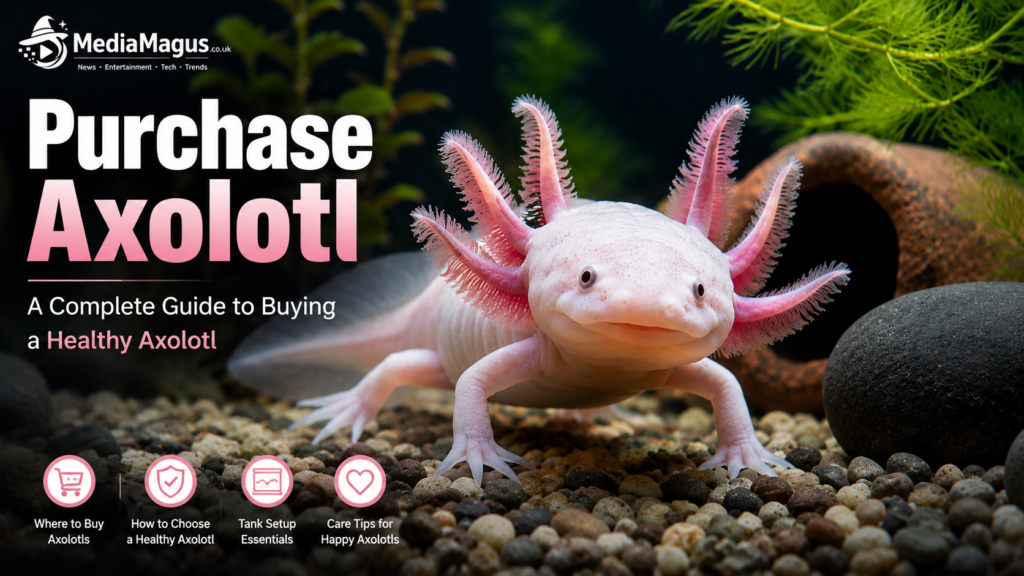
Leucistic axolotls are typically pale or pinkish with visible reddish or pink gills. They are among the most recognisable captive axolotl varieties.
Albino Axolotl
Albino axolotls have reduced pigmentation and may have lighter bodies with distinctive eyes depending on the genetic variety.
Golden Albino Axolotl
Golden albinos can have a yellowish or golden appearance and may develop attractive reflective pigmentation as they mature.
Melanoid Axolotl
Melanoid axolotls have very dark pigmentation and generally lack the reflective pigment seen in some other varieties.
Morph availability varies by breeder and region. A buyer should prioritise health, responsible breeding and appropriate care over unusual appearance alone.
What to Avoid When Buying an Axolotl
Not every online listing or seller is trustworthy.
Be cautious if a seller refuses to provide information about the animal’s age, feeding history or living conditions. Extremely poor housing conditions should also raise concerns.
Avoid purchasing an animal that visibly appears sick simply because the price is low. Although buyers may feel they are helping an animal in distress, purchasing from irresponsible sellers can unintentionally encourage poor breeding and husbandry practices.
Be especially careful with sellers who make unrealistic claims about extremely rare morphs, guaranteed health or effortless care.
A responsible purchase should support ethical animal keeping rather than impulse buying.
Legal Considerations Before You Purchase an Axolotl
Before purchasing an axolotl, check whether ownership is legal in your area.
Rules concerning exotic animals can differ between countries, states, provinces and local authorities. Some jurisdictions may restrict ownership, sale, importation or transportation of axolotls or other amphibians.
If you are purchasing an animal from another region, transportation and import requirements may also apply.
Do not assume that an animal advertised online is automatically legal to own where you live. Check the relevant government wildlife, environmental or animal control authority before completing the purchase.
Axolotl Care After Bringing It Home
The first few days after purchase should be focused on providing a stable environment rather than excessive interaction.
Transfer the axolotl carefully and allow it time to adjust to its new aquarium. Avoid unnecessary handling and monitor its behaviour, appetite and appearance.
Check water quality regularly and maintain the aquarium consistently. Sudden changes in water conditions can be stressful, particularly for an animal that has just experienced transportation.
If you notice serious changes in appearance, persistent refusal to eat, unusual floating, severe lethargy, wounds or other concerning symptoms, seek advice from a veterinarian experienced with amphibians or exotic aquatic animals.
Is an Axolotl a Good Pet?
An axolotl can be an excellent pet for someone who enjoys observing aquatic animals and is prepared to maintain a specialised aquarium.
However, it is not a low maintenance decoration for a fish tank.
The owner must understand water chemistry, temperature management, filtration, feeding and aquarium maintenance. The animal can also live for many years under appropriate captive conditions, making it a long term commitment.
If you are considering an axolotl simply because it looks unusual or is popular on social media, spend time researching its needs before purchasing one.
Purchase Axolotl Responsibly
The best way to purchase an axolotl is to approach the process as a long term animal care decision rather than an impulse purchase.
Research the species, prepare the aquarium first, identify a reputable seller, inspect the animal carefully and ask questions about its history. Consider the ongoing costs of food, water maintenance, equipment and veterinary care.
Most importantly, choose health and responsible husbandry over colour, rarity or a bargain price.
A healthy axolotl from a responsible source, combined with a properly prepared aquarium and knowledgeable owner, has a much better chance of thriving in captivity.
Final Thoughts
If you want to purchase an axolotl, take time to prepare before searching for an animal. Learn about water quality, temperature, feeding, aquarium requirements and local regulations first.
Choose a responsible seller who prioritises animal welfare and is willing to provide information about the axolotl’s history. Inspect the animal carefully, ask questions and avoid making a decision based purely on price or appearance.
You may aslo read more blogs
Frequently Asked Questions About Purchasing an Axolotl
Where can I purchase an axolotl?
You may find axolotls through specialist breeders, reputable exotic pet retailers and some online sellers. Always research the seller and verify local ownership regulations before purchasing.
How much does an axolotl cost?
The purchase price varies according to morph, age, genetics, availability, breeder and location. Remember that the aquarium and ongoing care can cost more than the animal itself.
What is the best axolotl to purchase for a beginner?
A healthy, established axolotl from a reputable breeder is generally a better choice than selecting an animal solely because it has a rare or unusual morph.
How do I know if an axolotl is healthy?
Look for good body condition, intact limbs, healthy looking gills, clear eyes, intact skin and normal responsiveness. Ask the seller about feeding and health history as well.
Can I keep two axolotls together?
Keeping axolotls together can create risks, particularly when animals are different sizes. They can injure or consume one another, so individual housing is often the safer approach.
Do axolotls need a heater?
Axolotls generally require cool water rather than tropical aquarium temperatures. In warm environments, owners may need to focus on cooling rather than heating the aquarium.
Can axolotls live with fish?
Keeping fish with axolotls is generally problematic. Fish may stress, injure or compete with the axolotl, while an axolotl may attempt to eat smaller fish.
Are axolotls easy to care for?
Axolotls can be manageable for a prepared owner, but their aquatic environment requires consistent maintenance. They should not be considered a completely low maintenance pet.
How long do axolotls live?
With appropriate care, captive axolotls can live for many years. Their long potential lifespan means purchasing one should be considered a long term commitment.