
Why Checking Your Engine Oil Regularly Can Save You From Costly Repairs
Learning how to check oil is one of the easiest and most useful car maintenance skills you can develop. Engine oil does much more than simply make engine components slippery. It helps reduce friction between moving parts, carries heat away from internal components, and helps keep the engine operating smoothly. When the oil level becomes too low, important engine components may not receive adequate lubrication. Continuing to drive with insufficient oil can eventually contribute to severe and expensive engine damage.
Checking the oil level takes only a few minutes on most vehicles equipped with a traditional dipstick, yet many drivers rarely perform the check themselves. A dashboard warning light should not be your only indication that something may be wrong. Depending on the vehicle, a warning light can indicate an oil pressure problem rather than simply telling you that the oil level is low. A quick manual check can therefore provide useful information before a minor maintenance issue develops into a major mechanical problem.
Regular oil checks can also help you notice patterns. If your engine oil consistently falls between services, the vehicle may be consuming oil or developing a leak. A small amount of oil loss may not immediately produce obvious symptoms, but repeatedly finding the level below the recommended range is something worth investigating. Checking the oil periodically gives you an opportunity to identify these changes early rather than discovering them after an engine problem occurs.
Everything You Need Before Checking Your Car’s Engine Oil
You do not need professional workshop equipment to check engine oil. In most cases, all you need is a clean lint free cloth or paper towel, access to the vehicle’s owner’s manual, and the correct engine oil if the level turns out to be low. A small funnel can also be helpful because it allows you to add oil cleanly without spilling it around the engine bay.
Before checking the oil, park your car on level ground. A significant slope can affect how oil sits inside the engine’s oil pan and may produce an inaccurate dipstick reading. The engine should also be switched off, and you should follow the manufacturer’s instructions regarding how long to wait before taking the measurement. There is no single waiting period that applies perfectly to every engine because manufacturers design different engines and oil monitoring systems differently.
Your owner’s manual is particularly important when adding oil. Do not assume that any engine oil is suitable simply because it is labelled as motor oil. Vehicles can require specific viscosities and performance specifications. Using the correct oil recommended for your engine is just as important as maintaining the correct quantity.
How to Check Engine Oil Correctly: A Simple Step-by-Step Method
Park Your Car on a Level Surface
Start by parking your vehicle on a reasonably flat surface and engaging the parking brake. Turn the engine off before opening the bonnet and beginning the inspection. A level surface helps the oil settle naturally in the engine’s oil pan and makes the dipstick measurement more reliable.
The correct checking temperature can vary between vehicles. Some manufacturers recommend checking the oil when the engine is cold, while others specify checking after the engine has been operating and then waiting for a particular period. For example, some manufacturer procedures allow a short waiting period after shutting down the engine so that oil can drain back into the oil pan. Always follow the procedure specified for your particular vehicle rather than assuming that one method works for every car.
Locate and Remove the Engine Oil Dipstick
Open the bonnet and identify the engine oil dipstick. On many conventional vehicles, the dipstick has a noticeable handle that may be brightly coloured, although the design and location differ between manufacturers. If you cannot immediately identify it, consult the owner’s manual rather than pulling out an unfamiliar component.
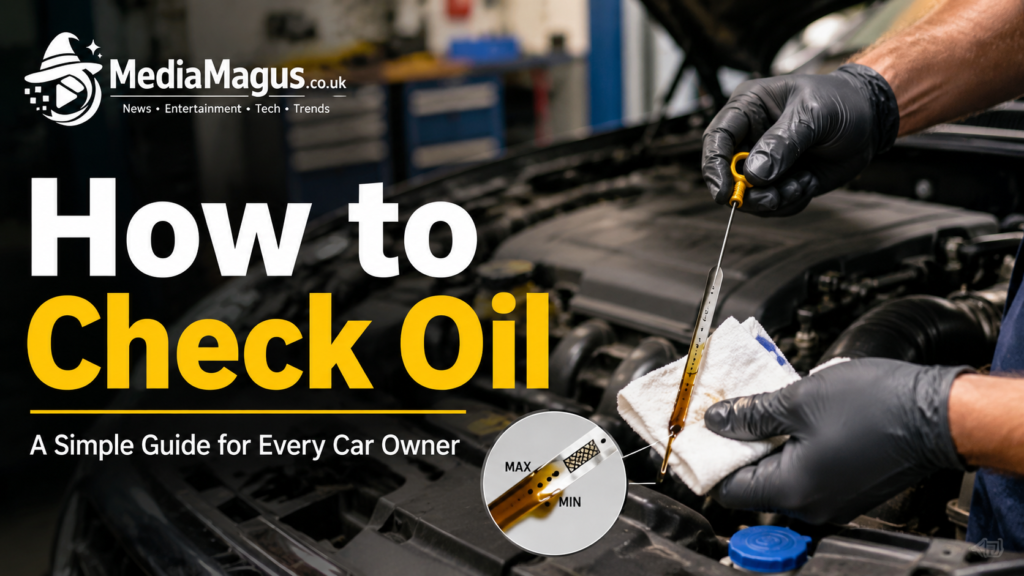
Once you have located the dipstick, carefully pull it completely from its tube. The end of the dipstick contains the measurement area, which usually has two marks, two dots, a crosshatched section, or labels such as MIN and MAX or LOW and FULL. These markings tell you the acceptable operating range for the engine oil.
Clean the Dipstick Before Taking the Reading
After removing the dipstick for the first time, wipe the entire measuring end clean with a lint free cloth or paper towel. This step is important because oil can travel along the dipstick tube while you are removing it, leaving oil in places that do not accurately represent the engine’s level.
Once the dipstick has been cleaned, push it completely back into its tube. Make sure it is seated properly. Pull it out again and hold the measuring end in a position where you can clearly see the oil film. This second reading gives you a much clearer indication of the actual oil level.
Check Where the Oil Sits Between the Marks
Look carefully at the end of the dipstick. The oil should normally be visible within the manufacturer’s specified measurement range. If the oil reaches the area between MIN and MAX, the level is generally within the acceptable range. If it is below MIN or LOW, the engine may require additional oil.
Do not judge the level solely by whether there is oil somewhere on the dipstick. The location of the oil film relative to the markings is what matters. If the dipstick has an unusual design or the markings are difficult to interpret, your owner’s manual should show exactly how the manufacturer expects the reading to be taken.
How to Read an Oil Dipstick and Know If the Level Is Right
Understanding the dipstick is just as important as knowing how to remove it. Different manufacturers use different markings, but the basic principle remains similar. The lower marking represents the minimum acceptable level, while the upper marking represents the maximum. Some vehicles use a textured or crosshatched area instead of clearly labelled MIN and MAX lines.
If the oil is comfortably between the two marks, you normally do not need to add anything simply to reach the upper mark. If it is close to the minimum mark, check your owner’s manual to determine the appropriate procedure for topping it up. If it is clearly below the minimum level, the vehicle needs attention because there may not be enough oil for reliable engine lubrication.
An oil level above the maximum mark should not be ignored either. Many drivers assume that having extra oil is safer than having too little, but excessive oil can also cause problems. Overfilling can interfere with the way the engine operates and may cause oil aeration or other mechanical issues. The goal is not to have as much oil as possible; the goal is to maintain the level specified by the manufacturer.
What to Do When Your Engine Oil Level Is Too Low
If your dipstick shows that the oil is below the recommended range, first identify the correct engine oil specification for your vehicle. This information can usually be found in the owner’s manual or manufacturer’s maintenance documentation. Pay attention to both viscosity and required performance specifications because the correct oil depends on the engine design.
Add oil gradually rather than pouring a large amount into the engine at once. Remove the oil filler cap, use a funnel if necessary, and add a small quantity of the correct oil. Replace the cap, wait briefly according to the manufacturer’s checking procedure, and then check the dipstick again. Repeating this process allows you to approach the correct level without accidentally overfilling the engine.
If the oil level is repeatedly low even after you top it up, do not treat repeated refilling as a permanent solution. A vehicle that regularly loses oil may have a leak, increased oil consumption, or another mechanical issue. In that situation, identifying the reason for the oil loss is more important than simply adding more oil every few days or weeks.
Can You Check Engine Oil Without a Dipstick?
Not every modern vehicle uses a traditional physical dipstick. Some newer cars use an electronic oil level monitoring system that displays the engine oil level through the instrument cluster or infotainment screen. This system can be convenient, but the checking procedure can differ significantly between vehicles.
Some electronic systems require the vehicle to be parked on level ground and may require the engine to reach a particular operating temperature before the measurement can be performed. Other systems may provide instructions directly on the dashboard. Because these systems are manufacturer specific, it is important to follow the exact procedure in the owner’s manual.
If your car does not have a visible dipstick, do not assume that something is missing. Look through the owner’s manual or vehicle information system to determine how oil level is measured. Trying to improvise a manual measurement method could give you misleading information.
What the Colour and Condition of Your Engine Oil Can Tell You
The oil’s appearance can provide some useful clues, although colour alone cannot diagnose an engine problem. Engine oil naturally becomes darker as it circulates through an engine and collects microscopic contaminants. Therefore, dark oil does not automatically mean that the engine is damaged or that the oil needs to be replaced immediately.
However, unusual changes deserve attention. Oil that appears contaminated, has an unusual fuel smell, contains visible particles, or develops an unusual creamy or milky appearance may justify further investigation. These observations need to be considered alongside other symptoms because several different conditions can affect oil appearance.
You should also pay attention to how quickly the oil level changes. If you check the oil periodically and notice that the level consistently drops much faster than expected, investigate the cause. Look for signs of external leaks and consider having the vehicle inspected for excessive oil consumption.
Common Engine Oil Checking Mistakes You Should Avoid
One of the most common mistakes is checking the oil while the vehicle is parked on a significant incline. Even if the engine contains the correct quantity of oil, the angle of the vehicle can affect the dipstick reading. Always use level ground whenever possible.
Another mistake is taking the first dipstick reading as the final measurement. Oil can spread along the measuring surface during removal, making the level difficult to interpret. Wiping the dipstick clean, reinserting it fully, and checking it again produces a much clearer reading.
Adding too much oil is another avoidable problem. Drivers sometimes see a low reading and immediately pour in a large quantity, only to discover that they have exceeded the maximum mark. Adding small amounts and rechecking the dipstick is much safer. You should also avoid choosing oil based solely on its brand or price. The specification recommended for your engine matters more than simply buying a familiar product.
How Often Should You Really Check Your Car’s Oil?
There is no universal number of days that applies to every vehicle. The appropriate frequency depends on factors such as the vehicle’s age, engine design, mileage, condition, driving habits, and the manufacturer’s recommendations. Your owner’s manual and maintenance schedule should therefore be your primary sources of guidance.
It is particularly sensible to check the oil before a long road trip, when buying a used vehicle, after noticing an oil related warning, or if you already know that your engine consumes oil. A quick inspection can provide reassurance before a long journey and may reveal a problem that would otherwise go unnoticed.
Drivers of older vehicles may also benefit from more frequent checks if the engine has a history of oil consumption. The key is consistency. A simple routine of checking the oil periodically is far more useful than waiting until the vehicle develops a warning light or obvious mechanical symptom.
When Low Engine Oil Could Mean a Serious Problem
Finding a low oil level once does not necessarily mean that your engine has a major fault. Oil can gradually be consumed during normal operation, and some engines use more oil than others. However, a pattern of repeated oil loss should not be ignored.
Look for evidence of an external leak, such as fresh oil beneath the vehicle or oily areas around accessible engine components. You should also pay attention to unusual engine noises, smoke, changes in performance, or warning lights. These symptoms can indicate that the problem goes beyond simply needing a small oil top up.
An oil pressure warning is particularly important. If an oil warning light appears while driving, do not automatically assume that adding oil later will solve the problem. Oil pressure problems can become serious very quickly. If your vehicle displays a critical oil pressure warning, follow the manufacturer’s instructions and seek appropriate professional assistance rather than continuing to drive normally.
Final Thoughts: Make Oil Checks Part of Your Car Care Routine
Knowing how to check oil is a small skill that can make a meaningful difference to routine vehicle maintenance. The process is simple: park on level ground, follow your vehicle’s recommended checking procedure, clean and reseat the dipstick, read the oil level carefully, and add only the correct oil when necessary. Taking a few minutes to perform this check can help you recognize low oil levels and potential problems before they become more expensive.
Most importantly, do not treat the dipstick as simply a tool for deciding whether to add more oil. It can also help you monitor changes in your engine over time. If the level repeatedly drops, the oil appears unusual, the engine develops new symptoms, or an oil warning appears, investigate the underlying cause. Good vehicle maintenance is not about reacting to problems at the last moment; it is about noticing small changes early and taking the appropriate action.
You may also read more blogs
Frequently Asked Questions About Checking Engine Oil
How do you check oil in a car?
Park the car on level ground, switch off the engine, and follow the manufacturer’s recommended checking procedure. Remove the dipstick, wipe it clean, insert it fully again, then remove it and check where the oil reaches relative to the minimum and maximum markings.
Should I check engine oil when the engine is hot or cold?
The correct method depends on the vehicle. Some manufacturers recommend checking oil before starting the engine, while others specify checking after the engine has been switched off for a particular amount of time. Your owner’s manual provides the most accurate procedure for your specific engine.
How high should oil be on the dipstick?
The oil should normally sit within the marked range between the minimum and maximum indicators. It does not need to exceed the minimum simply because you want the highest possible level, and it should never be intentionally filled above the maximum marking.
Can I check engine oil while the car is running?
For a conventional dipstick measurement, the engine should be switched off. The exact checking procedure should always follow the vehicle manufacturer’s instructions. Never remove the oil filler cap or attempt maintenance around a running engine unless the manufacturer specifically provides a procedure requiring it.
What happens if engine oil is too low?
Low engine oil can reduce the lubrication available to internal engine components. If the condition becomes severe and the engine continues operating without adequate lubrication, friction and heat can contribute to serious mechanical damage.
What happens if I put too much oil in my car?
Overfilling can also cause engine problems. Excess oil can become aerated and may interfere with normal engine operation. If the oil level is above the maximum marking, consult the manufacturer’s instructions or have the vehicle inspected rather than continuing to add oil.
How often should I check my engine oil?
Follow your vehicle manufacturer’s recommendations, but periodic checks are especially useful before long journeys, on older vehicles, when oil consumption is suspected, or whenever you notice signs of an oil leak or warning.
What if my car does not have an oil dipstick?
Some vehicles use an electronic oil level measurement system. Check the owner’s manual or vehicle display for the correct procedure because electronic systems can require specific engine temperatures, parking conditions, or measurement steps.