
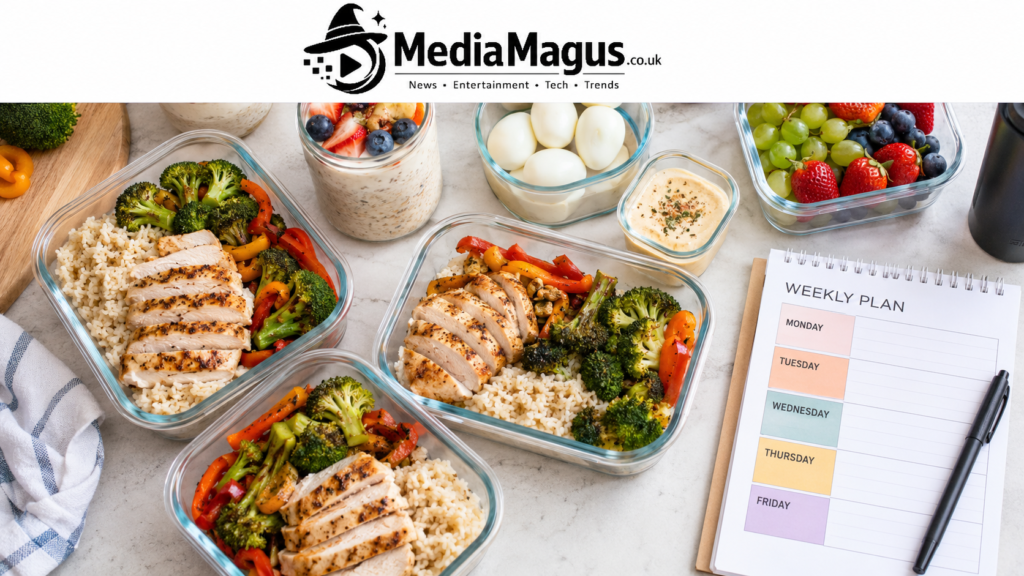

How to Meal Prep for a Busy Work Week: Meal prepping doesn’t need to mean spending your entire Sunday cooking five identical containers of chicken and rice. The goal is much simpler: do enough preparation ahead of time that weekday meals require very little thought, chopping, or cleanup.
A good meal prep routine gives you ready to eat breakfasts, easy lunches, and flexible dinner ingredients without making your food feel repetitive. With a little planning, even one or two hours of preparation can cover most of a busy work week.
The trick is to prep strategically rather than trying to cook everything in advance.
Start With Your Week, Not a Recipe
Before opening a recipe app or making a grocery list, look at your actual schedule.
If you have late meetings on Tuesday and Thursday, those are the nights that need the easiest meals. If Wednesday is usually relaxed, you can plan something that requires a little more cooking.
Think about how many meals you realistically need. You might only need five lunches and three dinners rather than 15 fully prepared meals.
A simple weekly plan could look like this:
- Breakfast: overnight oats or eggs with toast
- Lunch: chicken, rice and roasted vegetables
- Snack: fruit, yoghurt and nuts
- Dinner: flexible meals using prepped ingredients
- Emergency meal: frozen leftovers or a quick sandwich
This approach prevents one of the biggest meal prep mistakes: preparing far more food than you will actually eat.
Choose Meals That Share Ingredients
You don’t need five completely different recipes.
Instead, choose two or three main proteins, a couple of carbohydrates and several vegetables that can be mixed into different meals.
For example, you could prepare:
- Grilled chicken
- Roasted potatoes
- Cooked rice
- Roasted broccoli and peppers
- Boiled eggs
- A simple salad
- Greek yoghurt
- Fresh fruit
On Monday, the chicken can go with rice and vegetables. On Tuesday, you could put the chicken into a wrap with salad. Later in the week, the same ingredients can become a rice bowl with a different sauce.
That’s much easier than preparing separate recipes for every day.
Make a Short Grocery List
Once you know what you’re eating, write the shopping list around those meals.
A practical meal prep grocery list might include:
Protein
Chicken breast or thighs, eggs, tuna, beans, lentils, Greek yoghurt or another protein you regularly eat.
Carbohydrates
Rice, potatoes, oats, whole grain bread, pasta, tortillas or quinoa.
Vegetables
Choose vegetables that store well after cooking, such as broccoli, carrots, bell peppers, green beans and cauliflower. Add some fresh salad vegetables for meals where you want more crunch.
Fruit
Apples, bananas, oranges, berries or whatever you normally enjoy.
Flavour
Don’t underestimate sauces and seasonings. Garlic, lemon, herbs, spices, yoghurt based sauces, salsa and simple dressings can make the same basic ingredients taste completely different.
Use One Prep Session Efficiently
You don’t have to cook everything one item at a time.
Start with the foods that take the longest.
Put rice or potatoes on first. At the same time, season your chicken and put it in the oven or air fryer. While those cook, wash vegetables, prepare salad ingredients and boil eggs.
A typical 90 minute prep session might look like this:
First 10 minutes: Decide portions and start rice or another grain.
Next 20 minutes: Season chicken and prepare vegetables.
Next 30 minutes: Cook the protein and roast vegetables.
Next 15 minutes: Prepare eggs, salad ingredients, sauces or overnight oats.
Final 15 minutes: Let hot food cool appropriately, portion meals and clean the kitchen.
The exact timing doesn’t matter. The principle does: overlap tasks instead of waiting for one thing to finish before starting another.
Don’t Assemble Every Meal Too Early
This is one of the easiest ways to keep meal prepped food enjoyable.
You don’t necessarily need seven identical containers sitting in your refrigerator.
Instead, store some ingredients separately.
Keep cooked chicken, rice and vegetables in separate containers when possible. Store sauces separately too. Then assemble your lunch the night before or that morning.
This helps prevent soggy vegetables, wet wraps and salads that have lost their texture.
It also gives you more flexibility. If you’re not hungry for rice on Wednesday, you can turn the chicken into a wrap instead.
Plan Easy Breakfasts
Breakfast should require almost no decision making on a busy morning.
Overnight oats are useful because you can prepare several portions at once. A basic version can contain oats, milk or yoghurt, fruit and nuts or seeds.
Eggs are another practical option. Hard boiled eggs can be prepared ahead and combined with toast, fruit or vegetables.
If you prefer smoothies, prepare the solid ingredients in freezer bags or containers ahead of time. In the morning, add your liquid and blend.
The best breakfast is not necessarily the healthiest looking recipe online. It’s the one you’ll actually eat consistently.
Prepare Lunches You Won’t Get Bored Of
Lunch is often where meal prepping saves the most time.
Instead of preparing five identical meals, create a basic formula:
Protein + carbohydrate + vegetables + sauce
Then change one component throughout the week.
For example:
- Chicken + rice + broccoli + chilli sauce
- Chicken + wrap + salad + yoghurt dressing
- Chicken + potatoes + vegetables + garlic sauce
The ingredients overlap, but the meals don’t feel exactly the same.
You can also freeze some portions if you know you won’t eat them within a few days.
Keep Dinners Flexible
Dinner doesn’t have to be fully meal prepped.
You might prepare the ingredients rather than the finished dish.
Cook some chicken, chop vegetables and prepare rice. Then, on Wednesday evening, you can turn those ingredients into fried rice, a stir fry, a wrap or a bowl.
This gives you the convenience of meal prep without feeling like you’re eating leftovers every night.
Another useful strategy is to cook extra portions at dinner. If you’re already making a large pot of chilli or a tray of roasted chicken, make enough for tomorrow’s lunch.
That’s meal prep without a separate meal prep session.
Portion Food Based on Your Appetite
Meal prep doesn’t require every container to contain the same amount.
If you know you eat a larger lunch on workout days or have a lighter breakfast, prepare accordingly.
Use your normal appetite and routine as the guide rather than copying portions from someone else’s meal plan.
If you’re tracking calories or following a specific nutrition plan, portioning with a kitchen scale can make things more consistent. Otherwise, simple portions are usually enough for everyday meal preparation.
Store Food Properly
Good preparation can be wasted if food isn’t stored safely.
Refrigerate cooked food promptly rather than leaving it sitting out for hours. Use clean, airtight containers and keep your refrigerator at a safe temperature.
If you won’t eat something within its safe refrigerated storage period, freeze it instead.
Label containers with the date when necessary. It takes a few seconds and saves you from wondering whether that container of cooked chicken is still good later in the week.
When in doubt about the safety of a food, don’t rely on smell alone. Follow reliable food safety guidance.
Make Snacks Automatic
Snacks are easy to overlook during meal prep, yet they’re often what sends people to a vending machine or takeaway shop during a busy afternoon.
Prepare a few grab and go options:
- Apples or bananas
- Greek yoghurt
- Nuts
- Boiled eggs
- Cut vegetables
- Hummus
- Cheese
- Homemade energy bites
Keep some at home and, if appropriate, a few shelf stable options at work.
The idea isn’t to snack constantly. It’s to have a sensible option available when you genuinely need one.
Don’t Try to Make Meal Prep Perfect
A meal prep system should make your week easier, not create another chore you have to complete perfectly.
Some weeks you’ll have plenty of time to cook. Other weeks you’ll be exhausted and only manage to prepare rice, eggs and one protein.
That’s fine.
You can also use convenient foods alongside homemade meals. Frozen vegetables, canned beans, pre washed salad and ready to cook ingredients can save considerable time.
There is no prize for making every component from scratch.
A Simple One Week Meal Prep Example
Here’s a straightforward setup for someone who wants to prepare most of their weekday food without spending the entire weekend in the kitchen.
Breakfast: Overnight oats for three mornings and eggs with toast for two.
Lunch: Chicken, rice and roasted vegetables for three days, with one portion frozen for later.
Dinner: Prepped chicken and vegetables used in wraps, rice bowls and a quick stir fry.
Snacks: Fruit, yoghurt, nuts and boiled eggs.
Emergency option: A frozen homemade meal for the evening when work runs late.
This gives you structure without locking you into the exact same meal every day.
What to Do on Your First Meal Prep Day
If you’ve never meal prepped before, don’t attempt an elaborate seven day plan.
Start small.
Pick one breakfast, one lunch and two easy dinner options. Buy only the ingredients you need. Spend around an hour preparing them and see what actually gets eaten.
After the first week, you’ll learn useful things about yourself. Maybe you don’t enjoy reheated chicken. Maybe you need more snacks than expected. Maybe three prepared lunches are enough because you eat out once a week.
Adjust from there.
The best meal prep routine is the one that fits your real schedule rather than an imaginary perfectly organised week.
The Goal Is a Less Complicated Week
Meal prep works best when you stop treating it like a massive cooking project.
You don’t need seven perfectly arranged containers, complicated recipes or an entire afternoon in the kitchen. You need a few reliable foods, a realistic plan and enough preparation to make the busy parts of your week easier.
Start with three or four meals. Prep the ingredients you use most. Keep sauces and components separate when it helps. Freeze what you won’t eat soon.
Once you find a routine that fits your schedule, meal prep becomes less of a weekly task and more of a simple habit that saves you time when you need it most.
You may also read more blogs
Frequently Asked Questions
How many days ahead should I meal prep?
For most people, preparing several days of food at once is practical. You can refrigerate meals you’ll eat soon and freeze appropriate portions for later. Follow food safety recommendations for specific storage times.
Is meal prepping cheaper than eating out?
It often can be, particularly if you buy ingredients in sensible quantities and use them across multiple meals. Cooking larger batches also reduces the cost and time associated with preparing individual meals.
What foods are best for meal prep?
Foods that hold their texture and flavour after refrigeration or freezing work particularly well. Rice, potatoes, cooked chicken, beans, lentils, roasted vegetables, eggs and overnight oats are common choices.
Can I meal prep without eating the same food every day?
Absolutely. Prepare core ingredients separately and use different sauces, wraps, vegetables or seasonings to create different meals throughout the week.
How long does meal prepping take?
A basic session can take around an hour to 90 minutes, especially when you cook several things simultaneously. You can also reduce the workload by preparing only lunches and a few breakfast or snack items.