
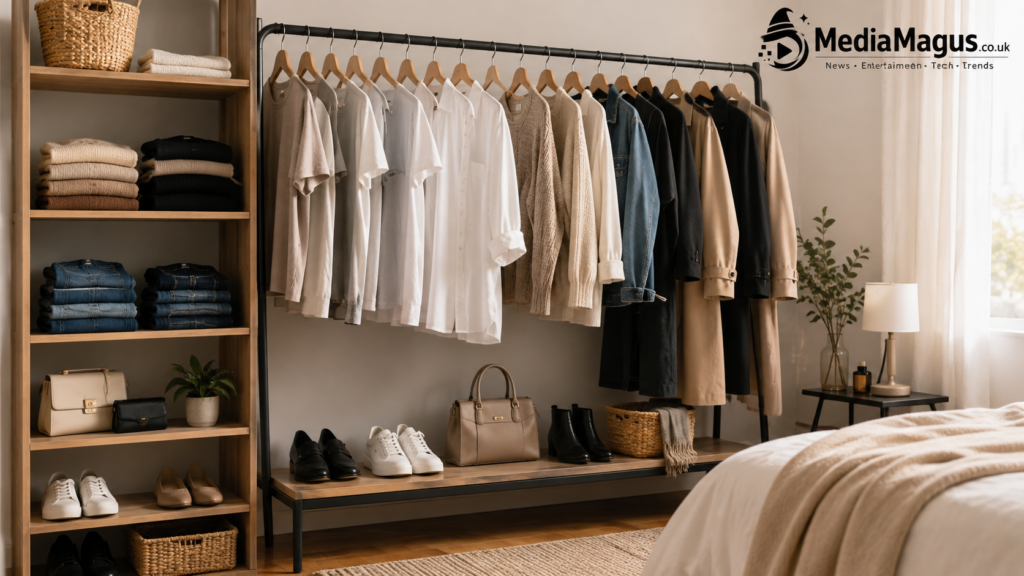

A capsule wardrobe is a carefully selected collection of clothing designed to make dressing easier while reducing unnecessary purchases. Instead of having a wardrobe filled with clothes that rarely get worn, you focus on a smaller selection of versatile pieces that work well together.
A typical capsule wardrobe can include everyday essentials such as tops, trousers, jeans, dresses, skirts, jackets, knitwear and shoes. The exact number is not important. What matters is that the clothes suit your lifestyle, fit properly and can be combined into multiple outfits.
The concept is based on simplicity and intentional shopping. Rather than buying something because it is on sale or currently trending, you ask whether the item fills a genuine gap in your wardrobe.
This makes a capsule wardrobe particularly useful for people who want to save money. When you own fewer but more useful clothes, you can reduce impulse purchases and get more value from every item.
Why Build a Capsule Wardrobe on a Budget?
Learning how to build a capsule wardrobe on a budget can help you save money while creating a more organised and practical personal style. You do not need designer clothing, expensive basics or a large shopping budget to create a wardrobe that looks polished.
The biggest financial advantage comes from buying intentionally. If a £20 or $25 top can be worn with five different outfits, it may provide more value than several inexpensive pieces that only work with one specific combination.
A budget capsule wardrobe can also reduce the pressure to constantly buy new clothes. Once you understand which colours, cuts and fabrics work for you, shopping becomes more selective.
There is also an environmental benefit. Buying fewer clothes, wearing them more frequently and taking better care of them can reduce clothing waste. Even small changes in shopping habits can make your wardrobe more sustainable.
Assess Your Current Wardrobe Before Shopping
One of the biggest mistakes beginners make is shopping before looking at what they already own. You may already have many of the pieces required for a capsule wardrobe sitting in your wardrobe.
Start by taking everything out and sorting your clothing into simple categories. Separate everyday clothes, workwear, occasion wear, seasonal items, outerwear and accessories.
Then ask yourself a few practical questions. Which pieces do you wear regularly? Which clothes fit comfortably? Which items make you feel confident? Which pieces have been sitting untouched for months?
Pay attention to repeated patterns. You may discover that you always reach for neutral tops, straight leg trousers, simple dresses or comfortable trainers. Those preferences can become the foundation of your capsule wardrobe.
Do not throw everything away simply because it does not fit the traditional idea of a capsule wardrobe. Some items may have sentimental or occasional value. The goal is to create a useful everyday wardrobe, not to eliminate everything you own.
Define Your Personal Style
A capsule wardrobe works best when it reflects your actual lifestyle rather than someone else’s aesthetic. Before purchasing anything, think about how you normally spend your week.
Someone working in an office may need smart trousers, shirts, blazers and polished shoes. A university student may prioritise jeans, T shirts, casual jackets and comfortable footwear. Someone working from home may need a mixture of comfortable basics and presentable tops.
Your style preferences matter too. You might prefer minimalist outfits, classic clothing, streetwear, smart casual looks, Scandinavian inspired fashion or feminine styling.
Create a simple list of words that describe the look you want. For example, you could choose classic, comfortable and neutral” or “casual, modern and practical.
This makes shopping easier because you have a clear standard. If an item does not fit your lifestyle or style description, you can leave it behind even if it looks attractive in the shop.
Choose a Realistic Capsule Wardrobe Size
There is no universal number of pieces required for a capsule wardrobe. Some people prefer a very small wardrobe, while others need more options because of work, climate, hobbies or social activities.
Instead of following an arbitrary clothing count, consider how frequently you do laundry, how many different situations your clothes need to cover and how often you change outfits.
A practical beginner capsule might contain several tops, a few pairs of trousers or jeans, one or two dresses or skirts if appropriate, a jacket or cardigan, outerwear, shoes and a small selection of accessories.
The key is versatility. Ten highly compatible pieces can create significantly more outfits than twenty items that do not coordinate.
Start small if you want. You can always add pieces later when you identify a genuine wardrobe gap.
Build Around Essential Clothing Categories
A successful affordable capsule wardrobe usually contains a mixture of basics and personality pieces. Basics form the foundation, while statement items prevent the wardrobe from becoming boring.
For tops, consider simple T shirts, shirts, blouses, knitwear and lightweight layers. Choose styles that can be worn alone or underneath jackets and sweaters.
For bottoms, consider the trousers, jeans, skirts or shorts that match your lifestyle. A well fitting pair of jeans can often work with casual T shirts, knitwear, shirts and jackets.
Outerwear is another important category. A simple jacket, coat or blazer can completely change the appearance of an outfit and make basic clothing look more polished.
Shoes should be selected according to real life needs. Instead of buying several pairs that look different but serve the same purpose, consider versatile options that can work across multiple outfits.
Accessories can add personality without requiring a large investment. Belts, scarves, bags and simple jewellery can change the appearance of familiar clothing.
Choose a Versatile Colour Palette
A coordinated colour palette makes a budget capsule wardrobe much easier to use. You do not need to wear only black, white and beige, but selecting colours that work together can dramatically increase outfit combinations.
Start with a few neutral colours such as black, navy, grey, white, cream, beige or brown. Choose the neutrals that suit your personal taste and existing wardrobe.
Then add one or two accent colours. These could be burgundy, green, blue, pink, mustard, rust or another colour you enjoy wearing.
The advantage of a controlled palette is that you can mix and match more easily. A neutral pair of trousers can work with several tops, while a coloured jacket can become a statement piece.
You should still include colours you genuinely love. A wardrobe that technically matches but does not reflect your personality will probably be ignored.
Create a Capsule Wardrobe Shopping List
Once you understand what you already own, create a shopping list based only on genuine gaps. This is one of the most important steps when learning how to build a capsule wardrobe on a budget.
Write down the specific items you need rather than simply writing buy clothes. For example, your list might say one lightweight neutral cardigan or one pair of comfortable black trousers.
Prioritise items that can create several outfits. If replacing a worn out basic allows you to wear many existing pieces, it should usually receive a higher priority than buying a new statement item.
Divide your list into categories such as need now, useful later and nice to have.
This prevents your entire budget from disappearing during one shopping trip. A capsule wardrobe can be built gradually.
Set a Realistic Clothing Budget
Your budget should reflect your financial situation rather than an arbitrary fashion rule. A capsule wardrobe can be created with almost any reasonable budget if you focus on priorities.
Before shopping, decide how much you can comfortably spend. Then divide that amount according to importance.
If you need several basics, spend more of the budget on those first. Avoid using most of your money on one fashionable item while leaving essential wardrobe gaps unresolved.
You can also create a monthly or seasonal clothing budget. This approach is useful if your wardrobe does not need to be replaced immediately.
Remember that the cheapest item is not always the best value. A £10 or $10 garment that loses its shape quickly may cost more over time than a reasonably priced item that remains wearable for years.
Use What You Already Own
The most affordable capsule wardrobe is the one you can create without buying anything. Before spending money, experiment with your existing clothes.
Try creating several combinations from your current wardrobe. Pair different tops with your trousers, layer shirts underneath knitwear, add jackets to simple outfits and experiment with accessories.
Take photographs of combinations you like. This can help you remember successful outfits when you are in a hurry.
You may also discover that an item you rarely wear becomes useful when styled differently. A dress can sometimes be worn with a jacket, while a button down shirt can work as a standalone top or lightweight layer.
This process helps identify what you actually need to purchase rather than what you simply want.
Shop Second Hand First
Second hand shopping can be one of the best ways to build a capsule wardrobe on a limited budget. Charity shops, thrift stores, resale platforms, vintage stores and local clothing markets can provide access to quality garments at lower prices.
Look for timeless pieces rather than items simply because they are inexpensive. Check seams, zippers, buttons, fabric condition and signs of excessive wear.
When buying second hand, know your measurements. Clothing sizes can vary considerably between brands and eras, so measurements may be more reliable than the label.
Second hand shopping also works particularly well for jackets, coats, bags, knitwear and other pieces where quality can be expensive when purchased new.
Shop Sales Carefully
Sales can reduce the cost of building a capsule wardrobe, but discounts can also encourage unnecessary purchases. A reduced price does not automatically make an item useful.
Before buying something on sale, ask whether you would have wanted it at full price. If the answer is no, the discount may not be saving you money.
Use your shopping list as a filter. If a sale item fills a genuine wardrobe gap, matches your colour palette and works with several existing pieces, it may be worth considering.
Avoid buying multiple versions simply because the price is attractive. A capsule wardrobe is about reducing excess, not collecting discounted clothes.
Prioritise Quality Over Quantity
Building a budget wardrobe does not mean choosing the cheapest possible clothing. Instead, focus on cost per wear and long term usefulness.
A garment that costs more but is worn dozens of times may provide better value than a cheaper item that quickly becomes uncomfortable or damaged.
Inspect the fabric, stitching, seams, buttons and construction before purchasing. Look for clothing that feels appropriate for its intended use.
You should also consider care requirements. A garment that requires expensive specialist cleaning may not be practical for your lifestyle, even if it looks excellent.
Quality does not always mean expensive. Second hand shopping, outlet stores, seasonal sales and lesser known brands can sometimes provide excellent value.
Build More Outfits With Fewer Clothes
One of the main goals of capsule wardrobe planning is outfit versatility. Ideally, each major clothing item should work with multiple pieces.
For example, one pair of neutral trousers might work with a T shirt, blouse, shirt, sweater and jacket. Changing footwear and accessories can create additional variations.
Think about outfits rather than individual items. Before buying something, try to imagine at least three complete outfits using clothes you already own.
If you cannot easily combine the new piece with your existing wardrobe, it may not be a good capsule purchase.
This simple rule can dramatically reduce impulse buying because every new garment must prove that it can earn its place.
Create Seasonal Capsule Wardrobes
Your capsule wardrobe does not need to contain every piece you own throughout the year. Seasonal rotation can make your wardrobe more practical and easier to manage.
During warmer months, lightweight shirts, T shirts, dresses, skirts and breathable trousers may become your everyday essentials. During colder months, you may need sweaters, coats, boots, scarves and heavier layers.
Store clothing that is unsuitable for the current season rather than allowing it to overcrowd your everyday wardrobe.
When a new season arrives, review what you already have before shopping. You may discover that only one or two pieces need replacing.
Seasonal rotation also gives you an opportunity to evaluate what you actually wore. If something remained untouched throughout the previous season, think carefully before giving it space again.
Avoid Common Capsule Wardrobe Mistakes
One common mistake is copying someone else’s capsule wardrobe exactly. A list that works for a fashion blogger, office professional or traveller may not work for your lifestyle.
Another mistake is focusing too heavily on a specific number of items. The purpose of a capsule wardrobe is not to win a competition for having the fewest clothes. It is to create a functional collection that makes your life easier.
Buying everything at once is another unnecessary expense. You can build a capsule wardrobe gradually.
It is also easy to become obsessed with neutral colours. If you enjoy bright colours or prints, include them. Personal style is an important part of making a wardrobe sustainable for you.
Take Care of Your Clothes
Clothing becomes more affordable when you extend its lifespan. Follow care labels, wash garments appropriately and avoid washing clothes unnecessarily.
Air drying can be gentler on many fabrics than repeated high heat drying. Folding knitwear properly can also help protect its shape.
Repair small problems before they become major ones. Replacing a button, fixing a loose seam or repairing a small tear may save you from replacing an otherwise useful garment.
Proper storage matters as well. Keep clothes clean and dry, use appropriate hangers and avoid overcrowding your wardrobe.
The better you care for your clothes, the less frequently you need to spend money replacing them.
Know When to Refresh Your Wardrobe
A capsule wardrobe should not be completely static. Your lifestyle, body, work requirements, climate and personal preferences can change.
Review your wardrobe occasionally rather than constantly shopping. Identify items that are damaged, uncomfortable, outdated for your lifestyle or no longer suitable.
Replace things based on need rather than trends.
You can also use a “one in, one out” approach when your wardrobe reaches its comfortable capacity. If you buy a new basic, consider whether an old item needs to be donated, recycled or retired.
This keeps your wardrobe manageable without creating unnecessary restrictions.
Budget Capsule Wardrobe Example
A beginner could create a simple everyday capsule using several versatile tops, a couple of pairs of trousers or jeans, one smart layer, one casual layer, a dress or alternative outfit option, practical shoes and a small selection of accessories.
The exact combination should depend on lifestyle. Someone working in a corporate office will need different pieces from someone working remotely or studying at university.
For example, a smart casual wardrobe might centre around dark trousers, straight leg jeans, neutral T shirts, a button down shirt, a fine knit sweater, a blazer, a casual jacket and versatile footwear.
The important principle is not the exact shopping list. It is the ability to combine the pieces repeatedly without feeling like you are wearing the same outfit every day.
How to Build a Capsule Wardrobe on a Very Small Budget
If your budget is extremely limited, start with what you own and buy only genuine necessities. You do not need to purchase an entire wardrobe in one shopping trip.
Prioritise clothing that solves an immediate problem. If you have plenty of tops but no suitable trousers for work, buy the trousers first.
Look for second hand options and affordable basics. You can also wait for seasonal sales for items that are not urgently required.
A small budget can actually encourage better wardrobe planning because it forces you to evaluate each purchase carefully.
Instead of asking, What can I buy with my budget? ask, What purchase will make the biggest difference to my existing wardrobe?
How to Make a Capsule Wardrobe Look Stylish
Minimal does not have to mean boring. Styling, proportions, layering and accessories can make a small wardrobe look much more interesting.
Experiment with different combinations of fitted and relaxed pieces. Try layering a shirt under a sweater, adding a belt to a simple outfit or wearing a jacket over basic clothing.
Accessories can also provide variety without requiring many additional garments. A different bag, scarf, pair of shoes or piece of jewellery can change the overall appearance of an outfit.
The goal is to develop a personal uniform without becoming trapped by a strict fashion formula.
Why Is the Capsule Wardrobe Approach Still Trending?
Capsule wardrobes continue to appeal to people because they address several common frustrations with modern shopping: overflowing wardrobes, decision fatigue, unnecessary spending and clothing that rarely gets worn.
The approach also fits naturally with minimalist and conscious consumption lifestyles. Instead of treating fashion as constant accumulation, capsule wardrobe planning encourages people to think about usefulness and longevity.
Social media has also made capsule wardrobes more visible. Outfit formulas, minimalist styling and “less is more” fashion content have helped introduce the concept to a wider audience.
However, the best capsule wardrobe is not necessarily the most minimalist one. It is the one that realistically supports the person’s lifestyle.
Reviews and Real World Considerations
People who enjoy capsule wardrobes often appreciate the simplicity of getting dressed. Having fewer compatible pieces can reduce the time spent deciding what to wear and make packing for travel easier.
Another potential benefit is improved shopping discipline. Once you know which silhouettes, colours and fabrics work for you, it becomes easier to reject items that do not fit your wardrobe strategy.
However, capsule wardrobes are not perfect for everyone. People who enjoy experimenting with fashion may find strict minimalism restrictive.
There is also no need to force yourself into a capsule system simply because it is popular. The principles of intentional shopping, outfit versatility and buying fewer unnecessary clothes can be used without following a strict capsule wardrobe formula.
A Simple Capsule Wardrobe Checklist
Before purchasing an item, ask yourself whether it fits properly and feels comfortable. Clothing that looks good but is uncomfortable will often remain unworn.
Next, consider whether the item works with at least three pieces you already own. If it requires buying additional clothes before you can wear it, it may not be a budget friendly purchase.
Check whether the colour fits your wardrobe and whether the garment suits your normal lifestyle.
Finally, ask whether you genuinely need it. If the answer is yes and it fills a clear gap, it is much more likely to become a valuable capsule wardrobe piece.
Conclusion
Learning how to build a capsule wardrobe on a budget is ultimately about making smarter clothing decisions rather than simply owning fewer clothes. You do not need an expensive wardrobe, designer brands or a strict item limit to enjoy the benefits of minimalist dressing.
Start by reviewing what you already own, identifying your lifestyle needs and defining your personal style. Then create a focused shopping list based on genuine gaps rather than impulse purchases. Prioritise versatile pieces, choose a practical colour palette and look for affordable quality through sales and second hand shopping.
You may also read more blogs
Morning Routine Ideas That Actually Improve Productivity
Frequently Asked Questions
How many clothes should be in a capsule wardrobe?
There is no fixed number. Choose enough versatile pieces to suit your lifestyle, climate and daily needs.
How much does a capsule wardrobe cost?
It depends on your budget and existing clothes. Save money by using what you own, shopping second-hand and buying only essentials.
What are the basic capsule wardrobe essentials?
Common essentials include T-shirts, shirts, jeans, trousers, knitwear, jackets, dresses and versatile shoes.
Can I build a capsule wardrobe with cheap clothes?
Yes. Focus on comfortable, versatile and reasonably durable pieces rather than simply choosing the cheapest options.
What colours work best?
Neutral shades such as black, white, navy, grey, beige and cream are easy to mix. Add one or two favourite accent colours for personality.
How often should I replace clothes?
Replace items when they become damaged, uncomfortable or no longer useful. Good-quality clothing can last for years with proper care.
Does a capsule wardrobe save money?
Yes. Buying fewer, more versatile clothes can reduce impulse purchases and help you get more wear from each item.
Can I include trendy clothes?
Yes. Choose trends that suit your style and work with several existing pieces. Avoid spending heavily on items you will rarely wear.