

Budget-Friendly Self-Care Ideas: Self care is often presented as something that requires shopping, expensive skincare products, spa appointments, wellness subscriptions, or carefully planned retreats. In reality, many of the most meaningful forms of self care cost absolutely nothing. Taking a quiet walk, getting enough sleep, writing down your thoughts, spending time outdoors, setting a boundary, or simply giving yourself permission to rest can all support your well being without affecting your bank account.
If you are looking for budget friendly self care ideas that don’t cost money, you do not need to buy anything to get started. Free self care is primarily about paying attention to your physical, mental, and emotional needs and making small choices that help you feel more balanced. The goal is not to create a perfect wellness routine but to build simple habits that are realistic enough to maintain.
This guide explores practical free self care activities, including ideas for mental health, physical well being, emotional wellness, relaxation, productivity, sleep, and everyday life. Whether you have five minutes or an entire afternoon, there are no cost ways to take better care of yourself.
What Budget Friendly Self Care Really Means
Budget friendly self care means prioritising your well being without requiring significant financial spending. While some self care products and services can be enjoyable, they are not essential. A self care routine can be created from ordinary activities that are already available to you, such as walking, resting, reading something you already own, listening to music, talking with a friend, or spending time away from screens.
The idea is especially useful for people who are managing a tight budget, saving money, studying, working through financial pressure, or simply questioning the idea that wellness must be expensive. Good self care should ideally reduce unnecessary pressure rather than create another financial obligation.
Free self care can also be highly personal. One person may feel restored after taking a long walk, while another may need quiet time alone. Someone else may feel better after cleaning their room, calling a loved one, exercising, or getting an early night. The most effective activities are usually those that address what you genuinely need at that moment.
Why Self Care Does Not Have to Cost Money
Many commercial messages make self care appear closely connected to buying things. New products can certainly make a routine more enjoyable, but purchasing something is not the same as caring for yourself. Self care is fundamentally about actions and decisions that support your overall well being.
Consider some of the simplest activities available to you. Sleeping at a reasonable time, drinking water, taking a break when you are overwhelmed, saying no to an unnecessary commitment, breathing slowly for a few minutes, or going outside can all be meaningful forms of self care. None requires a shopping trip.
There is also an important psychological benefit to free self care. When people believe they need money to feel better, they may postpone taking care of themselves during financially difficult periods. No cost activities remove that barrier and make wellness more accessible.
Free Self Care Ideas for Mental Well Being
Mental self care involves giving your mind opportunities to slow down, recover, process information, and regain focus. Modern life can involve constant notifications, social media, work demands, academic responsibilities, and an endless stream of information. Taking deliberate mental breaks can therefore be valuable even when you cannot take a long holiday.
The best free mental self care activities are often simple because they reduce stimulation rather than adding more tasks. You do not need a complicated meditation setup or expensive wellness app. A few minutes of intentional quiet can sometimes be enough to create a noticeable change in how you approach the rest of the day.
Take a Break From Your Phone
One of the easiest no cost self care activities is to spend some time away from your phone. Constant checking can make your day feel fragmented, particularly when you move repeatedly between social media, messages, videos, news, and work.
Try putting your phone in another room for a short period. You can use that time to sit quietly, walk, stretch, prepare food, or simply enjoy your surroundings. Even a brief screen break can create a sense of mental space.
Practice Slow Breathing
Slow, intentional breathing is another free relaxation technique that can be practised almost anywhere. When you notice yourself becoming tense, pause and take several slow breaths while paying attention to the sensation of breathing.
The purpose is not to perform a complicated technique perfectly. Instead, it gives you a moment to stop, notice how you feel, and interrupt an automatic cycle of rushing or worrying.
Journal Your Thoughts
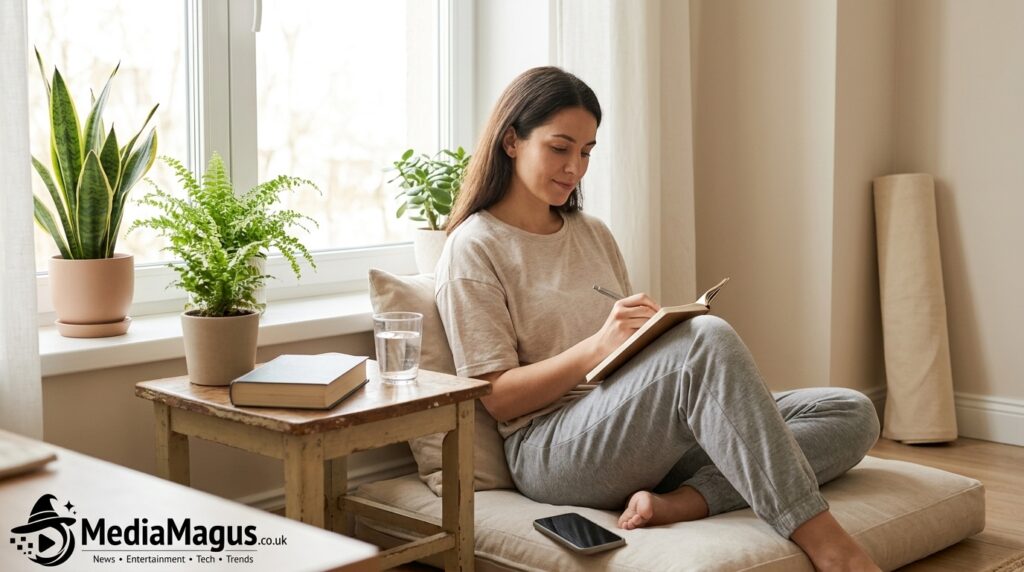
Writing can be an effective way to organise thoughts that feel crowded or confusing. You do not need a special journal. Any notebook, unused paper, or digital document can work.
Write about what is bothering you, what you need today, what went well, or what you would like to change. You can also create a simple list of things that are currently within your control and things that are not.
Spend Time in Silence
Silence can be surprisingly restorative when your day is filled with conversations, notifications, videos, music, and background noise. Find a comfortable place and spend a few minutes without consuming additional content.
You do not have to meditate formally. Simply sitting quietly and allowing your mind to settle can be a useful form of mental rest.
Free Self Care Ideas for Physical Well Being
Physical self care does not necessarily mean buying gym equipment, supplements, fitness memberships, or specialised wellness products. Many basic habits that support physical well being are completely free.
Movement, sleep, hydration, rest, sunlight, fresh air, and regular breaks can all become parts of a no cost self care routine. The important principle is to listen to your body rather than treating self care as another performance target.
Go for a Walk
Walking is one of the simplest free self care activities available. You can walk around your neighbourhood, visit a nearby public space, walk around your home, or simply spend some time moving without turning the activity into a demanding workout.
Walking can provide a change of environment and a break from sitting. If you have been working or studying for several hours, even a short walk can help you feel less physically stagnant.
Stretch Your Body
Gentle stretching requires no equipment and can easily fit into a busy schedule. You can stretch your shoulders, neck, back, arms, legs, and hips after spending long periods sitting.
Keep movements comfortable and avoid forcing your body into painful positions. The purpose of free stretching is to introduce gentle movement and awareness rather than achieve extreme flexibility.
Improve Your Sleep Routine
Sleep is one of the most important forms of free self care, yet it is often overlooked. Instead of viewing sleep as time lost from productivity, consider it part of maintaining your ability to function well.
A simple sleep routine might involve going to bed at a more consistent time, reducing unnecessary screen use before sleeping, keeping your bedroom comfortable, and giving yourself enough opportunity to rest.
Drink More Water
Staying hydrated can be incorporated into your routine without buying specialised drinks or supplements. Keep water accessible and make drinking regularly a normal part of your day.
Rather than turning hydration into another complicated health goal, simply pay attention to your body’s needs and make water an easy choice throughout the day.
Free Emotional Self Care Ideas
Emotional self care is about recognising feelings, responding to yourself with patience, and creating space for healthy emotional expression. It does not mean being positive all the time or pretending difficult feelings do not exist.
Sometimes emotional self care means talking. At other times it means being alone, crying, resting, writing, or acknowledging that you are having a difficult day. There is no single emotional self care activity that works for everyone.
Talk to Someone You Trust
A genuine conversation with a trusted friend, family member, mentor, or another supportive person can be an important form of free self care. You do not always need someone to solve your problem.
Sometimes simply expressing what you are experiencing can make a situation feel less overwhelming. If you are not looking for advice, you can also tell the person that you mainly need someone to listen.
Practice Self Compassion
People often speak to themselves in ways they would never speak to a friend. When you make a mistake, fall behind, or have an unproductive day, try replacing harsh self criticism with a more balanced response.
Self compassion does not mean ignoring responsibilities. It means recognising that being imperfect is part of being human and allowing yourself to recover instead of making a difficult situation worse through unnecessary self judgment.
Set Healthy Boundaries
Saying no can be an important form of self care. You do not have to accept every invitation, answer every message immediately, or agree to every request.
Healthy boundaries help protect your time and energy. A simple, polite “I cannot commit to that right now” can sometimes be more valuable than another expensive wellness activity.
Allow Yourself to Rest
Rest is not laziness. Your body and mind require recovery, especially after sustained physical, emotional, academic, or professional effort.
If you have been pushing yourself continuously, deliberately scheduling a period without productivity can be an effective form of self care. You do not need to justify every moment of rest by making it productive.
Free Self Care Ideas You Can Do at Home
Home can become an excellent place for no cost self care because many activities require only your existing space and time. You can create a calmer environment without purchasing candles, décor, skincare products, or special equipment.
The key is to choose activities that make your surroundings or your state of mind feel more comfortable. Sometimes changing your environment slightly can make an ordinary evening feel noticeably better.
Take a Relaxing Shower
A shower can become a simple reset point in the day. Instead of rushing through it, give yourself a few uninterrupted minutes to slow down and pay attention to the experience.
You do not need expensive bath products to make the activity meaningful. The value comes from intentionally giving yourself a moment to clean up, relax, and transition away from whatever happened earlier.
Declutter One Small Area
Cleaning does not have to become an exhausting whole house project. Choose one small area, such as your desk, bedside table, wardrobe shelf, or computer files.
Removing unnecessary clutter can create a greater sense of order. The important part is keeping the task manageable so that cleaning itself does not become another source of stress.
Listen to Music You Already Have
Music can change the atmosphere of a room without requiring any additional spending. Create a playlist from songs you already enjoy or revisit music that reminds you of positive experiences.
You can listen while resting, walking, cleaning, stretching, or simply sitting. Choose something that matches the emotional state you want to create rather than automatically playing whatever is trending.
Enjoy an Existing Hobby
Self care can involve doing something simply because you enjoy it. Read a book you already own, draw, write, cook with available ingredients, practise a language, take photographs, organise old pictures, or work on a creative project.
Hobbies can provide a valuable break from obligations because the activity is not necessarily tied to achievement. Enjoyment itself can be enough of a reason.
Free Outdoor Self Care Activities
Going outdoors can provide a useful change from indoor routines. You do not need to visit an expensive attraction or travel somewhere far away. A local street, public park, garden, courtyard, or other accessible outdoor space may be enough.
Try taking a slow walk without constantly checking your phone. Sit somewhere peaceful and observe your surroundings. Notice the weather, trees, sounds, buildings, or people moving through the area. The goal is to become more present rather than turn the activity into another task.
If the weather is suitable, you can also combine outdoor time with other free activities. Stretch outside, read something you already own, write in a notebook, talk with a friend, or simply sit quietly.
Self Care Ideas for Busy People
Busy people often assume self care requires a large block of free time. In reality, small moments can be incorporated into an ordinary day. A five minute pause, short walk, brief breathing exercise, or phone free meal can be easier to maintain than an elaborate weekend routine.
Look for transitions that already exist in your schedule. Before starting work, take a few quiet minutes. After finishing a task, stand up and stretch. During lunch, step away from your screen. Before bed, give yourself a short period without unnecessary notifications.
The goal is not to add dozens of activities to an already crowded schedule. Instead, identify one or two habits that make your existing routine more supportive.
Self Care Ideas for Students
Students frequently experience pressure from assignments, examinations, deadlines, social expectations, and uncertainty about the future. Free self care can help create small periods of recovery without adding significant costs.
Taking a walk between study sessions, organising notes, getting sufficient sleep, talking to a supportive friend, stretching after sitting, and taking intentional screen breaks are all practical options. Even studying in a different quiet location can provide a useful change of environment.
Students should also remember that constant productivity is not the same as effective studying. Rest can help prevent the cycle of working for long periods while concentration and motivation continue to decline.
Self Care Ideas for People Working From Home
Working from home can blur the boundary between professional and personal life. When your workspace is also part of your living environment, it can become difficult to recognise when the working day has actually ended.
Create simple transition rituals that cost nothing. Close your laptop, tidy your workspace, change clothes, take a short walk, stretch, or spend several minutes away from your work area. These actions can help signal that your professional responsibilities are finished.
It is also useful to avoid treating every break as wasted time. Standing up, getting water, looking outside, or walking around the room can give your body and mind a short recovery period.
How to Create a Free Self-Care Routine
A sustainable free self care routine should be simple enough to continue when life becomes busy. Start by identifying what you need most. If you feel mentally overwhelmed, prioritise quiet time and screen breaks. If you feel physically stagnant, focus on walking and stretching. If you feel emotionally isolated, make time for supportive conversations.
You can build a basic routine around three categories: something for your body, something for your mind, and something you genuinely enjoy. These do not have to take hours. For example, you might walk for fifteen minutes, spend ten minutes without your phone, and listen to music while preparing dinner.
Avoid creating an unrealistic schedule filled with wellness tasks. Self care should support your life rather than dominate it. The simplest routine that you actually follow is usually more valuable than a perfect routine that lasts only a few days.
Common Self Care Mistakes to Avoid
One common mistake is believing that self care must always feel relaxing. Some forms of self care are practical rather than immediately enjoyable. Cleaning your space, going to bed on time, dealing with an overdue responsibility, or setting a boundary may not feel exciting, but they can reduce future stress.
Another mistake is comparing your routine with what you see online. Social media often presents highly polished versions of wellness. Remember that someone else’s expensive routine is not a standard you need to meet.
It is also possible to turn self care into another form of perfectionism. You do not need to complete a long checklist every day. Missing a walk or having an unproductive afternoon does not mean your routine has failed.
How to Make Free Self Care a Sustainable Habit
Consistency becomes easier when you connect self care to activities you already do. For example, stretch after brushing your teeth, take a short walk after lunch, or spend a few phone free minutes before going to bed.
You can also use the “minimum version” approach. Instead of deciding that you must walk for an hour, commit to walking for five minutes. Instead of writing several pages in a journal, write three sentences. Small habits are easier to maintain during stressful periods.
Pay attention to how different activities affect you. If something consistently leaves you feeling calmer, more focused, rested, or connected, consider making it a regular part of your routine. Self care should be adjusted according to your actual needs rather than a fixed formula.
Reviews and Real Life Effectiveness
Free self care activities are often effective because they address fundamental needs rather than because they are associated with a particular product. Walking provides movement and a change of environment. Sleep provides recovery. Social connection can reduce feelings of isolation. Quiet time can provide mental space.
However, effectiveness varies from person to person. An activity that helps one person relax may feel boring or frustrating to someone else. This is why experimentation is useful. Try different activities and notice what genuinely improves your experience.
The strongest “review” of a self care practice is often how sustainable it is in your own life. If a free habit is easy to repeat, fits your schedule, and leaves you feeling better supported, it may be more useful than an expensive routine that is difficult to maintain.
Why No Cost Self Care Is Becoming Popular
The growing interest in free self care reflects a broader desire for practical wellness that feels accessible and realistic. People are increasingly aware that wellness does not have to be defined by products, memberships, luxury experiences, or complicated routines.
Financial pressure can also influence how people approach personal well being. When budgets are limited, free activities offer a way to maintain healthy habits without turning self care into another expense.
There is also a growing understanding that self care is about behaviour, boundaries, recovery, and awareness rather than consumption. A quiet morning, a walk outside, a good night’s sleep, or time with someone you trust can be just as meaningful as a purchased wellness experience.
Conclusion
Budget friendly self care ideas that don’t cost money prove that looking after yourself does not have to involve expensive products, subscriptions, treatments, or lifestyle upgrades. Some of the most accessible forms of self care are already available to you: sleep, walking, stretching, quiet time, meaningful conversations, hobbies, fresh air, journaling, and healthy boundaries.
You may also read more blogs
Frequently Asked Questions
What are the best budget friendly self care ideas that don’t cost money?
Some of the easiest options include walking, stretching, journaling, getting enough sleep, taking a break from social media, listening to music you already have, spending time outdoors, talking with someone you trust, and simply allowing yourself to rest. The best activity depends on what you currently need.
How can I practise self care without spending money?
Start with resources you already have. Use your home, local outdoor spaces, existing books or music, your own creativity, and supportive relationships. Free self care can involve physical movement, relaxation, emotional expression, healthy boundaries, or simply taking time away from unnecessary stimulation.
What is the simplest form of self care?
One of the simplest forms of self care is pausing and checking what you need. You might need water, food, sleep, movement, quiet, emotional support, or a break from work. Responding to that need can be more valuable than following a complicated routine.
Can self care really improve your mood without money?
Free activities can support mood and well being, particularly when they involve movement, social connection, rest, enjoyable activities, or reducing overwhelming stimulation. However, self care is not a replacement for professional support when someone is experiencing persistent or serious emotional difficulties.
What are good self care activities for stressful days?
On stressful days, choose activities that reduce demands rather than add more. Slow breathing, a short walk, a quiet shower, listening to calming music, talking to someone supportive, writing down your thoughts, or taking a genuine rest break can all be useful.
How can I make self care a daily habit?
Keep the routine small and connect it to habits you already have. A five minute walk, a short screen break, several minutes of stretching, or a few lines of journaling can be easier to maintain than a complicated schedule. Consistency matters more than doing everything perfectly.
Is sleeping considered self care?
Yes. Adequate sleep is an important part of caring for your physical and mental well being. Treating sleep as a legitimate need rather than something that can always be sacrificed for productivity can make your overall routine more sustainable.
Does self-care have to be relaxing?
No. Self care can be relaxing, but it can also be practical. Setting boundaries, organising your space, completing an important responsibility, asking for help, or addressing a problem can all be forms of self care when they support your overall well being.