
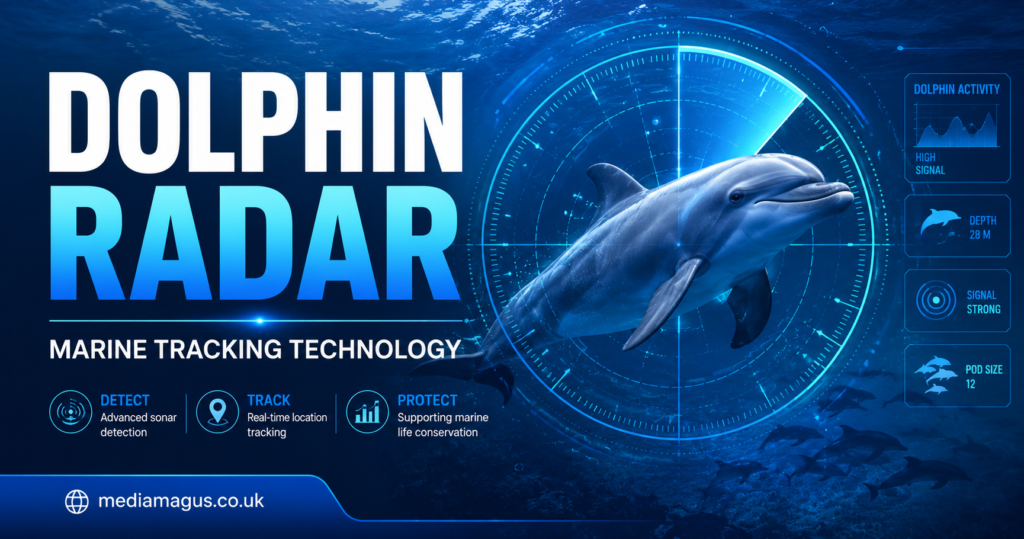

Users searching this phrase are typically looking to understand what Dolphin Radar is, how it works, whether it relates to dolphin tracking technology, marine research, sonar systems, artificial intelligence, or online tools.
What Is Dolphin Radar?
Dolphin Radar refers to technologies designed to detect, monitor, and track dolphins using advanced sensing systems. Depending on the context, the term may describe radar assisted marine monitoring systems, sonar technology, artificial intelligence software that identifies dolphin activity, or research platforms used by marine scientists.
Unlike traditional radar used for ships or aircraft, dolphin radar often combines multiple technologies including sonar, acoustic sensors, GPS tracking, satellite communication, and machine learning algorithms. These systems help researchers observe dolphin behavior without disturbing their natural habitat.
Marine conservation organizations increasingly rely on dolphin radar technology to monitor dolphin populations, migration routes, feeding areas, and breeding locations. Accurate tracking enables scientists to understand environmental changes and develop better conservation strategies.
In recent years, the phrase dolphin radar has also appeared in discussions surrounding AI powered wildlife monitoring systems that automatically recognize dolphins from underwater sounds or surface movements.
How Dolphin Radar Works
Dolphin Radar functions by combining several detection technologies rather than relying on traditional radar alone. Dolphins spend much of their lives underwater, making standard radar insufficient for continuous tracking.
Acoustic monitoring is one of the primary components. Dolphins communicate using whistles, clicks, and echolocation. Specialized underwater microphones called hydrophones capture these sounds, allowing researchers to estimate dolphin locations and identify species.
Surface detection systems use high frequency marine radar to detect splashes, groups of dolphins surfacing for air, or movement patterns near boats. Cameras enhanced with artificial intelligence can also recognize dolphins automatically.
Modern Dolphin Radar systems often integrate GPS, satellite communication, underwater sensors, drones, and machine learning software. These technologies work together to provide accurate real time monitoring of dolphin activity over large ocean areas.
The Technology Behind Dolphin Radar
Acoustic Sensors
Hydrophones are underwater microphones capable of detecting dolphin vocalizations over considerable distances. Every dolphin species has unique sound characteristics, allowing software to distinguish between species.
Researchers deploy hydrophone arrays across coastal waters to monitor dolphin populations continuously without interfering with their natural behavior.
Sonar Systems
Sonar technology sends sound waves underwater and analyzes returning echoes. Dolphins themselves use echolocation, making sonar particularly useful for studying their movements.
Passive sonar simply listens to sounds in the environment, while active sonar emits signals and measures reflections. Passive sonar is generally preferred in conservation work because it minimizes disturbance to marine life.
Artificial Intelligence
Artificial intelligence has transformed Dolphin Radar technology. AI algorithms process enormous datasets collected from underwater microphones, drones, satellites, and cameras.
Machine learning models automatically identify dolphin sounds, classify behaviors, estimate group sizes, and predict migration routes with increasing accuracy.
Satellite Tracking
Some dolphin conservation projects use satellite tags attached temporarily to individual dolphins. These tags transmit location data that researchers combine with Dolphin Radar observations.
Satellite integration provides valuable insights into long distance migration patterns and habitat preferences.
Why Dolphin Radar Is Important
Protecting dolphins requires accurate information about where they live, travel, and reproduce. Dolphin Radar provides scientists with reliable data that would otherwise be difficult or impossible to collect.
Human activities such as commercial shipping, offshore construction, fishing operations, and pollution pose significant threats to dolphin populations. Dolphin Radar helps authorities identify high risk areas and implement protective measures.
Governments and environmental organizations also use Dolphin Radar data when planning marine protected areas. Better understanding of dolphin habitats supports evidence based conservation policies.
The technology also assists in reducing accidental dolphin injuries caused by fishing equipment or vessel collisions by providing early detection and monitoring capabilities.
Common Applications of Dolphin Radar
Dolphin Radar serves multiple industries and research fields.
Marine biologists use it to study dolphin communication, migration, feeding behavior, and social structures. Long-term monitoring reveals changes in dolphin populations over time.
Environmental agencies employ Dolphin Radar to assess ecosystem health. Since dolphins are considered indicator species, changes in their populations often signal broader environmental issues.
Shipping companies can integrate marine monitoring systems to reduce collisions with dolphins and other marine mammals. Some ports are exploring wildlife detection technologies to improve maritime safety.
Tourism operators also benefit from Dolphin Radar by locating dolphins responsibly while minimizing disturbance to wildlife.
Military and oceanographic researchers occasionally utilize related acoustic monitoring technologies for broader marine observation purposes.
Dolphin Radar in Marine Conservation
Marine conservation has become one of the most significant uses of Dolphin Radar technology.
Conservation organizations monitor endangered dolphin populations in rivers, coastal regions, and offshore environments. Continuous observation helps identify declining populations before irreversible damage occurs.
Researchers can measure the impact of climate change, rising sea temperatures, pollution, and habitat destruction through long term Dolphin Radar data.
Protected marine reserves often install permanent acoustic monitoring stations that operate throughout the year. These stations collect valuable information about seasonal migration and breeding activity.
Conservation programs also collaborate internationally by sharing Dolphin Radar data, improving global understanding of dolphin populations across different oceans.
Dolphin Radar for Scientific Research
Scientific research has advanced dramatically with improvements in Dolphin Radar technology.
Traditional observation methods depended heavily on boats and visual sightings, limiting data collection to favorable weather conditions.
Today’s automated monitoring systems operate continuously, generating millions of data points each year. Artificial intelligence processes these records much faster than manual analysis.
Researchers study communication patterns by analyzing dolphin vocalizations. They investigate feeding strategies, family structures, migration timing, and responses to environmental changes.
Dolphin Radar also contributes to broader marine ecosystem studies by tracking interactions between dolphins, fish populations, whales, and oceanographic conditions.
Latest Updates About Dolphin Radar
Recent developments in Dolphin Radar focus on artificial intelligence and autonomous monitoring systems.
Researchers are increasingly deploying AI powered acoustic monitoring platforms capable of identifying dolphin species automatically from underwater recordings. These systems reduce manual analysis and improve detection accuracy.
Drone technology has also become more common. High resolution aerial cameras combined with AI image recognition can identify dolphin pods from above, providing additional data alongside underwater sensors.
Cloud computing enables real time processing of information collected from multiple monitoring stations. Scientists can receive alerts immediately when dolphin activity is detected in protected areas.
As technology continues to evolve, Dolphin Radar systems are becoming more affordable, scalable, and accurate for both research institutions and conservation organizations.
Dolphin Radar Reviews
Overall, researchers and conservation experts view Dolphin Radar technologies positively due to their ability to collect continuous, non invasive data.
Many marine scientists appreciate the increased efficiency provided by AI assisted monitoring. Automated detection significantly reduces the time required to analyze large acoustic datasets.
Users also highlight improved monitoring coverage compared to traditional boat based surveys. Permanent monitoring stations can operate day and night regardless of weather conditions.
However, experts note that no single technology provides perfect detection. Combining acoustic sensors, radar, drones, satellite tracking, and visual observations generally produces the most reliable results.
Overall, Dolphin Radar continues to receive favorable reviews within marine science communities because of its contribution to wildlife conservation and ecological research.
Benefits of Dolphin Radar
One of the greatest advantages of Dolphin Radar is continuous monitoring. Unlike manual observation, automated systems operate twenty four hours a day.
Another benefit is minimal disturbance to dolphins. Passive acoustic monitoring allows researchers to observe animals naturally without interfering with their behavior.
Artificial intelligence improves identification accuracy while reducing labor costs associated with manual data processing.
Long term datasets generated by Dolphin Radar help scientists detect environmental trends, evaluate conservation measures, and support policy decisions.
The technology also contributes to safer marine navigation by helping identify areas where dolphin activity is high.
Limitations and Challenges
Although Dolphin Radar is highly valuable, it has certain limitations.
Weather conditions can affect surface radar performance. Heavy waves, storms, or rough seas may reduce detection accuracy.
Acoustic monitoring depends on dolphins producing detectable sounds. Silent animals or noisy underwater environments may limit performance.
Installing advanced monitoring infrastructure can be expensive, especially for large scale ocean coverage.
Artificial intelligence systems also require extensive training data to achieve high accuracy across different dolphin species and environments.
Finally, integrating information from multiple sensors requires sophisticated software and technical expertise.
Future of Dolphin Radar Technology
The future of Dolphin Radar appears promising as artificial intelligence, robotics, and underwater sensing continue advancing.
Autonomous underwater vehicles may soon patrol marine protected areas while continuously monitoring dolphin populations.
Machine learning algorithms will become increasingly capable of recognizing individual dolphins based on vocalizations and movement patterns.
Satellite communication networks will improve global data sharing, enabling researchers worldwide to collaborate more effectively.
Future Dolphin Radar systems may integrate environmental sensors measuring water temperature, pollution levels, and fish abundance alongside dolphin monitoring, creating comprehensive marine ecosystem management platforms.
As costs decrease, more conservation organizations and governments are expected to adopt Dolphin Radar technologies for long term wildlife protection.
Conclusion
Dolphin Radar has become an essential tool in marine science, conservation, and environmental monitoring. By combining radar, sonar, underwater acoustic sensors, artificial intelligence, drones, satellite tracking, and machine learning, these systems provide researchers with unprecedented insights into dolphin behavior and habitat use.
You may also read this blog
Frequently Asked Questions
What is Dolphin Radar?
Dolphin Radar refers to technologies used to detect, monitor, and study dolphins through radar, sonar, acoustic sensors GPS drones, satellites, and artificial intelligence.
Is Dolphin Radar the same as sonar?
No. Sonar is one technology used within many Dolphin Radar systems. Modern Dolphin Radar often combines sonar with radar, AI, satellite tracking, and underwater acoustic monitoring.
Who uses Dolphin Radar?
Marine biologists, conservation organizations, environmental agencies, universities, research institutions, and some maritime organizations use Dolphin Radar for monitoring dolphin populations.
How accurate is Dolphin Radar?
Accuracy depends on the technologies used and environmental conditions. Systems combining acoustic sensors, AI, drones, and satellite data generally provide the highest accuracy.
Why is Dolphin Radar important?
It helps protect dolphins by monitoring populations, migration routes, habitats, and threats while supporting scientific research and conservation planning.
Does Dolphin Radar disturb dolphins?
Passive acoustic monitoring causes very little disturbance because it simply listens to natural dolphin sounds rather than transmitting signals.
Can Dolphin Radar predict dolphin movements?
Artificial intelligence can analyze historical data and environmental conditions to estimate likely migration routes and activity patterns, although predictions are not always perfect.
What is the future of Dolphin Radar?
Future developments include smarter AI systems, autonomous underwater vehicles, real time cloud monitoring, improved satellite integration, and more affordable conservation technologies.