
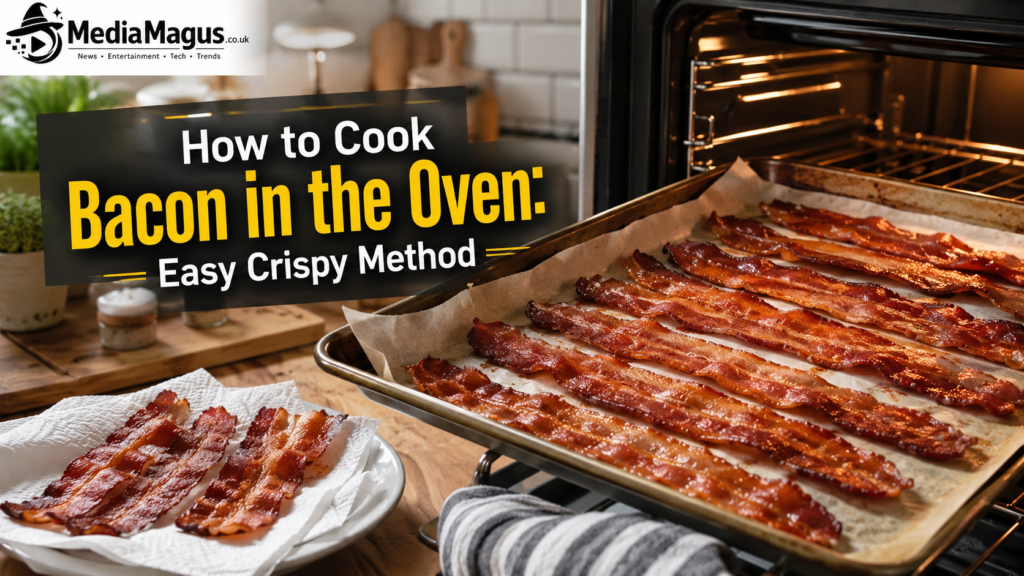

How to Cook Bacon in the Oven: Cooking bacon in the oven is one of the easiest ways to prepare it when you want evenly cooked slices, less hands on work, and enough bacon for several people at once. Instead of standing over a hot skillet and turning individual slices, you can arrange the bacon on a baking sheet, place it in the oven, and let the heat slowly render the fat while the bacon develops a crisp, browned exterior. The basic method is straightforward: arrange bacon in a single layer on a rimmed baking sheet, place it in a preheated oven at around 400°F (205°C), and cook until it reaches the texture you prefer, usually about 15 to 20 minutes depending on thickness and your oven. Because bacon thickness, brand, starting temperature, and personal preference all affect the final result, the clock should be treated as a guide rather than an absolute rule. Watching the bacon during the final few minutes is the best way to avoid taking it too far.
Why Cook Bacon in the Oven?
The biggest advantage of oven cooked bacon is convenience. A skillet works well for a few slices, but it becomes less practical when you need to cook a full package for breakfast, sandwiches, burgers, salads, or a family meal. An oven gives the bacon plenty of surface area, allowing several slices to cook at the same time without requiring constant turning. The bacon also cooks in its rendered fat rather than sitting directly against a small skillet surface, which can help produce a more consistent texture. Another benefit is that you can prepare other parts of the meal while the bacon cooks. This makes oven bacon particularly useful for weekend breakfasts, brunches, holiday meals, and recipes that require a larger quantity.
The oven method also gives you more control over texture. If you like bacon that is lightly browned and slightly chewy, you can remove it earlier. If you prefer very crisp bacon, you can continue cooking it for a few additional minutes while carefully monitoring the edges. Bacon can also be prepared on parchment or foil for easier cleanup, although you should always use a sturdy, rimmed baking sheet because bacon releases a significant amount of hot fat as it cooks.
What You Need to Cook Bacon in the Oven
You do not need specialized equipment to make good oven bacon. Start with a rimmed baking sheet large enough to hold the slices without overlapping them. The raised edges are important because they help contain the rendered fat. You will also need the bacon itself and, optionally, parchment paper or aluminum foil to make cleanup easier. A wire rack can be useful if you prefer the bacon to sit above some of its rendered fat, although it is not essential.
For most everyday bacon, regular cut pork bacon works very well at 400°F. Thick cut bacon needs more time because there is more meat and fat to heat through, while thin bacon can become crisp relatively quickly. If you are cooking turkey bacon or another specialty product, follow the package instructions when they differ from the standard pork bacon method because composition and moisture content can affect cooking behavior. Keep in mind that bacon continues to firm slightly as it cools, so it can be removed when it appears just a little less crisp than your final preferred texture.
How to Cook Bacon in the Oven
The simplest method begins by heating the oven to 400°F (205°C). While the oven heats, line a rimmed baking sheet with parchment paper or aluminum foil if you want easier cleanup. Arrange the bacon slices in a single layer across the sheet. The slices can be close together, but avoid stacking or heavily overlapping them because crowded bacon will cook less evenly. You generally do not need to add oil or butter because bacon naturally contains enough fat to cook itself.
Place the baking sheet in the oven and begin checking the bacon after roughly 12 minutes. Regular cut bacon will often need approximately 15 to 20 minutes at 400°F, while thick cut bacon may need longer. Exact timing varies considerably between ovens and bacon brands, so use the appearance and texture of the bacon as the main indicators. When the slices are browned and have reached your preferred level of crispness, carefully remove the baking sheet. Transfer the bacon to a plate lined with paper towels or another suitable draining surface so excess grease can be absorbed.
There is usually no need to flip bacon during oven cooking. Leaving the slices undisturbed makes the process simple and prevents hot grease from splashing onto your hands or oven. However, if your oven has noticeable hot spots, rotating the baking sheet toward the end of cooking can help improve consistency. Always use oven mitts when handling the hot baking sheet, and remember that rendered bacon fat can remain extremely hot even after the oven has been turned off.
How Long to Cook Bacon at Different Temperatures
There is no single cooking time that works for every piece of bacon because thickness and desired texture make a major difference. At approximately 400°F, regular cut bacon commonly takes around 15 to 20 minutes, while thick cut bacon may require approximately 20 to 25 minutes or more. These ranges are practical starting points rather than guarantees. A thin slice can become very crisp quickly, whereas a thick slice may remain relatively soft in the center even after the edges are browned.
| Bacon Type | Oven Temperature | Approximate Time | Best For |
|---|---|---|---|
| Regular cut bacon | 400°F / 205°C | 15–20 minutes | Everyday breakfast |
| Thick cut bacon | 400°F / 205°C | 20–25+ minutes | Meaty, substantial texture |
| Thin bacon | 400°F / 205°C | 10–15 minutes | Extra crispy results |
| Turkey bacon | Follow package guidance | Varies | Lower fat alternative |
The safest approach is to start checking earlier than you think you will need to. Oven temperatures can vary, and two brands of bacon with the same package weight can have noticeably different slice thicknesses. Bacon is also a food where a few extra minutes can change the result from pleasantly crisp to overly dark. If you are cooking it for the first time, take notes about the timing that works with your particular oven and preferred bacon brand.
How to Get Extra Crispy Bacon
If your goal is extra crispy bacon, the most important factors are sufficient cooking time, adequate spacing, and careful monitoring near the end. Arrange the slices so they do not overlap, because overlapping areas can trap moisture and prevent those sections from becoming crisp. A wire rack can also be used when you want the bacon elevated above the rendered fat, although many people prefer placing bacon directly on the lined baking sheet because the hot surface helps the bacon cook and brown.
For especially crisp bacon, allow the slices to continue cooking until the fat has rendered and the lean portions are deeply browned without becoming burnt. Remember that bacon becomes firmer as it cools, so there is no need to wait until every slice looks completely rigid while it is still in the oven. Once removed, place the bacon on paper towels for a short period to drain excess grease. This combination of proper spacing, enough cooking time, and a brief draining period usually produces a crispier final texture.
Should You Use a Rack, Parchment, or Foil?
Each pan setup has advantages. Parchment paper is convenient because it reduces sticking and generally makes cleanup easier. Aluminum foil is another practical option, particularly when you want to collect the rendered grease in one place for disposal after it cools. A wire rack allows the bacon to sit above the grease and can promote a slightly different texture, but the rack itself creates another item to wash and may require more careful cleaning.
For most home cooks, a lined rimmed baking sheet is the simplest choice. If you use foil or parchment, make sure it is properly positioned on the baking sheet and does not extend dangerously close to heating elements. Never pour hot bacon grease down a household drain because it can cool and solidify inside plumbing. Allow the grease to cool and dispose of it appropriately, or save strained bacon fat in a suitable heat resistant container if you have a culinary use for it.
How to Cook Different Types of Bacon
Regular cut bacon is the easiest variety to bake because its relatively thin slices cook quickly and render fat efficiently. Thick cut bacon requires more patience and should be checked based on both color and texture rather than simply following the timing used for regular bacon. If you want thick bacon that is crisp around the edges but still slightly meaty in the center, remove it before it becomes completely rigid.
Turkey bacon behaves differently because it generally contains less fat than traditional pork bacon. It can become dry or overly crisp if cooked for too long, so package directions are particularly useful. The same principle applies to flavored or specialty bacon products containing sugar, maple flavoring, pepper, or other additions. Ingredients such as sugar can brown more quickly, meaning the bacon may need closer attention toward the end of cooking.
Common Bacon Baking Problems and How to Fix Them
If your bacon is still soft when you expected it to be crisp, it probably needs additional cooking time. Return the tray to the oven for a few minutes and check frequently. If the bacon is burning around the edges while the center remains too soft, your slices may be unusually thick or your oven may distribute heat unevenly. Lowering the temperature slightly and allowing the bacon to cook longer can sometimes produce a more balanced result.
If bacon sticks to the pan, parchment paper or foil can make future batches easier to remove. If the bacon cooks unevenly, check that the slices are arranged in one layer and consider rotating the baking sheet near the end. If the bacon seems excessively greasy, drain it on paper towels immediately after cooking. Most importantly, avoid judging doneness from color alone. Browning is useful, but texture is the better indicator of whether the bacon has reached the level of crispness you actually want.
How to Store and Reheat Oven Baked Bacon
If you cook more bacon than you need, let it cool appropriately and refrigerate it in a covered container rather than leaving it at room temperature for an extended period. USDA guidance notes that perishable foods should not remain in the temperature danger zone of 40°F to 140°F for more than two hours, or more than one hour when the surrounding temperature is above 90°F.
Cooked bacon can be reheated in a skillet, oven, or microwave. For the best texture, reheating it briefly in the oven or a skillet can help restore some crispness. If you are preparing bacon ahead for breakfast, cooking it until nearly done and finishing it shortly before serving can also be convenient, although the final texture will depend on how it is stored and reheated. Always handle leftovers according to safe food storage practices rather than leaving cooked bacon sitting out for long periods.
Final Thoughts
Learning how to cook bacon in the oven is mostly about controlling three things: temperature, spacing, and timing. A rimmed baking sheet, a single layer of bacon, and an oven temperature around 400°F provide a simple starting point for consistently good results. Regular bacon commonly takes around 15 to 20 minutes, while thick cut slices generally need longer, but your oven and bacon will determine the exact timing. Start checking early, remove the bacon when it reaches the texture you prefer, and drain it briefly before serving. Once you find the timing that produces your ideal balance of crispness and chewiness, oven baked bacon becomes an easy method you can repeat for breakfasts, sandwiches, salads, burgers, and many other meals.
You may also read more blogs
Frequently Asked Questions
Is it better to bake bacon at 350°F or 400°F?
Both temperatures can work, but 400°F (205°C) is a convenient choice when you want bacon to cook efficiently and develop crisp edges. At a lower temperature such as 350°F, bacon can cook more gradually and may require additional time. The ideal temperature ultimately depends on the bacon thickness and texture you prefer.
Do you need to flip bacon when cooking it in the oven?
No. Bacon generally does not need to be flipped when baked on a sheet pan. Keeping the slices undisturbed makes the process easier and reduces the chance of splashing hot grease. If your oven has uneven heating, rotating the baking sheet near the end can help the slices cook more evenly.
Should bacon go in a cold oven or a preheated oven?
A preheated oven provides a more predictable starting point, particularly when you are trying to repeat a specific cooking time. Some recipes begin bacon in a cold oven, but a preheated 400°F oven is a straightforward method for beginners because the cooking environment is established before the bacon goes in.
How do you make bacon crispy in the oven?
Arrange the bacon in a single layer, avoid overlapping slices, and cook it until the fat has rendered and the slices reach your preferred level of browning. For extra crispy bacon, allow a few additional minutes of cooking while watching carefully because the transition from crisp to burnt can happen quickly.
Do you need to put oil on the baking sheet?
No. Bacon naturally releases fat as it cooks, so additional cooking oil is normally unnecessary. Adding oil can make the finished bacon unnecessarily greasy and does not provide a major advantage for standard bacon.
Can you cook thick cut bacon in the oven?
Yes. Thick cut bacon is particularly well suited to oven cooking because the gradual, even heat gives the thicker slices time to render their fat. Expect thick cut bacon to take longer than regular cut bacon and check the texture toward the end rather than relying only on a fixed timer.
What temperature should bacon be cooked to?
Bacon is thin and difficult to measure accurately with a household thermometer, so visual and texture cues are commonly used. USDA FSIS explains that bacon slices can present practical challenges for temperature measurement because of their thinness, and its guidance recognizes validated visual or other measurable indicators for such products. For general raw pork cuts, USDA recommends a minimum internal temperature of 145°F with a three minute rest, but that recommendation is for whole muscle pork cuts rather than using it as a direct bacon cooking time rule.
Can you save bacon grease after cooking?
Yes, bacon grease can be saved for cooking if it is handled properly. Allow it to cool sufficiently, strain it if necessary, and store it in a suitable covered container. Do not pour hot grease directly down the sink because it can solidify and contribute to plumbing blockages.