
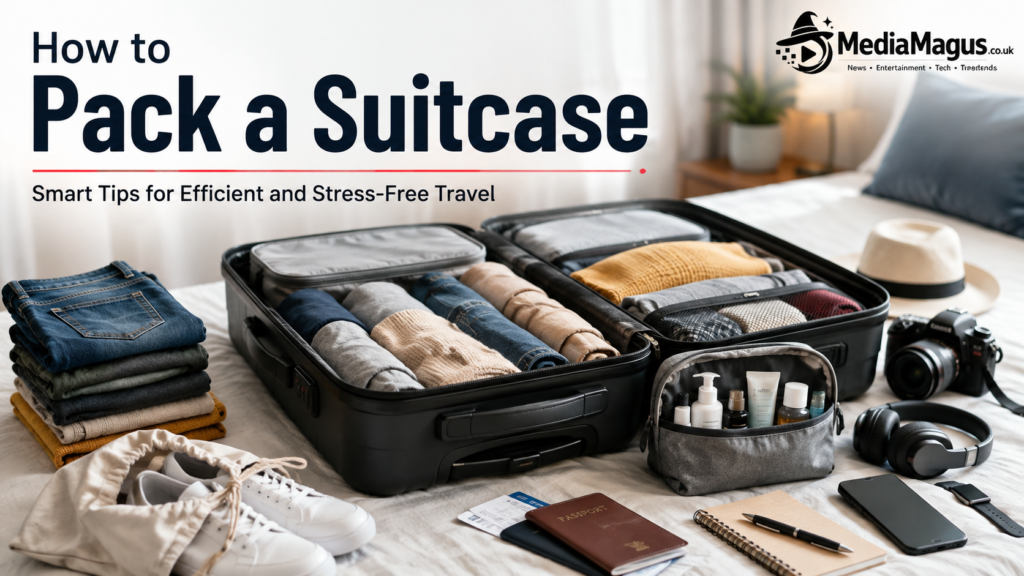

Packing a suitcase well is less about forcing as many belongings as possible into a small space and more about making deliberate decisions about what you actually need. The easiest way to pack efficiently is to start before you open the suitcase. Check the weather forecast for your destination, consider how many days you will be away, think about the activities you have planned, and check your airline’s baggage allowance if you are flying. A seven day city holiday, for example, does not necessarily require seven complete outfits if several items can be worn more than once. A practical suitcase usually contains versatile clothing that can be combined in different ways rather than separate outfits for every day. Once you know what you genuinely need, lay everything out where you can see it before placing anything inside the suitcase. This simple preparation step makes it much easier to notice duplicate items and remove unnecessary belongings before they take up valuable space.
What to Do Before Packing Your Suitcase
The first step in learning how to pack a suitcase is deciding what deserves space inside it. Start with the essentials, including clothing, underwear, sleepwear, footwear, toiletries, medication that you normally need, travel documents, electronics, and any items specifically required for your destination. Then consider the climate and activities. A beach holiday may require swimwear and lightweight clothing, while a winter trip may require a coat, warmer layers, and heavier footwear. Avoid packing based on hypothetical situations such as “I might need this.” Instead, consider whether you are realistically likely to use each item. One useful approach is to build a small colour coordinated wardrobe so that most tops work with most trousers, skirts, or shorts. This gives you several outfit combinations without requiring a large number of garments. It is also worth checking whether your accommodation provides items such as towels, hairdryers, or basic toiletries, because leaving unnecessary bulky items at home can make a noticeable difference.
Choose the Right Suitcase and Organise Your Items
Your suitcase should match the length and purpose of your journey rather than simply being the largest option available. A large suitcase can be useful for an extended trip, but extra space often encourages unnecessary packing. Before packing, divide your belongings into categories such as clothing, footwear, toiletries, electronics, documents, and accessories. Packing cubes can be useful because they create separate compartments inside the suitcase and make it easier to find specific items without unpacking everything. They are particularly helpful when several types of clothing need to stay organised. However, packing cubes are not essential; ordinary bags or carefully grouped clothing can achieve a similar organisational effect. Place heavier items toward the bottom or near the wheels of a wheeled suitcase because this can help the case remain more stable when it is upright. Lighter and softer belongings can then fill the upper areas and gaps around larger objects. Before closing the suitcase, check that frequently needed items are easy to access rather than buried beneath everything else.
How to Pack Clothes Efficiently
There is no single correct method for packing clothes because different garments respond better to different techniques. Lightweight casual clothing can often be rolled tightly, which makes it easier to use narrow spaces and see what is inside the suitcase. Heavier or structured garments such as jackets, formal shirts, and trousers may be better folded to maintain their shape. Another useful technique is to place several garments together and loosely bundle them, although this works best when the suitcase has enough space to accommodate the bundle without excessive pressure. Packing cubes can also help compress soft clothing and maintain organisation. Regardless of the method you choose, avoid creating extremely tight rolls or overstuffed sections because excessive pressure can increase wrinkles and make unpacking frustrating. Place underwear and socks inside smaller gaps rather than leaving empty spaces around them. For example, socks can sometimes be placed inside shoes, provided the shoes are clean and protected. The objective is to use the available space intelligently while keeping clothing accessible and reasonably neat.
How to Pack Shoes, Toiletries, and Small Items
Shoes are among the most difficult suitcase items because they are relatively bulky and do not compress easily. Take only the pairs you genuinely expect to use and choose versatile footwear whenever possible. Clean the soles before packing and place shoes inside reusable shoe bags or clean plastic bags so they do not come into contact with clothing. Small items such as socks can sometimes be placed inside shoes to use otherwise empty internal space. Toiletries require a different approach because liquids can leak during transport. Keep bottles securely closed and place liquid toiletries inside a leak resistant toiletry bag. Travel sized containers can reduce both space and weight, particularly when you only need a small amount of shampoo, skincare product, or other liquid. Keep frequently used toiletries somewhere accessible if you expect to use them during the journey. Small accessories such as belts, chargers, jewellery, and adapters should also have designated locations rather than being scattered throughout the suitcase. A small organiser or pouch can prevent these items from disappearing into corners of the luggage.
How to Prevent Wrinkles and Protect Your Belongings
Wrinkle prevention begins with selecting suitable fabrics and avoiding excessive pressure. Lightweight synthetic fabrics, knits, and some stretch materials generally tolerate suitcase packing better than delicate fabrics that crease easily. Fold shirts and trousers along natural seams where possible and avoid cramming the suitcase so tightly that the contents become heavily compressed. You can place a softer layer between delicate garments and harder objects such as shoes or toiletry containers. Delicate clothing may also benefit from being placed toward the top of the suitcase rather than underneath heavier belongings. If you are travelling with formal clothing, consider whether your accommodation will provide an iron or whether you can use a garment bag for particularly important pieces. Shoes and hard objects should be positioned so that their edges do not press directly against delicate fabrics. The same principle applies to electronics and fragile accessories: protect them from pressure and keep them separated from items that could scratch or damage them. Good organisation is therefore not only about saving space but also about preventing avoidable damage.
How to Pack a Suitcase for Different Trips
The ideal packing method changes depending on the journey. For a weekend trip, focus on a small selection of versatile clothing and avoid packing a separate item for every possible situation. A few interchangeable outfits, one pair of practical shoes, essential toiletries, and the electronics you actually need may be enough. For a week long holiday, planning outfits around a consistent colour scheme can significantly reduce the number of garments required. A business trip requires more attention to wrinkle prevention, so shirts, trousers, jackets, and formal footwear should be packed carefully and protected from unnecessary compression. For a longer journey, consider whether you will have access to laundry facilities. Being able to wash clothes during a long trip can reduce the amount of clothing you need to carry dramatically. Destination conditions also matter. Travelling somewhere cold may require fewer individual garments but more bulky layers, whereas a warm destination can require more lightweight clothing while using comparatively little suitcase space. The best packing strategy therefore starts with the trip itself rather than following one universal formula.
How to Keep Your Suitcase Within the Weight Limit
A suitcase can appear to have plenty of available space while already being close to its permitted weight. This is why checking luggage weight before leaving home is an important part of packing. If you are travelling by air, check your airline’s current baggage allowance because limits can vary by airline, fare type, route, and ticket. Place heavier belongings strategically and consider whether some items can be carried in your personal item where permitted. However, do not use your smaller bag simply as a way to move excessive weight without checking the applicable rules. Toiletries, shoes, books, and electronic accessories can become surprisingly heavy when combined. If your suitcase is overweight, remove items in order of usefulness rather than simply taking out whatever is easiest to reach. Ask yourself whether each item is essential, replaceable at the destination, or genuinely likely to be used. Weighing the suitcase before leaving home can prevent an unpleasant surprise at the airport and gives you time to reorganise your belongings.
Common Suitcase Packing Mistakes to Avoid
One of the most common mistakes is packing at the last minute. Rushing makes it easier to forget essentials while adding unnecessary items at the same time. Another mistake is packing too many just in case clothes that are unlikely to be worn. Travellers also frequently waste space by leaving shoes empty, failing to use small gaps, or choosing several pairs of footwear that serve essentially the same purpose. Packing toiletries in unsecured bottles is another avoidable problem because even a small leak can damage clothing. It is also unwise to put every important belonging into checked luggage. Travel documents, essential medication, valuables, important electronics, and other irreplaceable items should generally remain accessible and should be handled according to applicable airline and security rules. Finally, avoid packing your suitcase so tightly that you have no room for anything you acquire during the trip. Leaving a little spare capacity can make the return journey considerably easier.
Conclusion
Learning how to pack a suitcase efficiently is mainly a matter of planning, prioritising, and organising rather than using complicated tricks. Start by understanding the destination and length of your trip, select versatile items, organise belongings into practical groups, and use the available suitcase space intelligently. Rolling some clothing, folding structured garments, protecting shoes, securing toiletries, and weighing the finished suitcase can make travelling considerably easier. Most importantly, resist the temptation to pack for every imaginary situation. A well packed suitcase contains the things you are genuinely likely to need, remains within the applicable luggage allowance, protects your belongings, and leaves you enough space and flexibility to enjoy the journey rather than struggling with an unnecessarily heavy bag.
Explore more blogs
Frequently Asked Questions
Is it better to roll or fold clothes in a suitcase?
Rolling works particularly well for many casual and lightweight garments because rolled clothes can fit into gaps efficiently. Folding is often more suitable for structured or delicate clothing. The best approach is usually to combine both techniques rather than treating one method as universally better.
How do you pack a suitcase without wrinkles?
Choose wrinkle resistant clothing where possible, fold garments along their natural seams, avoid excessive compression, and place delicate clothing away from hard or heavy objects. Removing clothes from the suitcase soon after arriving can also help reduce prolonged creasing.
How do you save space when packing a suitcase?
Choose versatile clothing, reduce duplicate items, use packing cubes if helpful, place small belongings inside available gaps, and avoid taking unnecessary bulky footwear. Planning outfits before packing is one of the easiest ways to reduce excess clothing.
How many outfits should you pack for a week?
There is no universal number because it depends on the destination, activities, access to laundry, and personal preferences. For many travellers, several interchangeable outfits combined with clothing that can be worn more than once can be more practical than seven completely separate outfits.
Where should shoes go in a suitcase?
Shoes can generally be placed around the edges or near the bottom of a suitcase, with their soles protected by shoe bags. Smaller belongings such as socks can sometimes be placed inside clean shoes to make better use of internal space.
Should toiletries go in a suitcase?
Toiletries can be packed in checked luggage or carry on luggage depending on the item and applicable transport rules. Liquids should be securely sealed and protected against leaks, while any airline specific liquid restrictions should be checked before travelling.
How do you make a suitcase lighter?
Remove items you are unlikely to use, reduce the number of shoes, choose lightweight toiletries, avoid duplicate clothing, and weigh the suitcase before leaving. Reassessing every item based on necessity is often more effective than simply trying to rearrange everything.
What should you never put in checked luggage?
Important documents, essential medication, valuable possessions, and items that you cannot easily replace should generally remain with you rather than being placed in checked luggage. Airline and security rules also restrict certain items, so always check the current requirements for your journey.