
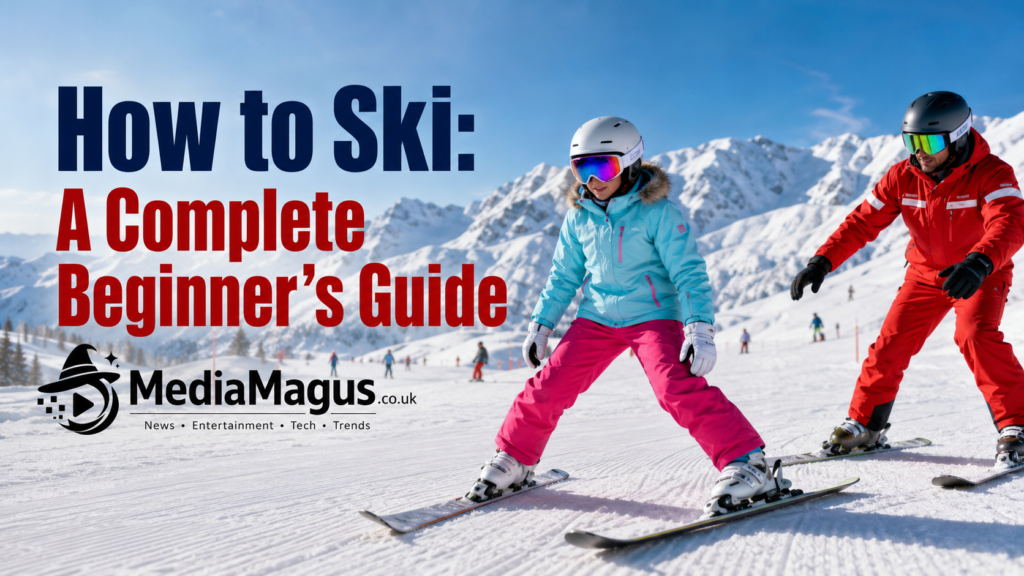

Learning how to ski can look intimidating when you watch experienced skiers move quickly down a mountain, but beginners do not need to master everything on their first day. Skiing is fundamentally about learning how to balance on two skis, control your speed, change direction, and stop safely. Once those skills become comfortable, you can gradually move from beginner terrain to more challenging slopes. The best way to learn is to start slowly, use properly fitted equipment, take a lesson from a qualified instructor, and spend your first sessions developing control rather than worrying about speed. Whether you are preparing for your first ski holiday or simply want to understand how skiing works, the fundamentals below will give you a practical starting point.
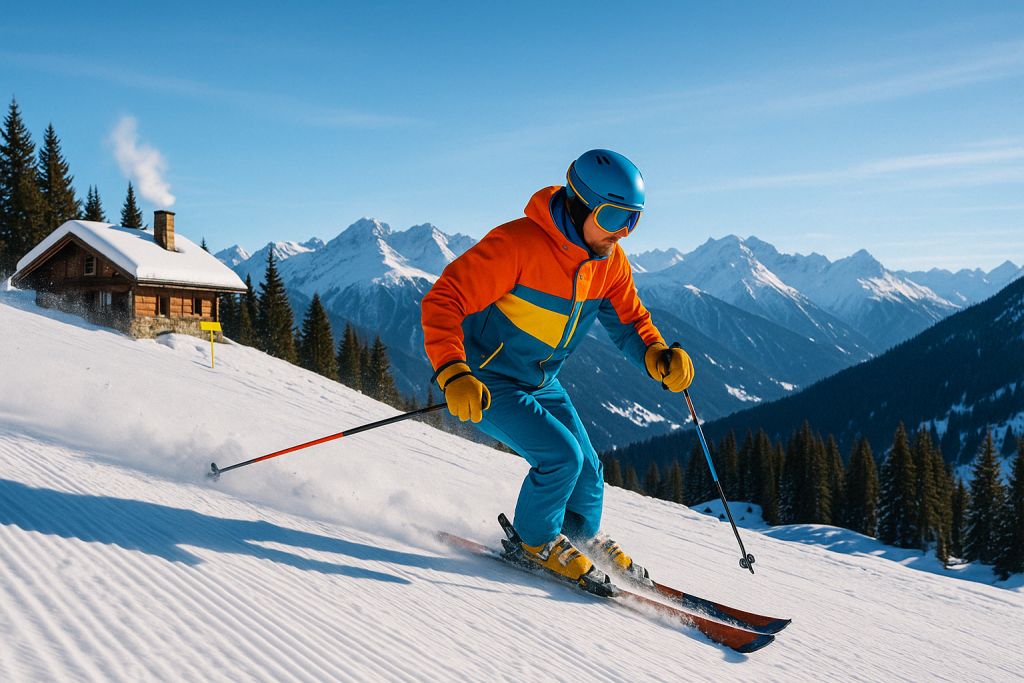
What Is Skiing and How Does It Work?
Skiing involves sliding over snow on two skis while using your body position, edges, and turns to control movement. Gravity naturally pulls you downhill, so the central skill is not learning how to go faster but learning how to control that movement. Your skis have edges that can grip the snow when you tilt them, allowing you to turn and regulate speed. Your body position also matters because staying balanced over the middle of the skis gives you greater control than sitting backward or leaning excessively forward.
For a beginner, skiing can initially feel unusual because the skis continue moving even when your feet are stationary relative to them. The goal is to develop a stable stance with your knees slightly bent, your weight balanced over your feet, and your upper body relaxed. Looking ahead rather than constantly looking down at your skis also helps you anticipate the terrain. As you gain experience, these basic movements become increasingly automatic.
What You Need Before You Start Skiing
Having the right equipment can make your first skiing experience significantly easier. A beginner generally needs skis, ski boots, poles, a helmet, goggles, waterproof outer clothing, gloves or mittens, and suitable base and mid layers. Ski boots deserve particular attention because they need to provide a secure connection between your feet and skis without causing excessive pain or pressure. Rental shops at ski resorts can normally help beginners select equipment according to their height, weight, ability, and intended terrain.
Your clothing should be designed for changing mountain conditions rather than simply being warm. A moisture wicking base layer helps manage sweat, while an insulating middle layer can provide warmth and a waterproof outer layer helps protect you from snow and wind. Avoid wearing ordinary cotton as your main base layer because it can hold moisture close to the skin. A helmet designed for skiing or snowboarding is also an important part of beginner safety.
Choosing the Right Skis and Boots
Beginners generally benefit from equipment that is appropriate for their size and ability rather than equipment designed for advanced performance. Very long or highly specialised skis can make learning unnecessarily difficult. Ski boots should feel snug and secure, with your heel properly held in place. However, they should not create severe pressure or numbness.
If you are renting equipment, tell the technician that you are a first time skier. This gives them useful information when selecting skis and boots. Proper equipment fitting is particularly important because uncomfortable boots can distract you from learning technique and may make you more likely to stop early.
What to Wear for a First Ski Day
Mountain weather can change quickly, so layering is more practical than relying on one extremely thick item of clothing. Wear a suitable base layer, an insulating layer when necessary, and a waterproof ski jacket and trousers. Waterproof gloves or mittens, ski socks, goggles, and a helmet are also important. Your goggles protect your eyes from snow, wind, and bright reflected sunlight while helping you see the terrain more clearly.
How to Learn Skiing as a Beginner
The safest and most efficient way to learn how to ski is to begin with a professional lesson. An instructor can observe your stance and movements, correct mistakes early, and introduce new skills at an appropriate pace. Trying to copy an experienced friend can sometimes be useful for motivation, but it is not a substitute for professional instruction because advanced skiers may use techniques that are inappropriate for someone still learning basic control.
Your first lesson will usually focus on simple movements rather than steep slopes. You may practise walking or sliding on skis, maintaining balance, gliding, stopping, and making basic turns. Do not worry if the first few attempts feel awkward. Skiing requires coordination, and repetition is one of the main ways your body learns these movements.
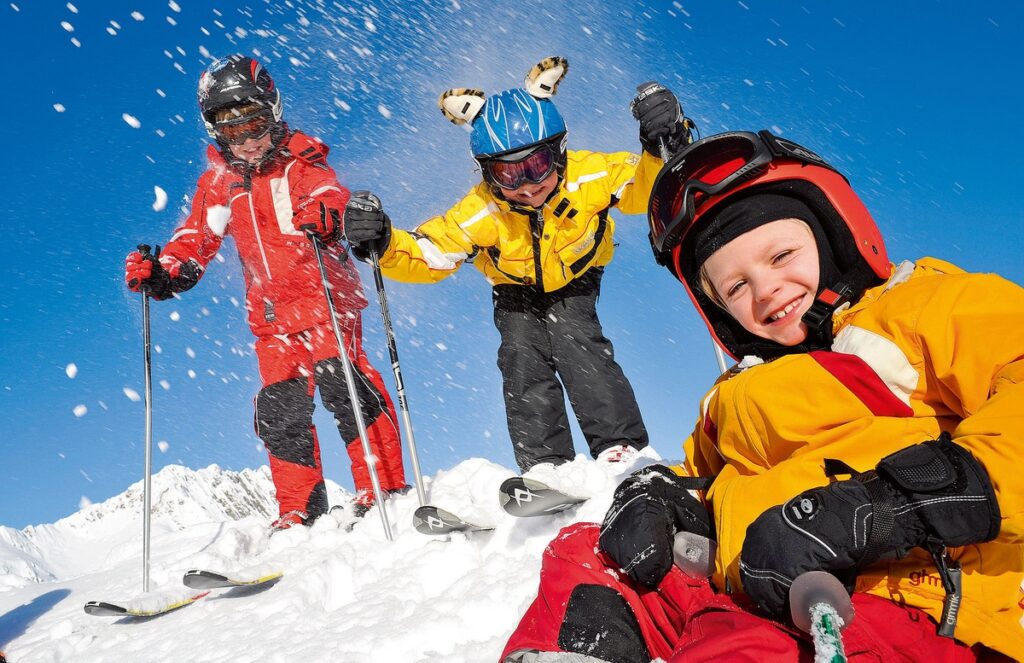
Learn the Basic Ski Stance
A strong beginner stance starts with your knees slightly bent and your body relaxed. Keep your hands comfortably forward rather than behind your body, and maintain balanced pressure over your feet. Your upper body should generally face down the slope while your legs and skis make the movements needed to turn and control speed.
One common mistake is leaning too far backward because beginners instinctively try to avoid moving downhill. This can actually make the skis more difficult to control. Instead, stay balanced and allow your ankles, knees, and hips to work together. Your instructor can provide individual corrections because the ideal stance varies somewhat with terrain and skiing style.
Practice Gliding and Stopping
Before attempting faster skiing, you need to know how to stop. One of the most important beginner techniques is the snowplough, also called the wedge. The front tips of the skis are brought closer together while the tails remain farther apart, creating a shape that helps control speed.
The wedge is not simply an emergency braking technique. Beginners use it to regulate speed while learning to turn. Practising controlled stops on gentle terrain gives you confidence because you know you can reduce your speed whenever necessary. Never move onto a steeper slope simply because you can glide; you should be able to stop reliably before progressing.
Learn to Turn
Turning is one of the foundations of skiing because it allows you to control both direction and speed. Beginners often start with wedge turns, gradually moving from one side of the slope toward the other. Instead of trying to force the skis around using only your upper body, focus on balanced movements through your legs and feet while keeping your upper body stable.
A useful beginner habit is to look toward the direction you want to travel. Your body naturally responds to where your attention is directed, so staring downhill or directly at your skis can make controlled turning more difficult. As your technique develops, you will gradually rely less on the wedge and more on parallel skis and refined edging.
Learn How to Control Your Speed
Good skiing is not about travelling as quickly as possible. Speed control is one of the most important skills a beginner can develop. You can regulate speed through the shape of your turns, the angle of your skis, and the terrain you choose. On gentle beginner slopes, making controlled turns across the hill can help reduce speed rather than pointing your skis directly downhill.
If you feel that you are travelling too quickly, do not panic or simply lean backward. Increase your control by completing a deliberate turn toward the side of the slope and, when appropriate, use the wedge to slow down. The ability to stop and control speed should determine when you progress to more challenging terrain.
How to Ski Safely
Safety should be part of your skiing technique from the beginning. Wear a properly fitted helmet, remain aware of other skiers and snowboarders, and choose terrain appropriate for your ability. Beginners should avoid crowded or difficult slopes until they have sufficient control. Ski areas generally use trail ratings or difficulty markings to indicate terrain, although the exact colours and systems can vary by country and resort.
Mountain conditions can also change throughout the day. Visibility, wind, snowfall, icy surfaces, and changing snow conditions can affect how the skis respond. Fatigue is another important consideration. When you become tired, your technique and reaction time can deteriorate, increasing the likelihood of mistakes. Taking breaks is therefore part of skiing safely rather than a sign that you are not progressing.
You should also learn basic skim area etiquette. Avoid stopping in narrow sections or where people coming downhill cannot easily see you. If you fall, move to a safer location when possible. When joining a trail or crossing another skier’s path, look carefully and give other people enough space. If you are unsure about a lift or trail, ask resort staff rather than guessing.
Common Beginner Skiing Mistakes
One of the most common mistakes is leaning backward. Beginners often do this because they are nervous about moving downhill, but it can reduce control and make the skis feel difficult to steer. Another common problem is keeping the legs completely straight. Slightly flexed knees allow you to absorb changes in the snow and maintain balance.
Looking continuously at your skis is another habit worth avoiding. Your eyes should normally look toward the terrain ahead so you can anticipate turns, people, and changes in the slope. Beginners also sometimes try to progress too quickly, moving onto steeper terrain before they can reliably stop. A controlled beginner on an easy slope is much safer than an inexperienced skier attempting terrain beyond their ability.
Trying to learn without instruction can also slow progress. A qualified instructor can identify small technical problems that may be difficult for a beginner to recognise independently. Even a short introductory lesson can establish better habits before you spend more time practising.
How Long Does It Take to Learn to Ski?
There is no single timeline because skiing ability depends on fitness, coordination, previous experience with sports, confidence, snow conditions, and the quality of instruction. Some beginners become comfortable with basic stopping and turning during their first day, while others need several sessions before those movements feel natural.
The most useful first day goal is not reaching a particular speed or slope. Instead, focus on being able to put on your equipment correctly, maintain balance, glide under control, turn in both directions, stop reliably, and understand basic slope safety. Once those abilities become consistent, progression becomes much easier.
How to Improve After Your First Ski Lesson
After learning the fundamentals, improvement comes from deliberate practice rather than simply spending more time sliding downhill. Repeat the skills you have already learned and gradually make them smoother. Practise turns in both directions and pay attention to whether you remain balanced throughout the movement.
As your confidence improves, an instructor can introduce parallel skiing, stronger edging, more advanced turning techniques, and different types of terrain. Do not feel pressured to follow other people’s progression. Someone who has skied for several seasons will naturally move differently from someone on their first trip.
A good progression might look like this:
- Beginner lesson and equipment familiarisation.
- Basic gliding and stopping.
- Controlled wedge turns.
- Linking turns across easy terrain.
- Improving speed control and balance.
- Developing parallel turns.
- Gradually exploring more challenging terrain with appropriate instruction.
The important principle is that control should come before difficulty. Moving to a harder slope should be the result of improved ability, not simply increased confidence.
Conclusion
Learning how to ski is less about conquering a mountain on your first day and more about developing reliable control one skill at a time. Start with properly fitted equipment, learn on suitable beginner terrain, and consider taking a lesson from a qualified instructor. Focus first on balance, gliding, stopping, turning, and speed control before attempting more challenging slopes. With patience and regular practice, movements that initially feel unfamiliar can become natural. The best beginner skier is not necessarily the fastest person on the slope but the person who can make controlled decisions, understand their limits, and enjoy the mountain safely.
You may also read more blogs
Frequently Asked Questions About How to Ski
Is skiing difficult for beginners?
Skiing can feel difficult during the first few hours because it requires balance and coordination that most people do not use in everyday life. However, beginners can learn the fundamental skills with appropriate instruction and gradual practice. Stopping, turning, and controlling speed are more important initially than skiing fast.
Can I learn how to ski without an instructor?
You can learn some basic skiing movements independently, but professional instruction is strongly recommended for beginners. An instructor can teach safe technique, correct poor habits, explain slope etiquette, and help you progress according to your ability.
How do you stop on skis?
Beginners commonly learn to stop using a snowplough or wedge. The skis form a wider V shape with the tails farther apart, creating resistance against the snow. The exact technique should be practised on gentle terrain with an instructor before being used on steeper slopes.
What should I wear skiing for the first time?
Wear moisture managing base layers, suitable insulation, a waterproof ski jacket and trousers, warm ski socks, waterproof gloves or mittens, goggles, and a properly fitted ski helmet. Layering is useful because mountain temperatures and activity levels can change during the day.
Is skiing harder than snowboarding?
Neither is universally easier because the learning experience depends on the individual. Skiing often allows beginners to move their legs independently and can make basic balance feel more intuitive initially, while snowboarding uses a different balance system. Personal coordination, previous sports experience, and instruction can all influence progression.
How many days does it take to learn skiing?
Many beginners can learn basic gliding, stopping, and turning within their first few days, but becoming genuinely comfortable takes longer. Progress depends on practice, instruction, terrain, fitness, snow conditions, and individual learning ability.
What is the biggest beginner skiing mistake?
Trying to ski faster or on steeper terrain before developing reliable control is one of the biggest mistakes. Beginners should prioritise balance, stopping, turning, and awareness rather than speed.
Can adults learn how to ski?
Yes. Adults can learn skiing at many different ages. The learning process may vary according to fitness, mobility, confidence, and previous experience, but adults can develop effective skiing skills through appropriate instruction and gradual progression.