
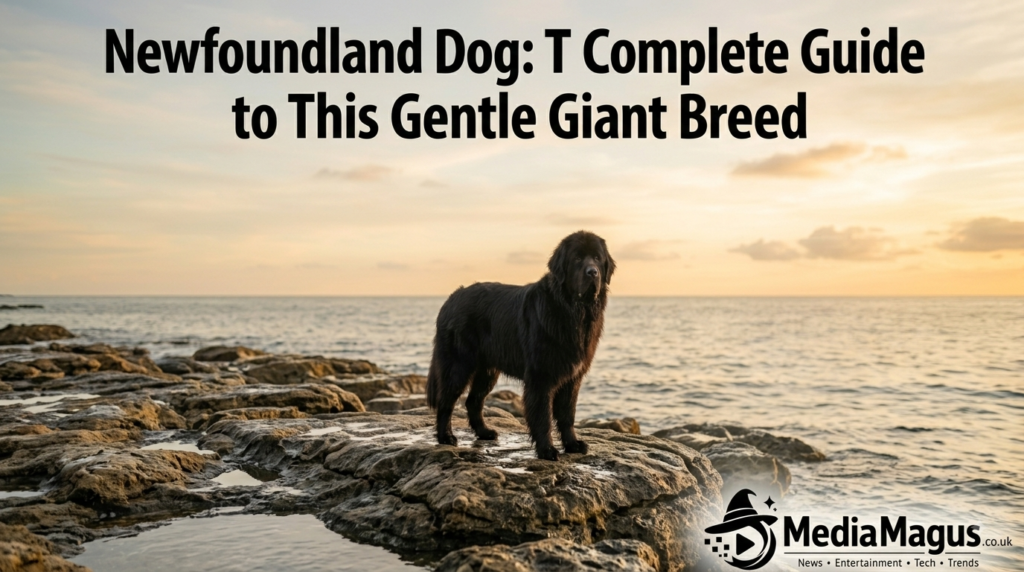

If you picture a dog the size of a small bear, calm enough to babysit toddlers and strong enough to pull a drowning sailor out of the North Atlantic, you’re picturing a Newfoundland dog. This breed isn’t just big and sweet natured by accident it was purpose built for water rescue on the rugged coast of Newfoundland, Canada, and that history still shapes everything from its webbed feet to its instinct to swim toward anyone struggling in water.
This guide covers what a Newfoundland dog actually is, where the breed comes from, what daily life with one looks like, real health and cost numbers, and how it stacks up against other giant breeds so you can decide if this dog fits your life, not just admire it from a distance.
What Is a Newfoundland Dog?
A Newfoundland dog (often nicknamed Newfie) is a giant working breed originally developed in Newfoundland, Canada, to assist fishermen hauling nets, retrieving gear, and rescuing people from cold water. Adult males typically weigh 130–150 pounds and stand 28 inches at the shoulder, with a thick, water resistant double coat, webbed feet, and a naturally sweet, patient temperament that has earned it a reputation as one of the best family dogs in the world.
History and Origin
The breed’s exact ancestry is debated, but most historians trace it to a mix of local Newfoundland working dogs and dogs brought over by Portuguese, Basque, and English fishermen in the 1600s and 1700s. What’s well documented is the breed’s working role: Newfoundland dogs pulled fishing nets, hauled carts of milk and wood in island villages, and were used specifically for water rescue because of their strength, stamina, and unusual comfort in cold ocean water.
Two historical examples show how deeply this reputation is documented. Meriwether Lewis brought a Newfoundland dog named Seaman on the Lewis and Clark Expedition (1804–1806), where the dog reportedly helped hunt game and once fought off an attacking beaver. And J.M. Barrie modeled the nursemaid dog Nana in Peter Pan directly on a real Newfoundland he knew, cementing the breed’s image as a gentle protector of children in popular culture.
By the 1880s, the breed had nearly died out on the island itself due to a dog tax meant to protect sheep farming, and its survival is largely credited to British and European breeders who continued the line which is why today’s breed standard is maintained internationally, not just in Canada.
Physical Characteristics
| Trait | Male | Female |
|---|---|---|
| Height | 28 inches | 26 inches |
| Weight | 130–150 lbs | 100–120 lbs |
| Lifespan | 9–10 years | 9–10 years |
| Coat | Double coat, water resistant | Double coat, water resistant |
| Recognized colors | Black, brown, gray, Landseer (white with black markings) | Same |
The Landseer coloring white with black markings is named after English painter Sir Edwin Landseer, who famously painted the breed in the 1830s. In parts of Europe, the Landseer is even classified as a separate breed from the solid colored Newfoundland.
Temperament and Personality
Newfoundland dogs are consistently ranked among the calmest giant breeds, but gentle giant undersells a few specific traits worth knowing before you bring one home:
- Water instinct: Newfoundlands have webbed feet and an oily, water resistant coat, and many will instinctively try to “rescue” swimmers including strong ones who don’t need help.
- The “Newfie lean”: a habit of leaning their full body weight against people they trust, which is affectionate but can knock over small children or elderly family members.
- Heavy drooling: especially after drinking water, due to loose jowls a real practical consideration, not a minor quirk.
- Low prey drive, high patience: this is one of the few giant breeds regularly recommended around toddlers and other pets, provided the dog is socialized early.
Newfoundland Dog vs Other Giant Breeds
If you’re comparing giant breeds, here’s how the Newfoundland stacks up against the three it’s most often confused with:
| Breed | Weight | Coat Maintenance | Energy Level | Best For |
|---|---|---|---|---|
| Newfoundland | 100–150 lbs | High (heavy shedder, weekly brushing minimum) | Low–moderate | Families, water lovers, calm households |
| Saint Bernard | 120–180 lbs | Moderate–high | Low | Cold climates, laid back owners |
| Bernese Mountain Dog | 70–115 lbs | High | Moderate | Active families, cooler climates |
| Leonberger | 90–170 lbs | High | Moderate | Experienced giant breed owners |
The clearest differentiator is the water rescue instinct and webbed feet no other breed on this list was bred specifically for swimming, which makes the Newfoundland the default choice for owners near lakes, rivers, or the coast.
Living With a Newfoundland
Exercise Needs
Despite their size, Newfoundlands are not high energy dogs. 30–45 minutes of daily exercise a walk plus swimming access if possible is typically enough. Over exercising a Newfoundland puppy, especially before 18 months, is actually discouraged, since their joints are still developing and too much high impact activity raises the risk of orthopedic problems later.
Grooming and Shedding
Expect to brush a Newfoundland two to three times a week year round, and daily during the twice yearly heavy shedding seasons. The double coat mats easily around the ears, legs, and tail if neglected. Many owners budget for professional grooming every 6–8 weeks given the coat volume involved.
Diet and Feeding
A full grown Newfoundland typically eats 4–5 cups of hig quality large breed dog food daily, split into two meals. Feeding a giant breed puppy a large breed specific formula (rather than standard puppy food) is important it controls calcium levels to slow bone growth and reduce joint disease risk.
Health Issues and Lifespan
The average Newfoundland lives 9–10 years, shorter than many mid sized breeds, largely due to size related health issues. The most significant conditions to screen for:
- Hip and elbow dysplasia common across giant breeds; reputable breeders provide OFA (Orthopedic Foundation for Animals) hip certifications.
- Subvalvular aortic stenosis (SAS) a heart condition disproportionately common in Newfoundlands specifically; cardiac screening before breeding is standard practice among responsible breeders.
- Cystinuria a genetic disorder affecting kidney stone formation, notably prevalent in the breed and testable via DNA screening.
- Bloat (gastric dilatation volvulus) a life threatening emergency common in deep chested giant breeds; many owners use slow feed bowls and avoid vigorous exercise right after meals as preventive measures.
Because SAS and cystinuria are specifically elevated in this breed (not just generic big dog issues), asking a breeder directly for cardiac clearance and cystinuria DNA test results is one of the most useful, breed specific questions a buyer can ask.
Training and Socialization
Newfoundlands are intelligent and eager to please, which makes them relatively easy to train compared to other giant breeds but their sheer size means training needs to start early. A 150 pound adult that was never taught not to pull on leash or jump up is a genuine safety issue, even if the intent behind the behavior is entirely friendly.
Early socialization exposure to children, other dogs, and everyday situations between 8 and 16 weeks matters more for Newfoundlands than for many breeds specifically because their size makes any fear based reactivity harder to manage later. Positive reinforcement training (treats, praise) works well; Newfoundlands tend to shut down under harsh correction based methods.
Cost of Owning a Newfoundland Dog
| Expense | Estimated Cost |
|---|---|
| Puppy from a reputable breeder | $1,500–$3,000+ |
| Adoption/rescue | $300–$600 |
| Monthly food | $80–$150 (large breed volume) |
| Grooming (professional, every 6–8 weeks) | $70–$120 per visit |
| Pet insurance | $50–$90/month for a giant breed |
| First year total (vet visits, supplies, training) | $3,000–$5,000+ |
Giant breeds also cost more in incidental ways that are easy to underestimate: larger crates, beds, and car space, higher dose flea/heartworm medication, and higher anesthesia costs for any surgery given the dog’s body weight.
Is a Newfoundland Dog Right for You?
Good fit if you:
- Have a fenced yard or regular access to safe swimming water
- Want a calm, family oriented dog rather than a high energy companion
- Can commit to weekly grooming and don’t mind drool and shedding
- Have space apartments are workable but not ideal for a 150 pound dog
Reconsider if you:
- Want a low shedding or low maintenance coat breed
- Live somewhere hot and humid without climate control (the double coat struggles in heat)
- Aren’t prepared for a shorter 9–10 year lifespan and elevated vet costs
- Need a dog that can be left alone for long stretches Newfoundlands bond closely and don’t do well as background pets
Final Thoughts
A Newfoundland dog isn’t the right choice for everyone the shedding, drool, and shorter lifespan are real trade offs but for the right household, it’s hard to beat a dog this size that’s also this gentle. If you have the space, the grooming commitment, and ideally some water nearby, few breeds reward you with the same combination of calm companionship and genuine devotion
You may also read more blogs
FAQs
Are Newfoundland dogs good with kids?
Yes they’re widely considered one of the most patient and gentle breeds around children, historically nicknamed “nanny dogs.” Supervision is still recommended, mainly because of their size and leaning habit, not aggression.
How big do Newfoundland dogs get?
Males typically reach 130–150 pounds and 28 inches tall; females are somewhat smaller at 100–120 pounds and 26 inches.
Do Newfoundland dogs shed a lot?
Yes. They have a thick double coat and shed heavily twice a year, requiring brushing several times weekly year round and daily during shedding season.
Are Newfoundland dogs good swimmers?
Exceptionally so. Webbed feet and a water resistant coat give them natural swimming ability, and the breed has a documented history of water rescue work
How long do Newfoundland dogs live?
The average lifespan is 9–10 years, shorter than many smaller breeds due to size related health risks.
How much does a Newfoundland puppy cost?
Reputable breeders typically charge $1,500–$3,000+, while rescue adoption runs roughly $300–$600.
Do Newfoundland dogs drool a lot?
Yes, notably more than most breeds, due to loose jowls especially right after drinking water.
Is a Newfoundland dog a good apartment dog?
t’s possible but not ideal. Their calm energy level helps, but their size and coat maintenance needs are better suited to homes with more space.