
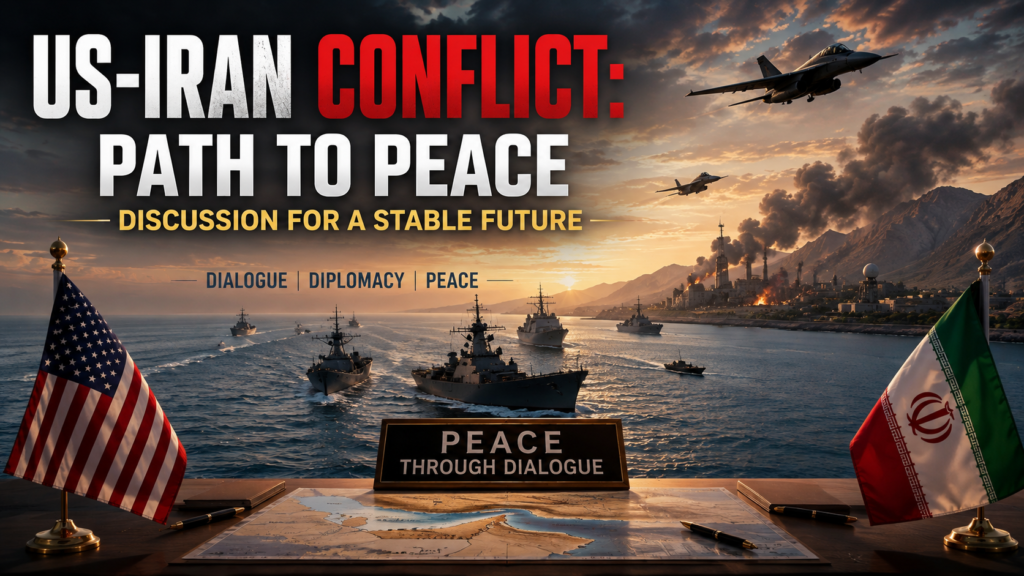

US Iran: Latest Situation
The phrase US Iran is attracting intense attention because relations between Washington and Tehran have entered another dangerous phase. After a period of reduced military activity, the United States and Iran have exchanged new attacks, with the confrontation increasingly connected to the strategically important Strait of Hormuz.
The latest escalation follows months of military confrontation that began with major US and Israeli strikes against Iran in February 2026. A Pakistan mediated memorandum of understanding later created a temporary reduction in fighting and established a negotiating period, but that arrangement ultimately failed to produce a lasting settlement.
As of September 3, 2026, the situation remains fluid. Recent US strikes have targeted Iranian military infrastructure, including air defense, radar and maritime capabilities. Iran has responded with missile and drone attacks against US forces and facilities in parts of the Gulf region.
The confrontation is therefore about much more than two countries exchanging military attacks. It involves nuclear policy, sanctions, energy security, regional alliances, maritime shipping and the possibility of renewed diplomacy.
What Is the US Iran Conflict?
The US Iran conflict is a long running geopolitical confrontation between the United States and the Islamic Republic of Iran. Its roots extend through decades of disagreements involving Iran’s government, its nuclear activities, US sanctions, regional influence and American military alliances in the Middle East.
The relationship has repeatedly moved between diplomatic negotiations and confrontation. The nuclear issue has been particularly important because Washington and its allies have sought limits and verification of Iran’s nuclear activities, while Tehran has argued for its right to peaceful nuclear development and objected to extensive economic sanctions.
The current crisis is considerably more serious than an ordinary diplomatic dispute. According to the Council on Foreign Relations, the 2026 confrontation involves unresolved disagreements over Iran’s nuclear program, the Strait of Hormuz and sanctions relief.
That combination makes the US Iran relationship particularly difficult to stabilize. Progress on one issue can be undermined by developments on another, while military actions can make future negotiations politically harder.
Why Are the US and Iran Fighting?
One of the most important questions behind the US Iran conflict is why the confrontation has become so intense. There is no single cause. Instead, several disputes have accumulated over years and have become interconnected during the 2026 crisis.
The nuclear program is one major issue. The United States has long sought restrictions and verification concerning Iran’s nuclear capabilities. Washington has also used sanctions to pressure Tehran over its nuclear activities, missile development, regional activities and other security concerns. A recent Congressional Research Service summary describes US sanctions on Iran as among the most comprehensive unilateral sanctions maintained against a foreign country.
Iran’s Nuclear Program
Iran’s nuclear activities have been at the center of US Iran tensions for years. International concern has focused particularly on uranium enrichment, monitoring and the ability of inspectors to verify the status of Iran’s nuclear program.
The International Atomic Energy Agency has faced difficulties maintaining continuity of knowledge regarding Iran’s declared nuclear facilities and enriched uranium stockpile. The Security Council Report says the IAEA’s ability to verify implementation of Iran’s safeguards obligations has been significantly affected by the wider crisis.
This creates a major diplomatic problem. The United States wants credible limits and verification, while Iran seeks sanctions relief and guarantees that agreements will be respected.
US Sanctions and Economic Pressure
Economic sanctions are another central part of the confrontation. Washington has imposed extensive restrictions on Iranian individuals, organizations and economic activities.
The objective is to limit Tehran’s access to financial resources and pressure the Iranian government to change policies relating to its nuclear program, missiles, regional activities and other issues.
For Iran, however, sanctions are viewed as economic warfare and an attempt to weaken the country. The resulting disagreement makes sanctions relief one of the most important issues in any potential US Iran negotiation.
Regional Security
The US and Iran also disagree fundamentally about security in the Middle East. Washington maintains military forces and partnerships across the region, while Iran has developed relationships with political and armed groups in several countries.
When US and Iranian forces come into direct conflict, the consequences can therefore spread beyond the borders of the two countries. Recent Iranian attacks have involved targets or territories connected to US military operations and American partners in the Gulf.
The Strait of Hormuz
The Strait of Hormuz has become one of the most immediate flashpoints.
The narrow waterway connects the Persian Gulf with the Gulf of Oman and is a critical route for international energy shipments. Any prolonged disruption can affect oil prices, shipping costs, insurance and inflation around the world.
The 2026 crisis has already caused a substantial reduction in shipping activity through the strait. Reuters reported that tanker traffic had fallen sharply amid the confrontation, increasing concerns about global oil supplies.
Latest US Iran Developments
The latest phase of the crisis intensified after a period of relative calm. In early September, the United States conducted another series of strikes against Iranian military capabilities.
US officials said the operations targeted systems and infrastructure connected with Iran’s military activities near the Strait of Hormuz. Targets reportedly included air defenses, radar systems, communications infrastructure and maritime capabilities.
Iran subsequently launched missiles and drones toward locations involving US forces and American allies in the region. Bahrain, Jordan, Kuwait and Iraq have all featured in reporting surrounding the latest escalation.
The attacks have also produced civilian casualties. Reports from Iranian authorities and international media differ on some casualty figures and details surrounding individual incidents, underscoring the importance of distinguishing confirmed information from claims made by either side.
The humanitarian consequences are among the most serious concerns surrounding the latest US Iran escalation.
The Strait of Hormuz and US Iran Tensions
The Strait of Hormuz is disproportionately important to the global economy because a significant amount of internationally traded energy passes through the waterway.
That means the US Iran confrontation can affect people far beyond the Middle East. If shipping is restricted, energy prices can rise. Higher oil and gas costs can then influence transportation, manufacturing, electricity and consumer prices.
The economic consequences are already visible. Reuters reported that Brent crude settled around $95.63 per barrel on September 2, while West Texas Intermediate was around $91.01, with markets reacting to concerns about continued disruption.
Why the Strait Matters
For Iran, the Strait of Hormuz provides access to an essential export route. For the United States and its partners, keeping international shipping open is a major security objective.
This creates a difficult strategic situation. Iran can use its geographic position to threaten shipping, while the United States can deploy naval and air power to attempt to protect maritime routes and pressure Iranian military capabilities.
The risk is that military operations intended to protect shipping could themselves trigger further Iranian retaliation.
Impact on Global Oil Markets
Oil markets respond quickly to uncertainty. Traders do not necessarily need an actual long term shortage before prices rise. The possibility of a major disruption can itself create a risk premium.
That is why every new development involving US Iran relations is closely watched by energy markets.
If the Strait remains heavily restricted for an extended period, the impact could extend to countries that have no direct involvement in the conflict. Import dependent economies could face higher fuel costs, while businesses could experience increased transportation and production expenses.
US Iran Nuclear Dispute
The nuclear dispute remains one of the most important long term issues between Washington and Tehran.
The two sides had attempted to establish a diplomatic framework during 2026. A June memorandum created a 60-day negotiating period intended to support discussions about a final agreement, including Iran’s nuclear program. However, the arrangement deteriorated and officially expired in August without producing a final settlement.
This failure is significant because a nuclear agreement could potentially address several disputes simultaneously.
Iran could seek sanctions relief and economic normalization. The United States could seek limits, verification and transparency concerning nuclear activities. International inspectors could potentially provide mechanisms for monitoring compliance.
The problem is trust.
Why Trust Is Difficult
The US and Iran have repeatedly accused each other of violating commitments. Military attacks make this distrust even deeper.
Iran wants assurances that sanctions relief will be meaningful and that Washington will honor negotiated arrangements. The United States wants confidence that Iranian commitments will be verifiable and durable.
Without some form of confidence building mechanism, negotiations can quickly collapse.
US Iran Sanctions and Economic Pressure
US sanctions remain a powerful tool in Washington’s strategy toward Iran.
The United States has sanctioned thousands of individuals and entities connected to Iran and has used restrictions affecting financial transactions, oil exports and other economic activities.
In August 2026, the US administration announced additional economic pressure designed to further isolate Iran. The measures came after the expiration of the June negotiating framework.
Economic Effects on Iran
Sanctions can reduce access to international financial markets, make trade more difficult and limit oil revenues.
Iran’s economy was already under pressure before the latest escalation. The conflict and restrictions on energy exports have added further uncertainty.
Recent reporting has highlighted concerns about inflation, currency weakness and declining oil exports. Reuters reported that Iran’s oil exports had fallen sharply amid the wider crisis and restrictions around the Strait of Hormuz.
Effects Beyond Iran
Sanctions can also affect companies and countries that trade with Iran.
Businesses must evaluate whether transactions could expose them to US penalties. This can discourage international companies from entering or maintaining commercial relationships with Iranian entities.
As a result, US Iran tensions can have consequences for international finance even when companies are located far outside the Middle East.
US Iran and the Middle East
The current confrontation cannot be understood solely as a bilateral dispute.
The United States has military bases and security relationships throughout the Middle East. Iran has relationships with regional political and armed groups. Consequently, an attack involving either country can create pressure on neighboring states.
Recent Iranian missile and drone activity has involved locations such as Bahrain, Jordan, Kuwait and Iraq, while US operations have focused on Iranian military capabilities.
Gulf Countries
Gulf states have a major interest in preventing the conflict from expanding.
Countries such as Bahrain, Kuwait, Qatar, Saudi Arabia and the United Arab Emirates depend heavily on regional stability, international trade and energy infrastructure.
A prolonged US Iran war could threaten ports, airports, oil facilities and shipping routes while increasing the possibility of attacks spreading across borders.
Iraq and Jordan
Iraq occupies a particularly sensitive position because it has relationships with both the United States and Iran.
US military activity in the wider region and Iranian linked groups operating in Iraq create the possibility that the country could become an additional arena for confrontation.
Jordan is also strategically important because of its location and close security relationship with Washington.
Could the US Iran Conflict Become a Larger War?
A major question surrounding US Iran searches is whether the confrontation could become a much larger regional war.
The possibility cannot be dismissed. Continued attacks create opportunities for miscalculation, especially when military operations involve several countries and weapons systems.
At the same time, both Washington and Tehran have reasons to avoid an uncontrolled conflict.
A prolonged war would be enormously expensive. It could damage energy markets, threaten regional governments, increase civilian casualties and place additional pressure on military forces.
The Risk of Miscalculation
The biggest danger may not always be a deliberate decision to start a massive war.
Instead, escalation can happen through retaliation.
One side launches an attack. The other responds. A third party becomes involved. Another strike follows. Eventually, the original political objective becomes difficult to separate from the momentum of military operations.
This is why diplomatic communication remains important even during periods of intense fighting.
Why Diplomacy Still Matters
Despite the current escalation, diplomacy remains the most realistic long term method of addressing the underlying disputes.
Military strikes may destroy weapons systems or infrastructure, but they cannot permanently resolve disagreements over nuclear policy, sanctions, regional security or maritime access.
A sustainable settlement would require agreements that both countries consider enforceable and politically acceptable.
What Could Happen Next?
The future of US Iran relations remains uncertain.
One possibility is continued American military pressure combined with economic sanctions. This approach could seek to weaken Iran’s military and economic capabilities while attempting to force Tehran back toward negotiations.
A second possibility is renewed diplomacy through intermediaries. Countries such as Pakistan, Oman and Qatar have played roles in efforts to facilitate communication between Washington and Tehran. Earlier mediation contributed to the June memorandum.
A third possibility is further escalation around the Strait of Hormuz.
If shipping remains threatened, the United States could increase military operations aimed at reopening maritime routes. Iran could respond by expanding attacks or attempting to maintain pressure on the waterway.
The Most Important Warning Signs
People following the US Iran situation should watch several developments closely:
- Changes in activity around the Strait of Hormuz
- New US or Iranian military strikes
- Attacks involving Gulf states
- Changes in oil exports and tanker traffic
- New US sanctions
- Iranian nuclear developments
- Statements from American and Iranian leaders
- Mediation efforts by regional countries
- Any new ceasefire or nuclear agreement
These factors will help determine whether the crisis moves toward de escalation or another period of intensified fighting.
US Iran Reviews and Global Reactions
The international response has been mixed but generally concerned about the possibility of a wider conflict.
Regional countries have strong incentives to reduce tensions because they could suffer directly from attacks, disrupted shipping and economic instability.
Pakistan, Oman and Qatar have been among the countries associated with diplomatic efforts. Pakistan’s involvement was particularly significant in the 2026 ceasefire and memorandum process.
European and other international actors are also concerned about the nuclear dimension and the potential consequences for global energy markets.
The international community therefore faces two connected challenges: reducing immediate military escalation and creating a framework for resolving the underlying nuclear and security disputes.
US Iran FAQ
What is happening between the US and Iran right now?
The United States and Iran are experiencing renewed military confrontation after a period of reduced fighting. Recent US strikes targeted Iranian military capabilities, while Iran responded with missile and drone attacks involving US forces and regional allies.
Why are the US and Iran in conflict?
The confrontation involves several issues, including Iran’s nuclear program, US sanctions, regional security, missile capabilities and control of or access to the Strait of Hormuz.
What is the Strait of Hormuz?
The Strait of Hormuz is a strategically important maritime passage connecting the Persian Gulf with the Gulf of Oman. It is a major route for global energy shipments, making disruptions there important to international oil markets.
Is there a US Iran nuclear deal?
A June 2026 memorandum created a temporary framework and a 60 day period for negotiations over a final agreement. However, the framework expired in August without producing a final settlement.
Are US sanctions still affecting Iran?
Yes. The United States maintains extensive sanctions on Iran, covering numerous individuals, organizations and economic activities. Additional economic pressure was announced during the 2026 crisis.
Could the US Iran conflict affect oil prices?
Yes. Disruption or perceived risk around the Strait of Hormuz can affect global oil prices because of the waterway’s importance to energy transportation. Recent fighting has already contributed to market volatility.
Could the US and Iran return to negotiations?
A return to diplomacy remains possible, although the latest military escalation makes negotiations more difficult. Previous mediation involving Pakistan, Oman and Qatar demonstrates that diplomatic channels can still exist even during periods of confrontation.
What should people watch for in the US Iran crisis?
The most important indicators include military strikes, activity around the Strait of Hormuz, oil prices, sanctions, nuclear negotiations and diplomatic statements from Washington, Tehran and regional mediators.
Conclusion
The US Iran conflict has become one of the most important geopolitical and economic stories of 2026. What began as a confrontation centered on nuclear policy and regional security has expanded into a broader crisis involving military strikes, sanctions, energy markets and the strategically vital Strait of Hormuz. The latest escalation demonstrates how fragile previous attempts at de escalation have been. A June memorandum created an opportunity for negotiations, but the arrangement expired without a final agreement, and military confrontation has now intensified again.