
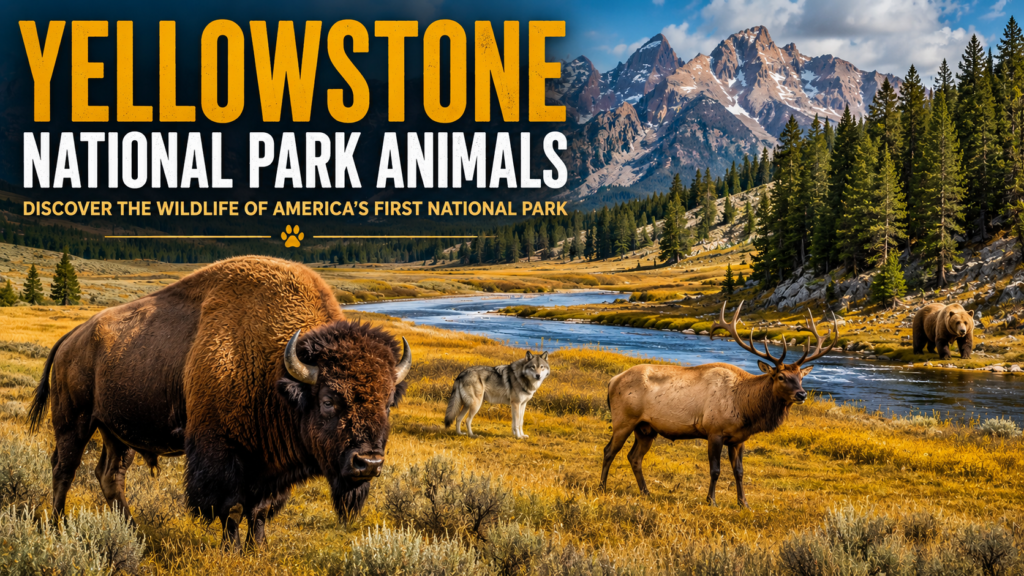

Yellowstone National Park is one of the most remarkable places in North America for observing wildlife in a natural environment. Located primarily in Wyoming, with portions extending into Montana and Idaho, the park protects a vast ecosystem of mountains, forests, rivers, lakes, grasslands, and geothermal landscapes. This diversity of habitats supports an extraordinary range of animals.
When people search for Yellowstone National Park animals, they often think first of iconic species such as American bison, grizzly bears, wolves, and elk. These animals are indeed among the park’s most famous residents, but Yellowstone’s wildlife community is much larger. Visitors may also encounter pronghorn, moose, bighorn sheep, coyotes, foxes, beavers, otters, bald eagles, ospreys, trumpeter swans, and many other species.
One of the most special features of Yellowstone is that its wildlife is part of a functioning ecosystem rather than being maintained primarily as a collection of individual attractions. Predators, herbivores, scavengers, birds, fish, insects, and plants all interact within the landscape. This makes wildlife watching in Yellowstone more than simply spotting individual animals it is an opportunity to observe nature operating on a large scale.
Because animals move freely throughout the park, sightings are never guaranteed. That uncertainty is part of the experience. A quiet drive through a valley can suddenly turn into an unforgettable wildlife encounter when a herd of bison appears on the horizon or wolves are spotted moving across a distant ridge.
Why Yellowstone Is Famous for Wildlife
Yellowstone is famous for wildlife because of its enormous protected landscape and ecological diversity. The park covers more than two million acres and forms the core of the Greater Yellowstone Ecosystem, one of the largest nearly intact temperate ecosystems in the world. Its relatively undeveloped environment provides important habitat for large mammals and countless smaller species.
The park’s wildlife story is also closely connected to conservation history. Yellowstone became the world’s first national park in 1872, and over time, conservation efforts helped protect species and habitats that had faced serious pressures. The restoration of gray wolves in the 1990s became one of the most well known wildlife conservation projects in the park’s history.
Today, Yellowstone provides habitat for a large variety of native animals. Some species are relatively easy to spot, while others are elusive and require patience, binoculars, and sometimes the assistance of experienced wildlife watchers.
The park’s changing seasons also influence wildlife behavior. Spring brings newborn animals and increased activity. Summer provides abundant food and longer daylight hours. Autumn is famous for elk activity and the movement of animals preparing for winter. During winter, snow covered landscapes can make certain species easier to track, although travel conditions can be challenging.
Large Mammals Found in Yellowstone
Large mammals are among the biggest attractions for people exploring Yellowstone National Park. These animals are powerful, fascinating, and often easier to identify from a safe distance than smaller wildlife.
However, visitors should remember that large mammals are wild animals. Even animals that appear calm or accustomed to seeing humans can react unpredictably. The safest wildlife experience is always one in which visitors observe animals from a respectful distance.
American Bison
The American bison is arguably the symbol most closely associated with Yellowstone wildlife. Yellowstone is home to one of the largest and most important publicly managed bison populations in North America, and visitors frequently see these massive animals grazing in open valleys and grasslands.
Bison can appear slow and relaxed, but they are extremely powerful and can run much faster than many people expect. They may also become defensive, especially during breeding season or when people approach too closely.
Visitors often see bison around the Lamar and Hayden valleys, along roads, and near thermal areas. In some situations, bison may walk directly along roadways, creating traffic delays. These encounters can be exciting, but drivers should remain patient and avoid trying to force animals away from the road.
Elk
Elk are another major part of Yellowstone’s wildlife population. Large herds can often be seen in open meadows and valleys, particularly during certain seasons.
The Mammoth Hot Springs area is well known for elk sightings, and visitors may sometimes see animals resting or grazing near developed areas. During the autumn rut, male elk become especially active as they compete for access to females.
The sound of a bull elk bugling across the landscape is one of Yellowstone’s most memorable natural experiences. However, visitors should give elk plenty of space, particularly during the rutting season when males can become aggressive.
Grizzly and Black Bears
Yellowstone is home to both grizzly bears and black bears. Seeing either species in the wild can be an unforgettable experience, although bear sightings are not guaranteed.
Grizzly bears are generally larger and have a distinctive shoulder hump, while black bears can vary considerably in color and are not always black. Identifying a bear by color alone can therefore be misleading.
Bears are most active during warmer months when food is available. They may be seen near forests, meadows, and mountain areas, but they often remain difficult to spot because of their behavior and habitat.
Visitors should never approach a bear. Anyone hiking in bear country should follow park guidance, maintain appropriate distances, and understand how to respond if they encounter wildlife on a trail.
Gray Wolves
Gray wolves are among Yellowstone’s most fascinating animals and are central to the park’s modern conservation story. Wolves were reintroduced to Yellowstone in the 1990s after being absent from the ecosystem for decades.
Today, wolves are one of the species that attract wildlife enthusiasts, photographers, and researchers. They often travel in packs and can cover large distances, making them difficult to observe at close range.
The Lamar Valley is particularly famous for wolf watching. Early mornings and winter conditions can provide excellent opportunities for spotting wolves because the open landscape and lack of dense vegetation may make distant animals easier to see.
Even when wolves cannot be seen clearly, visitors may observe other signs of their presence, including tracks or interactions with other wildlife.
Moose
Moose are among the more elusive large mammals in Yellowstone. Despite their impressive size, they can be surprisingly difficult to find because they often inhabit areas with dense vegetation and wet habitats.
Moose are associated with streams, ponds, willow communities, and forested areas. They are generally solitary compared with animals such as bison and elk.
Visitors who hope to see moose should be patient and observant. A quiet morning near suitable habitat may offer a better opportunity than a busy midday wildlife drive.
Pronghorn
Pronghorn are among the fastest land mammals in North America and are particularly associated with open landscapes.
They can often be seen in grasslands and broad valleys where their exceptional speed provides protection from predators. Their distinctive appearance, including their horns and white markings, makes them easy to recognize.
The northern parts of Yellowstone and open areas around the park can provide opportunities to observe pronghorn. Their presence also demonstrates the ecological importance of maintaining connected habitats across the Greater Yellowstone region.
Bighorn Sheep
Bighorn sheep are well adapted to mountainous terrain and rocky slopes. Their powerful bodies and specialized hooves allow them to move across steep landscapes that would be difficult for many other animals.
They may be seen in rugged areas where cliffs and mountains provide natural habitat. Because of their surroundings, spotting them often requires looking carefully at distant slopes.
During certain seasons, male bighorn sheep are particularly impressive because of their large curled horns. Like other Yellowstone animals, they should be observed without approaching or disturbing them.
Other Yellowstone Wildlife to Discover
Although Yellowstone’s most famous animals are often large mammals, the park’s biodiversity extends far beyond bison, bears, wolves, and elk. Smaller predators and mammals contribute significantly to the ecosystem.
These species may be harder to spot, but they can be equally interesting for wildlife enthusiasts. Taking time to look beyond the most famous animals can make a Yellowstone trip even more rewarding.
Coyotes and Foxes
Coyotes are widespread throughout Yellowstone and can sometimes be seen traveling across open areas or hunting for food.
They are adaptable predators and play an important role in the ecosystem. Coyotes may hunt small mammals, consume carrion, and interact with other predators.
Red foxes are also present but can be more difficult to find. Their smaller size and preference for certain habitats mean that visitors often need to pay close attention to spot them.
Mountain Goats
Mountain goats are specially adapted to steep, rocky environments. Their thick coats help them survive cold mountain conditions, while their specialized hooves allow them to navigate challenging terrain.
They are typically associated with higher elevations and rugged landscapes. Visitors should use binoculars when viewing mountain goats because the animals may be located far from roads and trails.
Badgers and Otters
Badgers are powerful digging animals that can be seen in open habitats, although they are not among Yellowstone’s easiest animals to find.
River otters, meanwhile, are associated with waterways and can sometimes be observed swimming or moving along riverbanks. Their playful behavior makes them a favorite among wildlife watchers.
Both species contribute to the ecological balance of Yellowstone and demonstrate why visitors should take time to observe smaller animals rather than focusing exclusively on famous predators.
Beavers and Small Mammals
Beavers play an important role in shaping wetland ecosystems. By building dams, they can influence water flow and create habitats that benefit numerous other species.
Yellowstone also supports smaller mammals such as marmots, ground squirrels, pikas, and other rodents. These animals form an important part of the food web and provide prey for predators such as coyotes, foxes, hawks, and eagles.
For visitors, spotting small mammals can be especially rewarding because it often requires slowing down and paying attention to subtle movements in the landscape.
Birds and Aquatic Animals
Yellowstone is also an excellent destination for birdwatching. Its forests, wetlands, rivers, lakes, and open valleys provide habitats for many bird species.
Birdwatchers may encounter bald eagles, golden eagles, ospreys, ravens, hawks, owls, trumpeter swans, ducks, geese, and numerous smaller birds.
Bald eagles are particularly impressive when seen near Yellowstone’s waterways. Ospreys can also be observed around lakes and rivers where fish provide an important food source.
Yellowstone’s aquatic environments support several native fish species as well. Rivers, streams, and Yellowstone Lake contribute to the park’s complex aquatic ecosystem, although anglers must follow specific regulations and understand that not all fish species found in the region are native.
For wildlife enthusiasts, combining mammal watching with birdwatching and aquatic wildlife observation can provide a much more complete understanding of Yellowstone’s biodiversity.
Best Places to See Yellowstone Animals
Where you go can make a significant difference when looking for animals in Yellowstone. Wildlife is unpredictable, but certain areas are widely recognized for offering good opportunities to observe different species.
The Lamar Valley is particularly famous for wildlife viewing. Its open landscapes make it easier to scan large areas with binoculars or spotting scopes. Visitors may encounter bison, pronghorn, coyotes, wolves, and other animals.
Hayden Valley is another popular wildlife viewing destination. Its broad open spaces provide opportunities to see bison and other large mammals, while surrounding habitats support a variety of species.
The Mammoth Hot Springs area is well known for elk sightings and can also provide opportunities to observe other wildlife. Because it is near developed areas, visitors should still remember that animals can move through these locations and must be given adequate space.
The Northern Range is particularly important for wildlife enthusiasts because of its combination of open habitat and year round accessibility in certain areas. It can be an excellent place to search for predators and large herbivores.
Near Yellowstone Lake, visitors may find opportunities to observe waterfowl and other species associated with aquatic habitats. The surrounding forests and shorelines also support diverse wildlife.
Best Time to See Wildlife
Wildlife can be observed throughout the year, but different seasons offer different opportunities.
Spring is an exciting period because many animals become more active, and newborn wildlife can sometimes be seen. However, visitors must be especially careful around mothers and young animals.
Summer brings warmer temperatures and abundant food, making it a popular season for visitors. Roads and facilities are generally more accessible, but wildlife viewing locations can become crowded.
Autumn is famous for elk activity, particularly during the rut. Cooler weather also creates excellent conditions for wildlife observation, although some facilities and roads may begin seasonal closures.
Winter transforms Yellowstone into a dramatically different environment. Snow can make certain animals easier to identify against the landscape, and wildlife viewing can be particularly rewarding for experienced visitors prepared for cold conditions.
For many visitors, the best time to see Yellowstone animals is early morning or late afternoon. Animals are often more active during cooler periods, while midday can be less productive for certain species.
Yellowstone Wildlife Viewing Tips
Successful wildlife viewing requires patience. Instead of driving quickly from one attraction to another, visitors should spend time scanning open valleys, forest edges, waterways, and distant slopes.
A good pair of binoculars is one of the most useful items for observing Yellowstone wildlife. A spotting scope can be even more valuable for distant wolves, bears, or other animals.
Visitors should also watch the behavior of other people. If multiple vehicles are stopped safely in an appropriate location and visitors are using binoculars or spotting scopes, there may be wildlife nearby. However, people should never stop in unsafe locations or create traffic problems.
Wildlife watching is also about respecting the environment. Visitors should stay on designated trails where required, avoid feeding animals, and never attempt to attract wildlife for photographs.
Yellowstone Animal Safety Rules
Safety should always be the priority when viewing Yellowstone National Park animals. Wild animals are unpredictable, and even seemingly peaceful species can become dangerous when approached.
Bison, elk, bears, and other large animals require substantial space. Visitors should never attempt to touch, feed, chase, or approach wildlife for a photograph.
Bear country requires additional preparation. Hikers should understand local guidance and know how to respond to potential encounters. Food and scented items should also be handled responsibly according to park regulations.
Visitors should also remember that wildlife safety is not limited to large predators. Animals such as bison and elk can cause serious injuries if people get too close.
The best wildlife photograph is one taken from a safe distance. Using binoculars, spotting scopes, or camera equipment with a long lens allows visitors to enjoy remarkable encounters without disturbing the animals.
Why Yellowstone Wildlife Matters
Yellowstone’s animals are important because they are part of one of the most significant protected ecosystems in North America. Predators, herbivores, scavengers, birds, fish, and smaller mammals interact in complex ways that help maintain ecological balance.
The presence of large predators such as wolves and bears is particularly significant because they influence the behavior and distribution of other species. At the same time, herbivores such as bison and elk shape vegetation through grazing and movement across the landscape.
Conservation in Yellowstone also demonstrates the importance of protecting large connected ecosystems. Wildlife does not recognize park boundaries, and many species depend on habitats that extend beyond Yellowstone itself.
For this reason, protecting Yellowstone animals is not simply about preserving individual species. It is about maintaining the relationships between animals, plants, water, climate, and landscapes that make the Greater Yellowstone Ecosystem so unique.
Latest Update on Yellowstone Wildlife
Wildlife conditions in Yellowstone can change from year to year because of weather, food availability, population dynamics, disease, wildfire, and other ecological factors. As a result, visitors should check current information from the National Park Service before planning a wildlife focused trip.
Recent wildlife management and conservation efforts continue to focus on maintaining healthy populations, monitoring ecosystems, protecting visitors, and managing interactions between wildlife and people.
For the most current information about road conditions, closures, wildlife regulations, and park alerts, visitors should rely on official National Park Service information rather than social media posts or unverified reports.
Conclusion
The animals of Yellowstone National Park are among the greatest treasures of the American wilderness. From enormous American bison and majestic elk to elusive wolves, grizzly bears, moose, pronghorn, bighorn sheep, and countless bird species, Yellowstone offers an extraordinary opportunity to observe wildlife in a protected natural ecosystem.
Frequently Asked Questions About Yellowstone National Park Animals
What animals are most commonly seen in Yellowstone?
American bison and elk are among the animals visitors commonly encounter. Depending on location and season, visitors may also see pronghorn, coyotes, deer, and various bird species.
Are there grizzly bears in Yellowstone?
Yes. Grizzly bears are part of the Yellowstone ecosystem. Black bears are also found in the region, and both species require visitors to maintain a safe distance..
Where is the best place to see wolves in Yellowstone?
The Lamar Valley is widely recognized as one of the best areas for wolf watching. Its open terrain allows experienced wildlife watchers to scan large distances.
Can you see bison in Yellowstone?
Yes. Bison are among the most frequently observed large animals in Yellowstone. They can be found in several areas of the park and may sometimes walk along or near roads.
What is the best time to see animals in Yellowstone?
Wildlife can be viewed year round, but early morning and late afternoon are often productive periods. Spring and autumn are particularly popular for specific wildlife experiences.
Are Yellowstone animals dangerous?
Some Yellowstone animals can be dangerous if approached too closely. Bison, bears, elk, and other large animals are powerful wild creatures.
What should I bring for Yellowstone wildlife watching?
Binoculars are highly recommended, while a spotting scope can be useful for viewing distant animals. A camera with a telephoto lens is also helpful for photography..
Can I feed animals in Yellowstone?
No. Feeding wildlife is prohibited and can create serious problems for both animals and people. Animals that become accustomed to human food may lose their natural fear of humans and become dangerous.